
Surviving a Tornado at Sea: A Motorsailer’s Firsthand Account
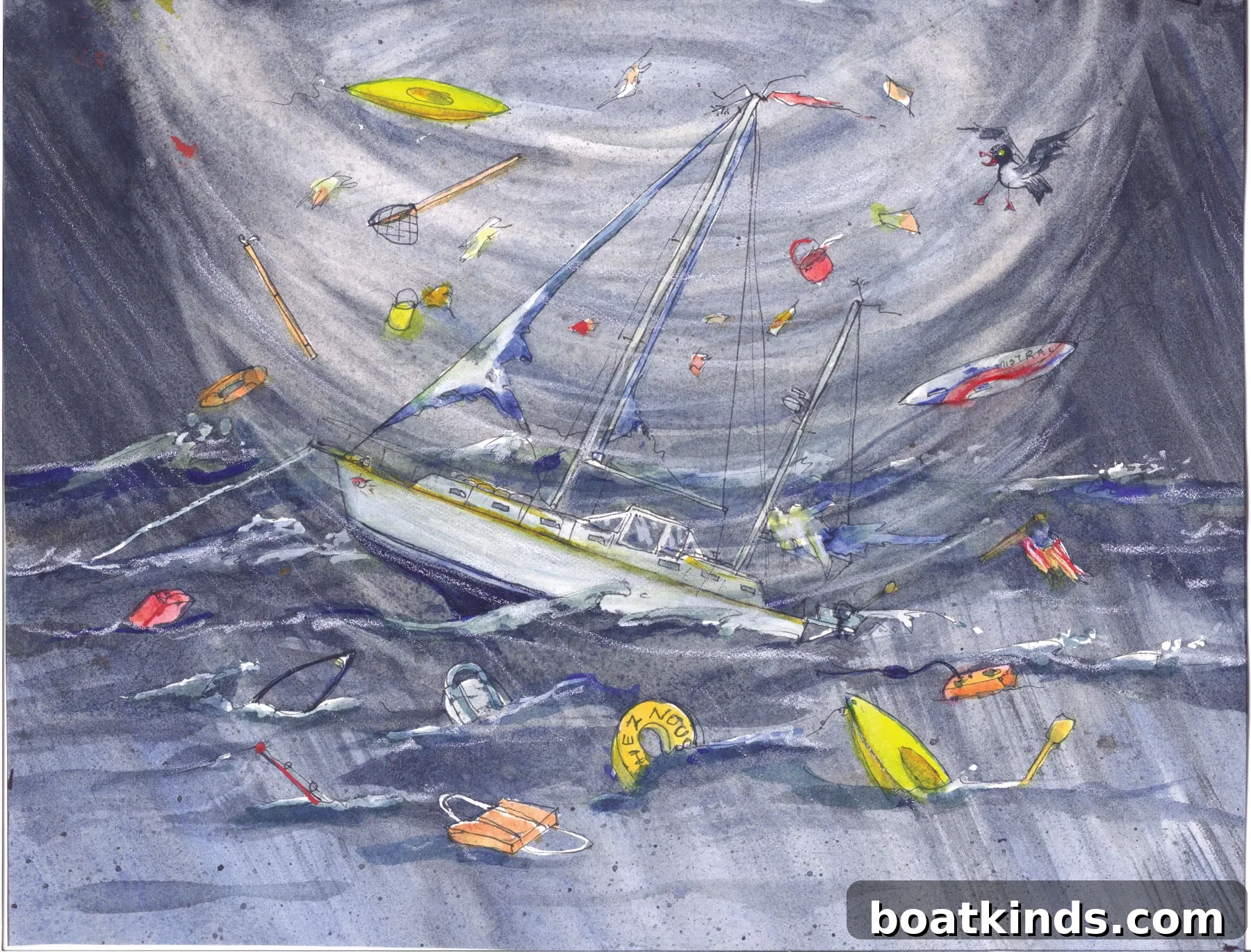
The night erupted in lightning that tore the sky into white fissures. What began as big, tentative drops quickly became a sheet of water so dense it felt solid. “At least we can see the shore lights,” I shouted. “It’s not a whiteout.” I wish I hadn’t said it.
Almost immediately the rain became a roaring wall that swallowed Chez Nous, our 53-foot motorsailer. Visibility dropped to nothing; even our decks disappeared beneath the torrent. The sound was impossible to describe, and the pressure changes made our ears pop. Then everything changed again — the boat began to lurch, pivot and, by the way it felt, spin.
“It’s a tornado!” my wife Mel screamed. The wheel’s spokes blurred as the helm reacted to the rudder and the boat swung. The boat heeled hard to port. We dove down the companionway. I scrambled to secure the cribbing boards while hanging on as the angle increased. Snaps that held the cockpit enclosure to the sides popped open one by one. The lower half of the companionway door flap exploded outward as pressure equalized. The enclosure ballooned under the force.
We had prepared for emergencies. Offshore life jackets with whistles and strobes sat within reach. We grabbed inflatable jackets, which were deflated so we could move and escape if needed — you can’t swim through a hatch wearing a large, fully inflated jacket. I had placed the personal locator beacon next to the boat’s EPIRB with waterproof flashlights and a handheld VHF radio at the base of the companionway, each with lanyards so we could keep them tied to us. Important electronics, a phone, wallets and computer drives were in a yellow Pelican box. We huddled in that cocoon and waited.
Chez Nous rocked, settled, then rolled hard to starboard before snapping back to port. Turning, swinging and heaving, she eventually righted herself. Then, just as suddenly as it had arrived, the tornado moved on. It likely lasted a minute or less; time had stopped inside the chaos. My thoughts were consumed by the fear and the violence, tempered by a strange, practical calm.
The wind kept howling and the seas stayed large. When we opened the companionway and climbed up, I expected the cockpit enclosure to be torn away, but the example built by Linda and John Schwartz of BeaverBrand Canvas in Fort Lauderdale held intact — our command center remained in place and Chez Nous was still seaworthy. Once again the lesson was plain: trust a well-built boat.
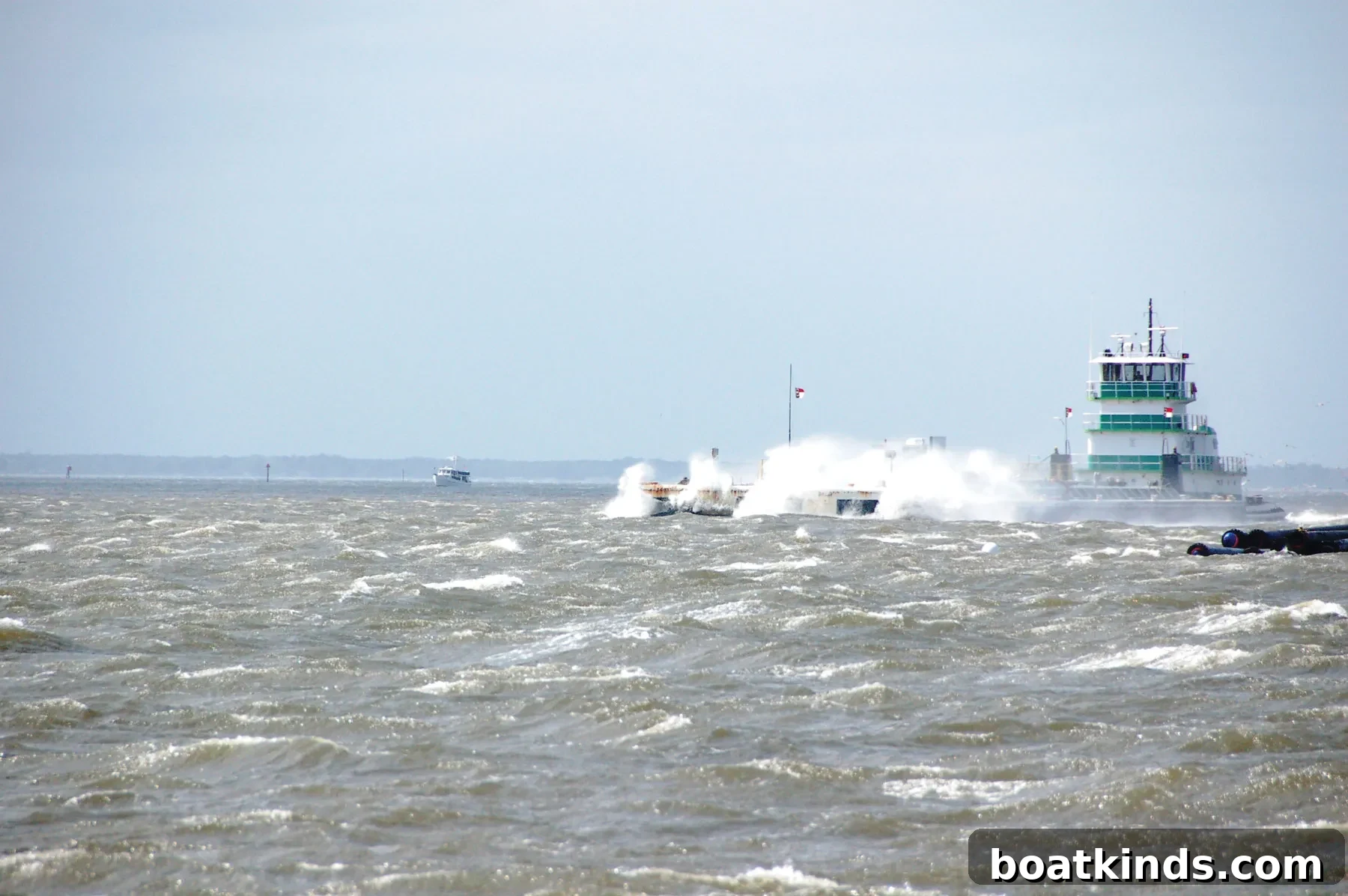
In the strobe of lightning I could make out a neighboring boat being slammed by waves, its deck repeatedly washed. We were close enough that I briefly considered deploying fenders, but they would have been pointless in those conditions. A man from the nearby boat came on deck trying to help, but he could barely hang on. Our size made us relatively stable compared with many smaller boats in the harbor that were bucking and burying bows into each wave. Nearly every vessel showed anchor lights, except for one single-hander whose boat had vanished downwind. We and the boats near us turned on spreader lights to increase visibility.
Every boat in the anchorage had dragged. We checked in on the VHF to compare notes. One skipper reported his GPS indicated about 158 feet of drag and that his spreaders had been submerged as the boat lay on its beam. Another described being “sitting on the wall” instead of on deck. The damage ashore was visible the next morning on television: the satellite dish was mangled and the news showed neighborhoods reduced to rubble. Authorities reported 24 fatalities.
We assessed our situation. We felt secure that we wouldn’t drag again unless another tornado struck directly. Still, behind us lay a known hazard: a sunken wooden derelict marked with white PVC pipes. We had anchored in this harbor before and knew exactly where it was. To avoid risk, we decided to move. We started the 200-hp Yanmar, hauled in roughly 120 feet of muddy chain and reanchored farther out.
Anchoring after nightfall in severe weather is hazardous and communication is difficult, but our headsets were invaluable. That night they were likely lifesavers as Mel steered Chez Nous while I worked precariously on the bow with heavy chain and gear.
In the aftermath I reflected on what had happened. Some people may find it counterintuitive, but I believe that in certain tornado encounters you can be safer on a well-built boat than inside a rigid structure ashore. A boat can move and flex with the forces, whereas a building that can’t flex may collapse around you. This is not advice to head for the marina when tornado warnings are issued — the only thing I want is never to hear a tornado warning again — but it is food for thought and a measure of hope if you ever find yourself on the water in a strong, well-built vessel.
People have asked how we could be sure it was a tornado in the dark. The answer is simple: you know. It didn’t feel like a squall line or a straight-line gust. It jumped and touched down unpredictably, ripping metal and lifting objects straight up. Dinghies in the anchorage were overturned with twisted painters — the kind of damage consistent with tornadic winds.
We’ve had other close calls: years earlier a tornado struck near our anchorage in South Carolina and left a clear path of destruction through the woods. Waterspouts have formed over us before, one even starting by pulling the shirt off my back as it developed. Experience teaches you the sound, the feel and the danger.
All you can do is prepare: secure important gear in waterproof containers, keep life-saving electronics and beacons ready and reachable, use inflatable jackets sensibly, and trust quality built components — from anchors to canvas enclosures. Above all, hope you never have to use that preparedness.
Do you know how to tie up to avoid storm damage? See our video on tying up to avoid storm damage.
This article originally appeared in the November 2017 issue.