
Slipper: A Fast Wood-and-Carbon Daysailer Rebuilt from Recycled Parts
They knew immediately they had nailed the start. When Chris Maas, a retired Seattle boatbuilder, and his brother Alex, a former maker of high-end carbon tillers, glanced back after the start of the 2021 Yellow Island Race in Deer Harbor, Washington, they saw they’d opened a clear lead while the rest of the fleet still hunted a breath of breeze.
They were sailing Slipper, a strikingly elegant and exceptionally quick 27-foot wood-and-carbon daysailer that Chris designed and built at his home on Center Island, Washington. The boat’s light, efficient hull and sensitive handling under a modified Starboat rig proved ideal in fickle conditions: slightly heeled with a plumb stem, Slipper sliced through the water with barely a wake as she pulled away from the pack.
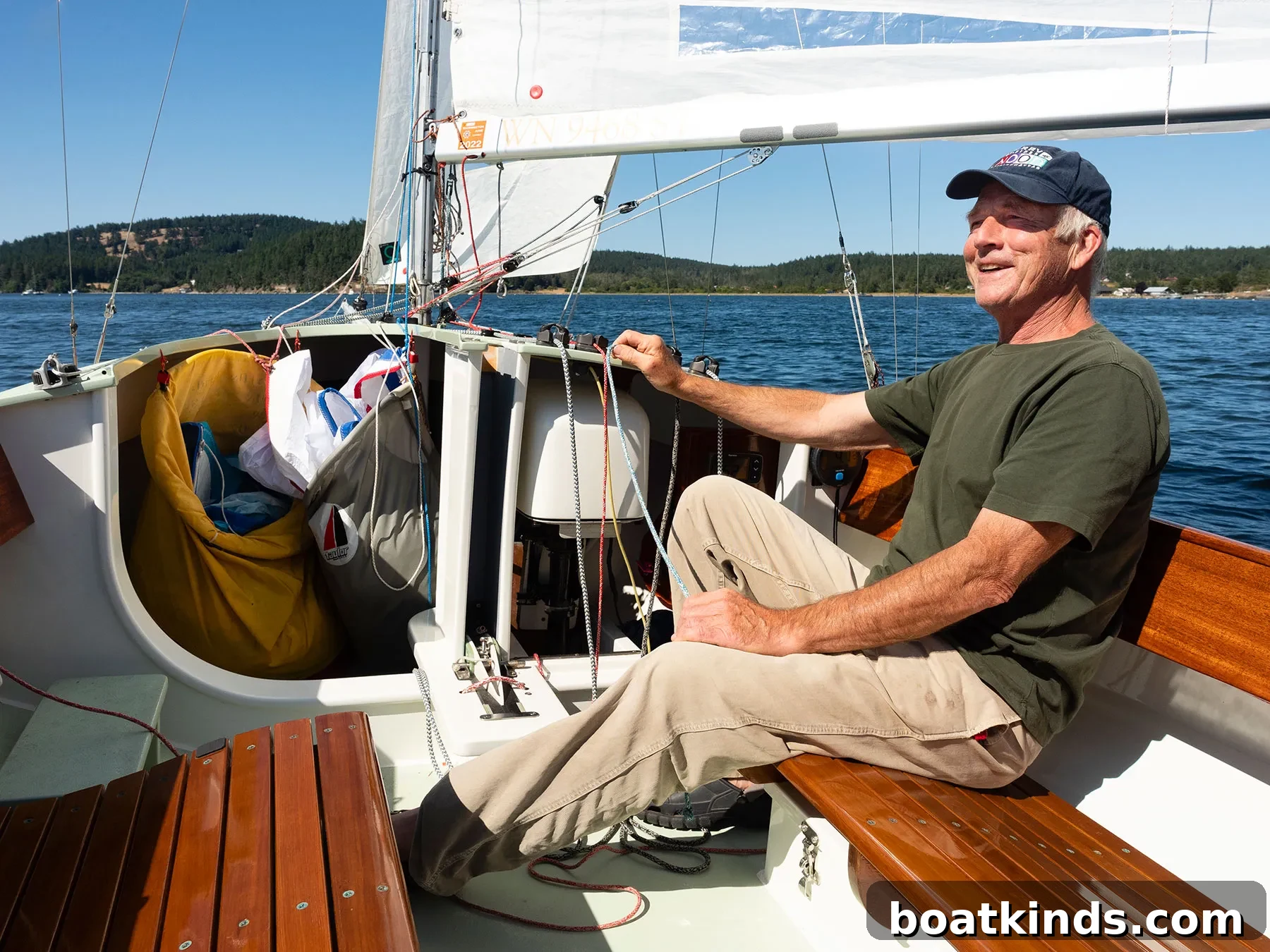
Chris, now 64, built Slipper as a personal labor of love. He wanted a boat that combined performance and comfort with modern conveniences: a lifting keel, a high-performance profile rudder and a retractable electric auxiliary. Equally important was his goal to use materials and equipment thoughtfully. Over the years he’d noticed good hardware languishing unused, so for Slipper he prioritized recycled materials and repurposed gear whenever practical. “As I’ve gotten older I’ve taken stock of what I’ve used to build boats through the years,” he says. “It can be a little appalling. There’s a lot of good equipment out there, either in basements or heading to the dump.”
That thriftiness, combined with decades of craftsmanship, shaped the boat. Chris repurposed a Star mast that had previously failed at deck level but was otherwise serviceable. “A Star rig is beautifully engineered and finely tunable,” he says. “Tiny wires, like jewelry—13 separate stays to keep it up. It’s a little scary, but very adjustable.”
Chris drew on a long resume that includes open-water rowing shells, fast dinghies such as International Canoes and foiling Moths. For Slipper he looked to traditional East Coast daysailers—boats that launch on a whim and reward simple, pleasant afternoons on the water—then applied modern materials and detailing to elevate performance and comfort.
He strip-built the hull from cedar milled from a driftwood log, then sheathed it with surplus 200 g carbon cloth from Boeing. He used that carbon to reinforce structural areas and to skin the boat’s bulkheads, which were milled from cedar his neighbor had cut. For a touch of classic beauty he added a thin veneer of Honduras mahogany on the transom, salvaged from a 1950s East Coast boat project. The curved tiller came from a piece of Douglas fir that had once supported an old water tank; the narrow keel fin is a Douglas fir core wrapped in carbon and carries a 380-pound bulb cast from surplus lead ingots in a homemade concrete mold.
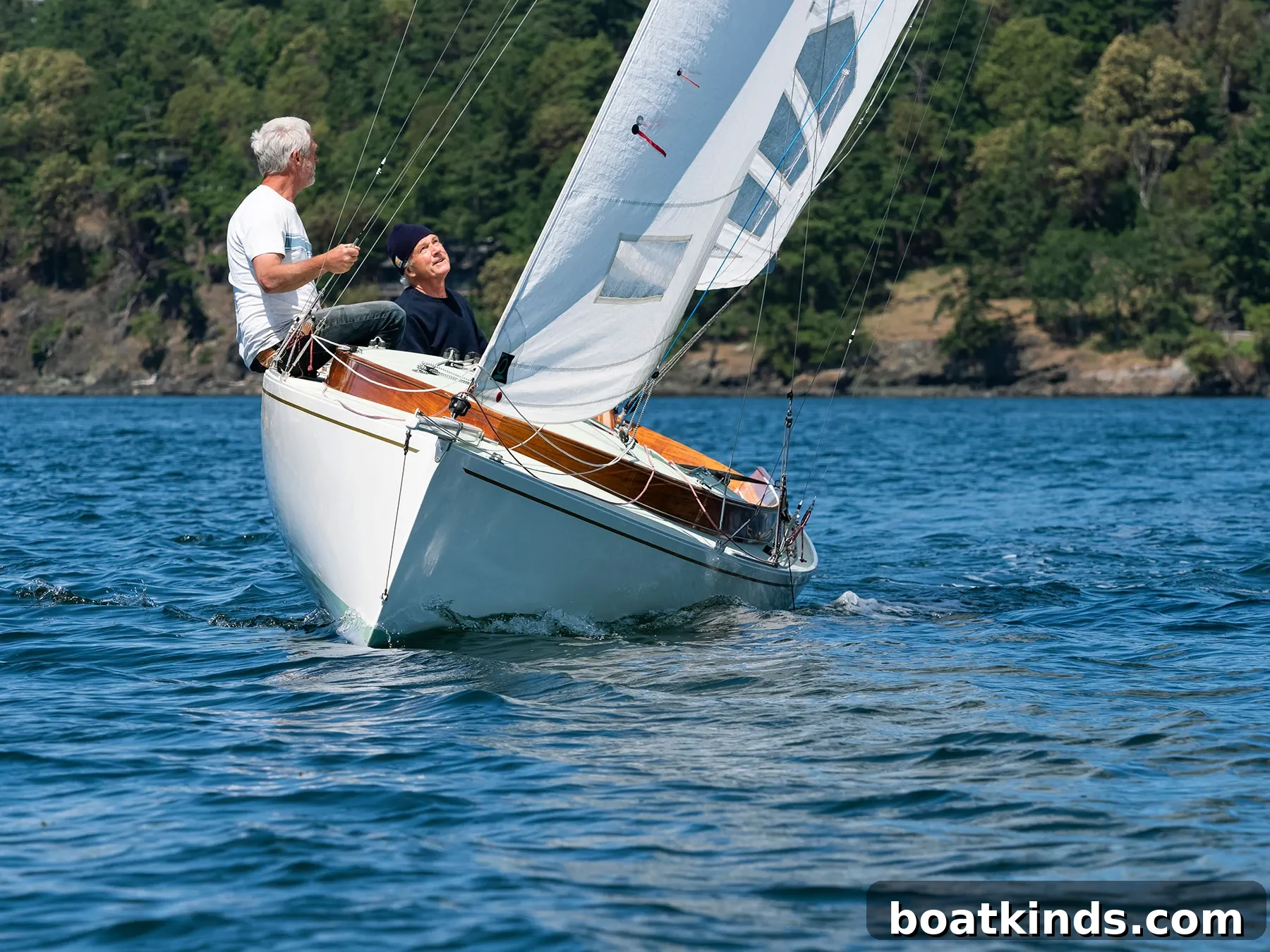
Slipper’s auxiliary propulsion is an innovative electric solution. The retractable outboard hides in the starboard half of a small cuddy: a converted 3.3-horsepower Mercury lower unit rebuilt as an electric drive, with a controller that formerly ran a kid’s go-kart and a mini bike. A small section of hull is attached to the motor’s lower unit so when it’s hauled up the opening closes cleanly, preserving the boat’s lines and hydrodynamics.
“Epic,” says Todd Twigg, a crewmember who described the sensation of sailing Slipper. “No words can fully describe the dreamlike feeling of being on her or watching her sail.” That praise created high expectations for a summer day sail in the San Juan Islands, and the boat did not disappoint. Under light summer skies we left the dock under electric power, motored quickly into open water, hoisted sail, retracted the motor and were immediately rewarded: Slipper accelerated, the leeward rail dipped to greet the water and the boat moved with effortless grace.
Comfort was central to the design. Chris engineered cockpit benches with thoughtful seat depth and backrest angle so guests sit easily and enjoy the ride—no hiking straps, no tiller extensions or trapeze wires. “I see guys on Melges 24s hanging over the lifeline and it looks awful,” he says. “My answer was to make sailing pleasant: you sit in the boat, put your arm over the coaming and steer.”
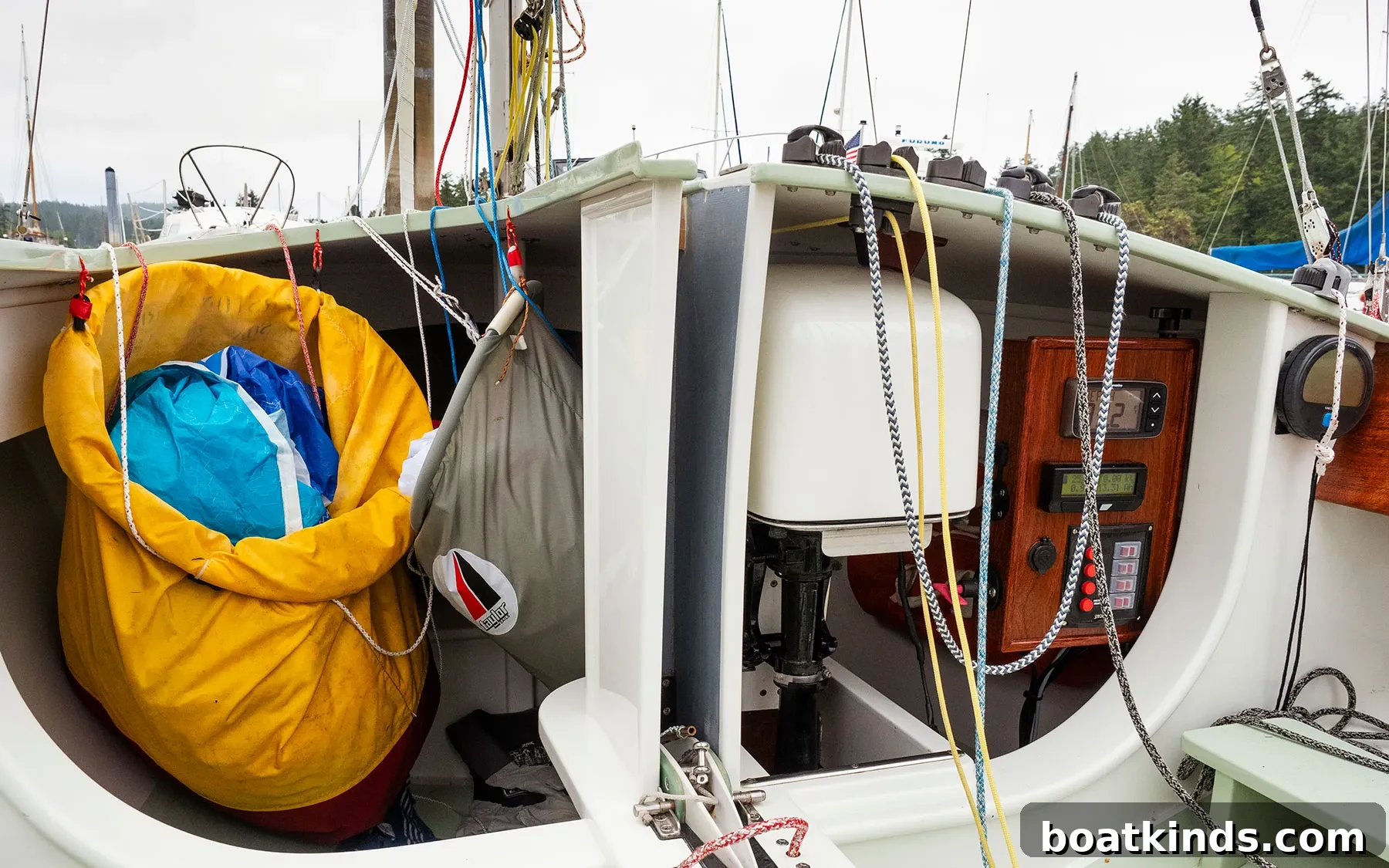
Light airs didn’t stop Slipper from powering through Lopez Pass, notorious for strong currents. When the wind shut off on the east side and the foils lost their flow, the boat began to drift, and Chris reached for the motor. Before he deployed it, the breeze filled from the opposite side and Slipper instantaneously converted that shift into forward motion, carrying the crew back to the dock at Center Island.
That turn of speed explains why Slipper left the fleet behind at the start of the Yellow Island Race. She finally surrendered the lead to the 49-foot schooner-rigged sled Sir Isaac after the crew made a tactical error—rounding Jones Island too tightly and parking briefly in a wind shadow. Slipper finished second on the line and corrected to third overall, an impressive result for a small boat carrying a high PHRF rating.
With that performance, Chris demonstrated that it’s entirely possible to build a sensible, elegant and high-performing daysailer largely from recycled and repurposed materials. Slipper’s sustainability-minded approach complements the trophies and accolades she has already collected, showing that resourceful building and refined design can coexist—and win—on the racecourse.
Specifications
LOA: 27’0”
LWL: 21’8”
Beam: 7’0”
Draft (keel up/down): 14” / 7’
Displacement: 1,300 lbs.
Sail area (up/downwind): 280 / 474 sq. ft.
This article was originally published in the April 2022 issue.