
David Tunick’s Solo Sailing Journey: From Small Boats to Transatlantic Crossings
David Tunick describes his progression as a sailor as gradual and earned. “I’m not a great sailor,” admits the art dealer, now 78, with the kind of self-effacing humor that colors his stories. He wasn’t brought up in junior sailing programs or yacht clubs, and it took him years to join the Cruising Club of America. Still, sailing became a central part of his life.
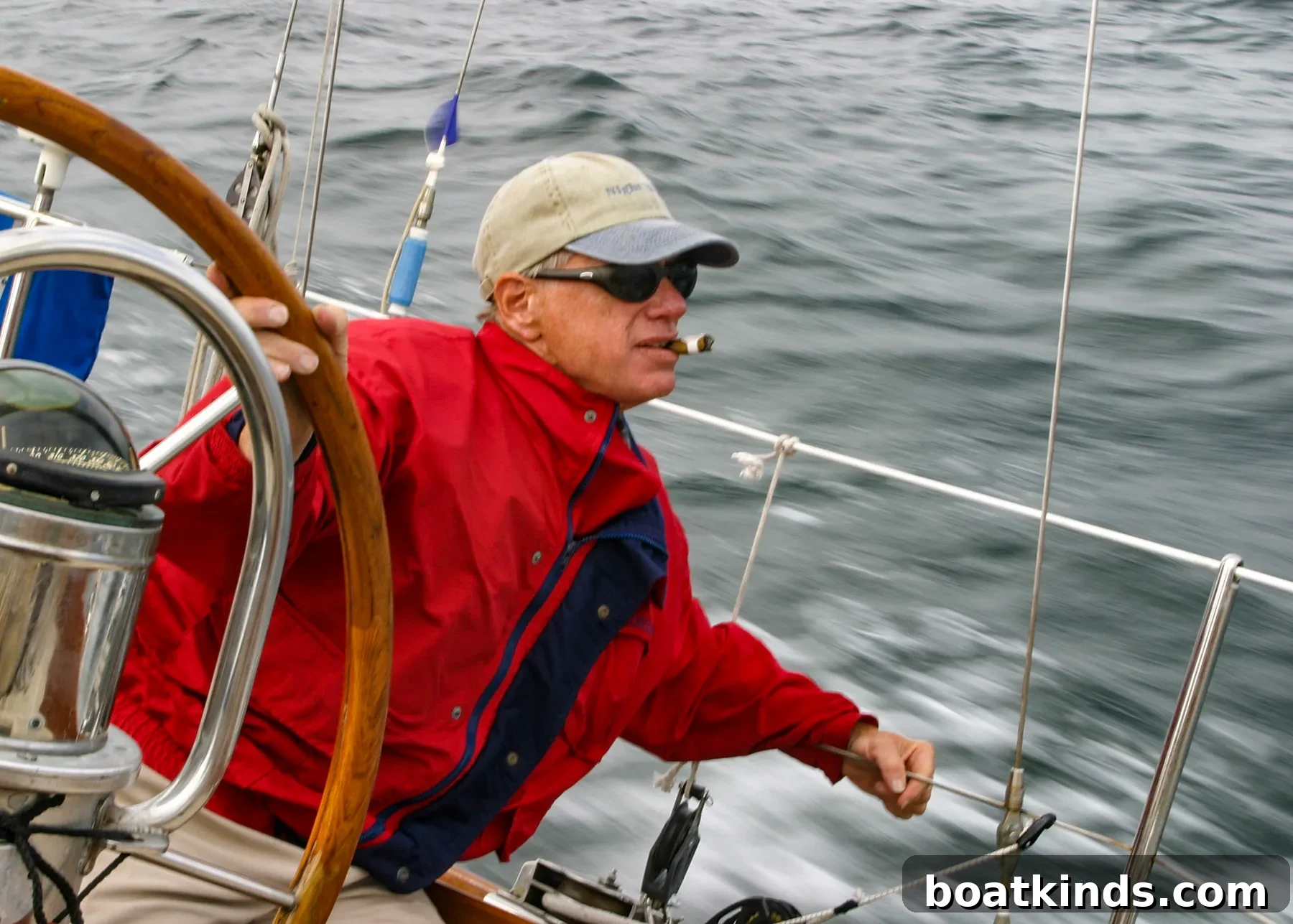
His earliest memories of boats stretch back to childhood: a model boat that sank in a park and weekends aboard a 30-foot Wheeler with his father and uncles that lit a lasting love for being on the water. After college in 1966 he bought a used wooden Lightning dinghy and sailed across Long Island Sound, spending nights ashore at Oyster Bay. A few mishaps—his Lightning once sank and was sold while submerged—didn’t deter him. Instead, the lure of longer voyages grew as his life and business evolved.
For about a decade he built a thriving trade in 15th- to mid-20th-century prints, drawings and paintings by artists such as Rembrandt, Goya, Matisse and Picasso, working from an Upper East Side townhouse. The summer seasonal rhythm of the art world freed him to return to boating: “Collectors and museum people disappear in the summer,” he says, “so it’s like an academic year for me.”

A decade after the Lightning he upgraded to a Sparkman & Stephens 40-foot yawl named Thunderbolt and sailed to Cape Cod, Bermuda and Maine. He eventually traded up again to a 54-foot Sparkman & Stephens-designed aluminum yawl built in 1967 by Abeking & Rasmussen. Tunick watched that boat for three years, attracted despite small reservations about the cockpit and coamings. An unexpected opportunity—selling a Maurice Prendergast painting at an unusually high price—gave him the funds to buy the yawl in 1984. He renamed her Night Watch, a nod to the famous Rembrandt and to the watches he kept at sea.
Transporting Night Watch across the country did not go smoothly: the yawl tipped while being trucked, damaging teak and winches. Repairs began before insurance settled, and builders even sourced wood from the same tree used in 1967. Tunick repaired and outfitted the boat, spending summers cruising Maine and winters in the Caribbean with family and clients. He sold his Maine house as development changed the island’s character, but his love of cruising only deepened.
At the New York Yacht Club he chaired the model committee and applied his organizational skills from the art world. He also grew fond of singlehanded sailing, finding the independence and responsibility liberating: “I don’t have to worry about others falling overboard or making mistakes,” he says. He had made several solo passages to Bermuda and longer trips with crew before deciding to attempt a solo transatlantic crossing.
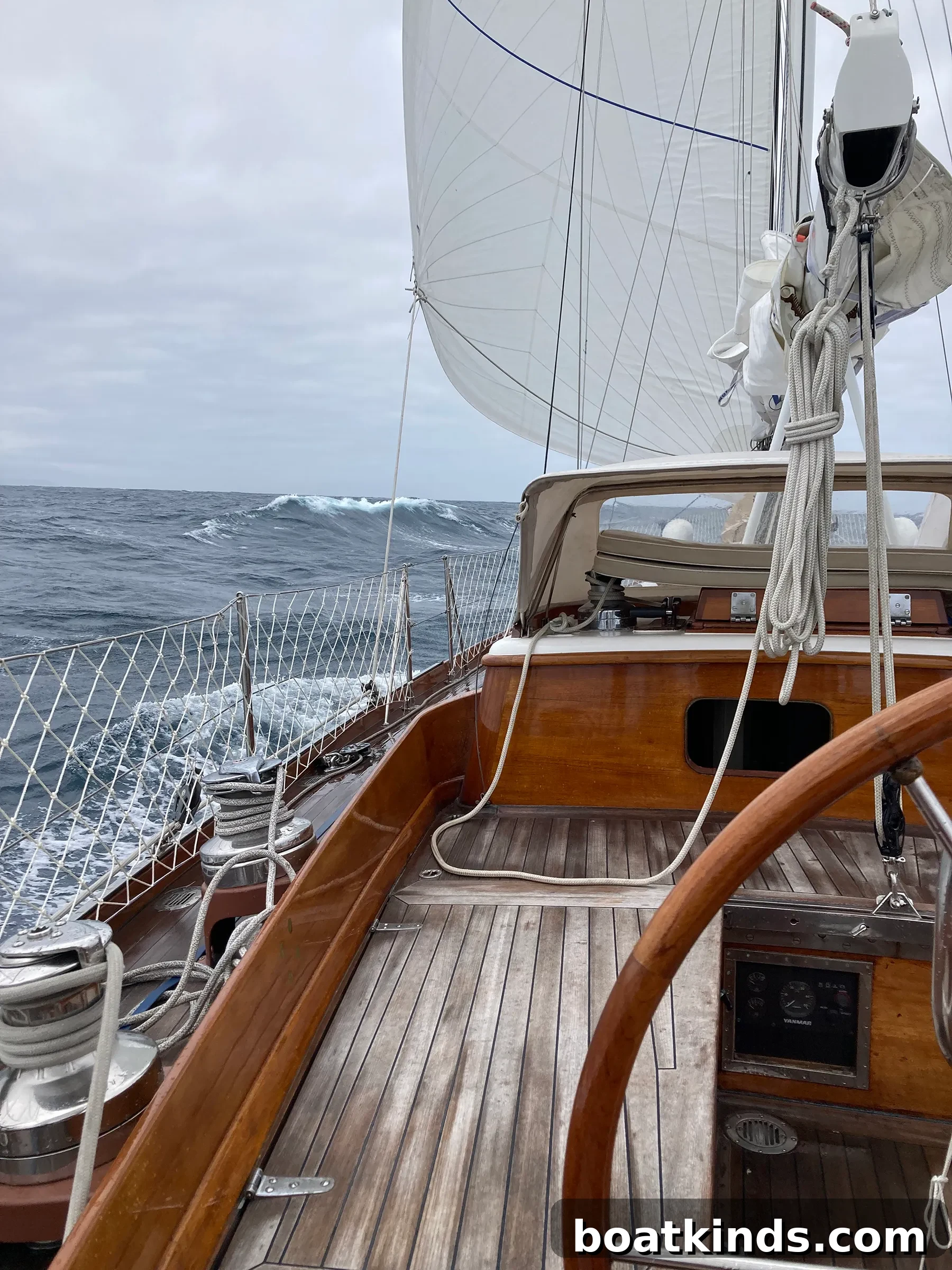
He left on Friday the 13th and after 2,000 miles and 17 days reported the passage “terrific,” even though numerous mechanical and rigging failures tested his resolve: radar and generator failures, a broken spinnaker halyard and an autopilot disabled by a steering gear failure that required a five-hour nighttime repair in heavy seas. He ate well, slept when he could and found solace in visits from porpoises, seabirds and even a Monarch butterfly. After 22 days he reached Falmouth, England, having completed a solo crossing of some 3,000 miles.
Once in Europe, Tunick took part in classic boat regattas in the Solent, Scotland, Denmark and Sweden. He never intended to race aggressively—sailing, for him, remained a place of relaxation—but he enjoyed the camaraderie and the social life of classic yacht events. Scandinavia, in particular, captured his heart: the Stockholm Archipelago, the dramatic fjords of Norway and the many serene anchorages became favorite summer haunts. He spent many European summers cruising and organizing cruises through the Royal Scandinavian Yacht Clubs’ North American Station.
Before the pandemic he stored Night Watch indoors in the Netherlands, but a yard moved her outside without consulting him and rainwater caused interior and engine damage. Over the years he invested in a more powerful engine, rebuilt generators, renewed rigging and added redundant systems—preparations that can take years for a long ocean delivery.
When Tunick planned his return to the United States in 2022 he upgraded equipment, stocked provisions that travel well, and refined onboard cooking. He rarely drinks, never offshore, and even though he has never had coffee, he admits to a fondness for chocolate. He loaded Night Watch with chocolate milk and candy bars—comforts that mostly went untouched during the voyage.
The delivery faced an array of persistent problems. After leaving Spain a starter motor failed and the autopilot stopped, a steering jam forced him to anchor outside Horta, and corrosion and parts shortages created longer fixes. He endured long stretches becalmed in the Azores High, often drifting without power while cooking and sleeping in short bursts to preserve energy and manage watch duties. When wind finally returned, autopilots balked again and he had to jury-rig the helm and carefully balance the rig so the boat would steer herself.
Once, sailing toward the Gulf Stream, a sudden wave threw him across the deck and he suspected broken ribs and a damaged right hand. He continued despite injury, inspired by stories of sailors who overcame far greater physical challenges. Electrical gremlins, intermittent generator faults and corroded starters forced inventive solutions: contacts with fellow club members, remote troubleshooting via WhatsApp, and help from friends who advised him on spare parts and procedures.
Nearly a month after leaving the Azores and having covered some 1,800 miles, he finally sighted Bermuda’s St. David’s Lighthouse. With Bermuda charts at home and only a tourist map aboard, a friend sent photos of navigation charts to his phone so he could find the channel into St. George’s Harbour. He rebuilt the starter with an OEM unit and got the engine running again, even while the generator and autopilots remained temperamental.
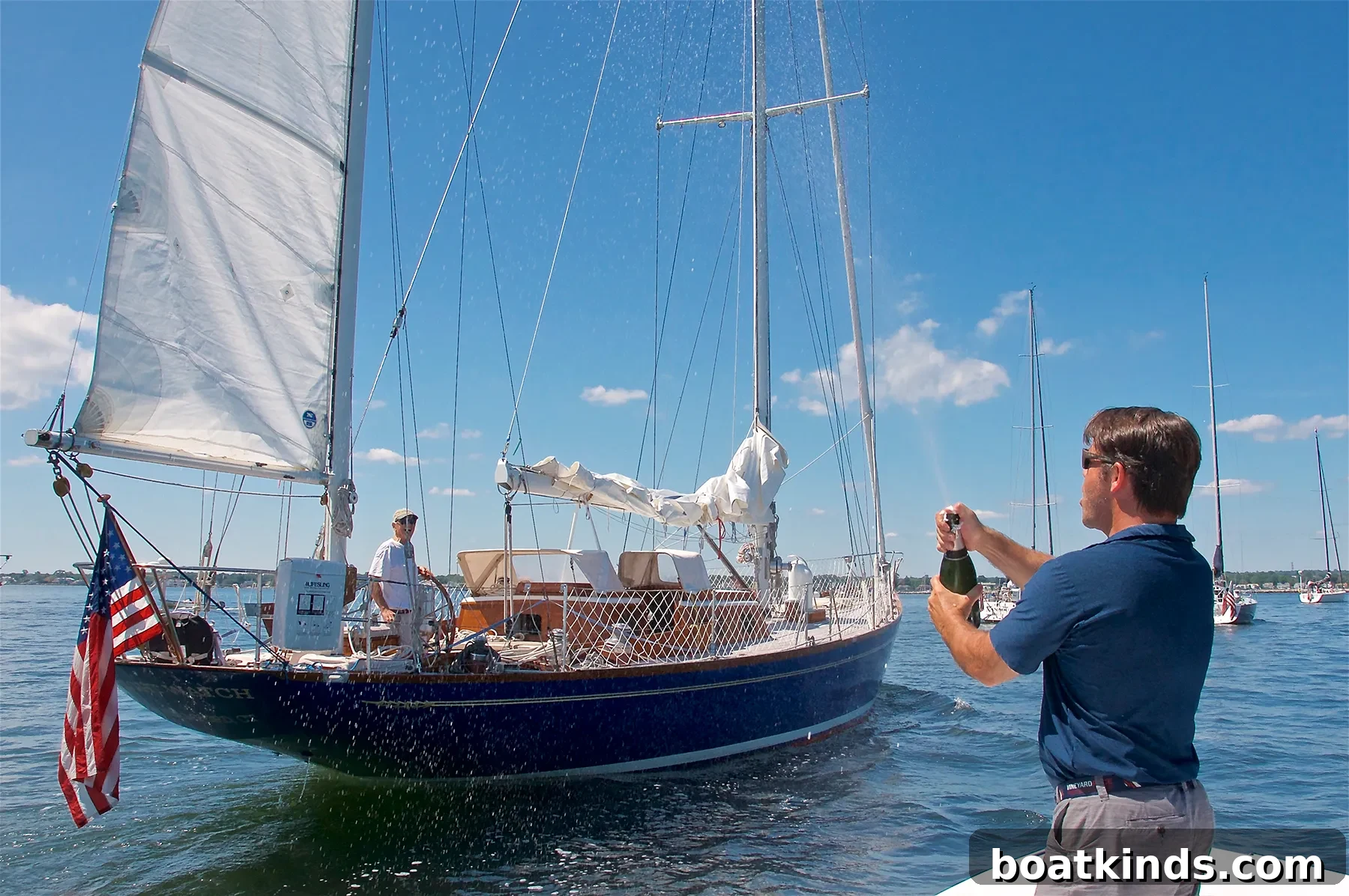
Tunick continued to Long Island Sound, where a jubilant flotilla of yachts and Stamford Yacht Club members greeted him with horns, a cannon and champagne. He lost weight during the hardest stretches—20 pounds in the Azores High—and he calls that phase the low point of the voyage, yet he insists he never truly suffered. “Heck, I’m on a boat. Nothing makes me happier than to be afloat,” he says.
He found sustained moments of wonder at sea: sunsets opposite the rising moon, the Milky Way luminous across a black ocean, and stretches of solitude that felt almost spiritual. He reportedly never touched the chocolate supply, losing his sweet tooth at sea only to regain it once ashore.
Tunick may now be the oldest person to singlehandedly sail the Atlantic from east to west, and although Guinness inquired about an application he did not pursue that path—he sailed for the experience, not the record. The Cruising Club of America honored him with the Far Horizons Award for his two solo transatlantic passages. Back in Long Island Sound he plans to return to familiar cruising grounds—Newport, Cuttyhunk, Martha’s Vineyard, Nantucket and Nova Scotia—and still dreams of singlehanding back to Spain and sailing to Ireland in the years ahead.
This article was originally published in the May 2023 issue.