
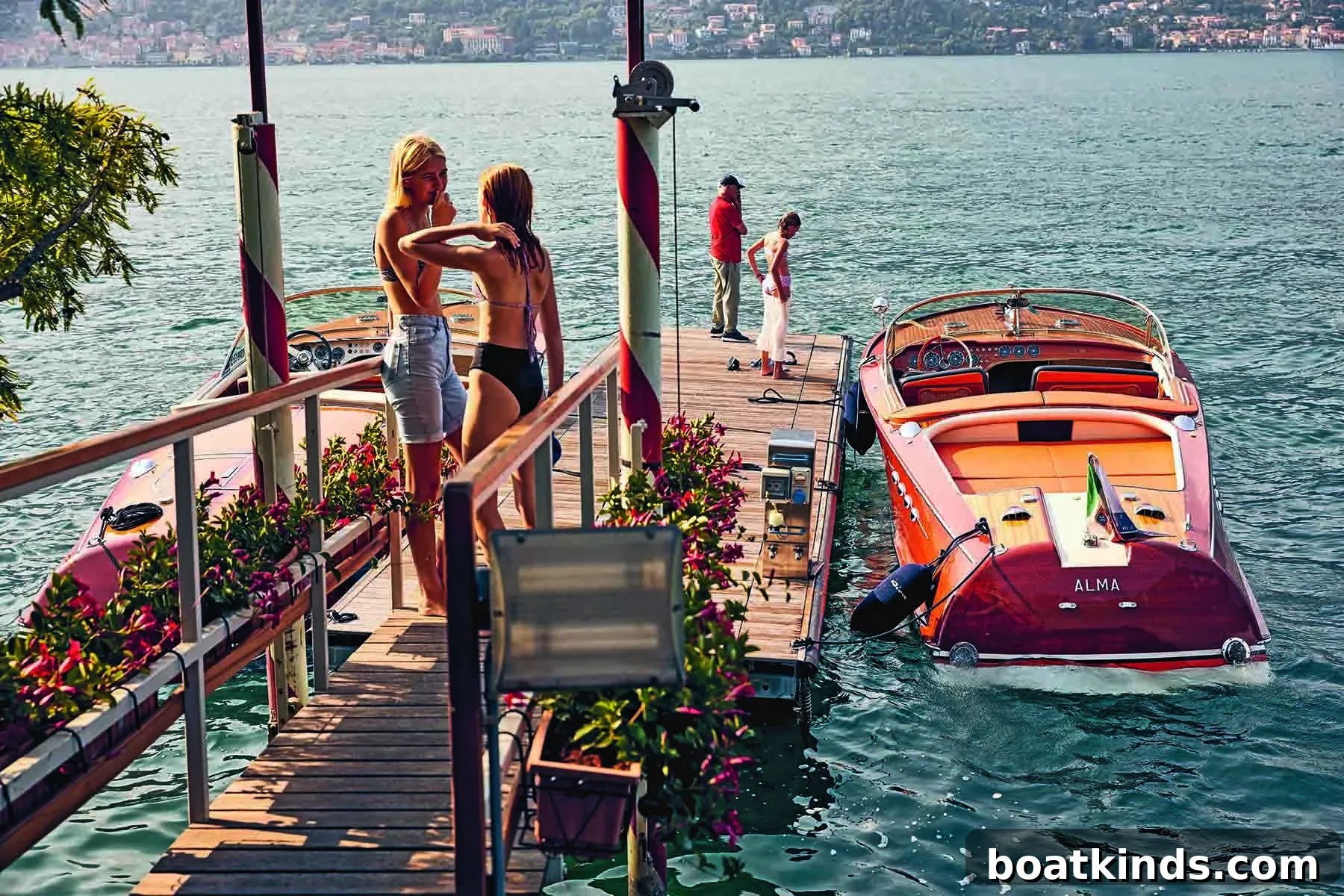
The name Riva has long been synonymous with Italian style, luxury and timeless boatbuilding. Central to that reputation is the Riva Aquarama, the iconic runabout produced from 1962 until 1996, which established Carlo Riva and his yard as creators of some of the most sought-after recreational boats in the world.
Riva’s history reaches back to the 19th century: Pietro Riva began building boats in the 1880s, and the company evolved over generations. Carlo Riva, a great-grandson of Pietro, inherited not only a family business but also a legacy of craftsmanship. His father had already introduced pleasure boats to the company’s lineup alongside the small racing craft Riva was known for, and when Carlo took over in the 1950s he pushed the brand into a new era of design and refinement. The Aquarama, introduced in 1962, became emblematic of that transformation—so much so that it earned the nickname “the Ferrari of the boating world.”
According to Riva, roughly 760 Aquaramas were built during the model’s production run, and about 650 remain today. Many of these classic mahogany boats are meticulously maintained by passionate owners and collectors, which helps explain their continued visibility at luxury marinas and classic boat shows around the globe.
The Aquarama attracted some of the most famous figures of its era. Entertainers and royalty alike were among its admirers: Peter Sellers, best known for his role as Inspector Clouseau in The Pink Panther series, owned an Aquarama; so did Prince Rainier of Monaco and King Hussein of Jordan. The appeal was clear — the boat combined performance and presence: twin engines capable of producing 45 to 50 knots depending on the powerplant, a large cushioned sundeck ideal for lounging or being seen along the Côte d’Azur, and a retractable roof that opened the rear seat and cockpit to sun and sea breezes.
One of the Aquarama’s most famous and ambitious commissions came from Ferruccio Lamborghini, the founder of the Lamborghini car company. In 1968 Lamborghini ordered an Aquarama that became Hull No. 278, outfitted originally with twin 4.0-liter V-12 engines taken from the Lamborghini Espada road car. Built in just three months—Riva’s yard reportedly worked around the clock to meet the deadline—that boat became the fastest Aquarama ever produced. Later owners swapped those V-12s for more conventional V-8 engines, and the original Lamborghini V-12s eventually made their way into the Lamborghini Museum. Hull No. 278 has since been restored to its original configuration, with Carlo Riva personally testing and inspecting the boat to ensure the restoration reflected his exacting standards.
This year marks the 60th anniversary of the Aquarama, an occasion Riva is celebrating with a commemorative book. The collectible volume features more than 200 photographs and illustrations that document the model’s craftsmanship—from the hand-finished mahogany hull and chrome details to the distinctive robin’s egg blue and cream upholstery that remain signature visual elements of the Aquarama. The book highlights how meticulous woodworking, elegant lines and thoughtful interior detailing combined to create a boat that is as much an object of design as it is a high-performance recreational vessel.
The Aquarama’s enduring appeal comes from that blend of performance, beauty and craftsmanship. It embodies a midcentury ideal where speed and style were equally prized, and where a wooden runabout could be a status symbol, a design statement and a true pleasure-craft all at once. For collectors and enthusiasts, the Aquarama is more than a classic boat: it’s a piece of maritime design history that continues to turn heads six decades after its debut.
—Kim Kavin
This article was originally published in the September 2022 issue.