
Editor’s note: Last month’s column focused on initial preparations for a canyon run. In this installment, we cover how to gather current offshore intelligence, the gear you need, and practical tactics for high-summer trolling.
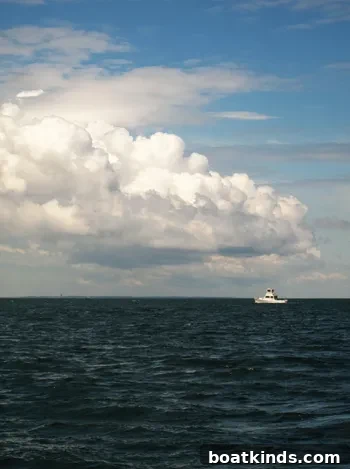
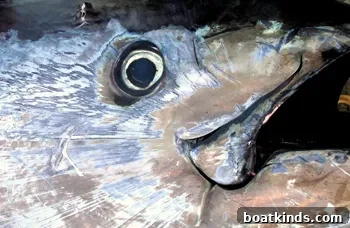
Heading to the canyon can be expensive and equipment-intensive. Fuel costs alone can be staggering, and the tackle list is long: seven or more 30- to 50-class stand-up rods, trolling reels, hooks, sinkers, leaders, gaffs, gimbal belts, and harnesses. Add hook baits, at least half a dozen flats of butterfish for chum, spinning outfits, squid jigs for making live bait at night, a dip net and other basic supplies. All told, provisioning a canyon trip can outstrip what you paid for your last car.
That said, you don’t have to buy everything at once. Tuna and big-game gear tends to circulate in marina communities; someone is often willing to lend or sell equipment. And a prudent approach will save you money and frustration: don’t assume you need to go “all-in” until you’ve made a few honest attempts 200 miles offshore or at least run past the 40-fathom curve once.
Consider staging a scaled-back trial first. Try a day chasing makos or threshers around the 30-fathom line or trolling midrange humps for bluefin. These shakedown trips reveal how your systems and crew perform when you’re on open water, and whether you can handle the physical demands of fighting large pelagics. Tethering to a heavy tuna or a big shark is hard, often exhausting work — not everyone will enjoy or withstand it.
The scenarios: trolling and chunking
You’ll generally prepare for two scenarios: daytime trolling and nighttime chunking. Both can dominate depending on season and local conditions. High-summer canyon trips often center on daytime trolling, while many canyon captains head offshore at sundown to set a drift and chum, or to jig and live-line beneath spreader lights. Night chumming can program fish to take dead bait and vertical jigs around the clock when pressure is sustained.
The search for life
Interpreting fishing reports and reading the water are critical. Canyon reports expire quickly; the location of a feeding aggregation 24 hours ago may be meaningless now because pelagic species like tuna and wahoo can move fast. Prioritize actionable details: are fish on the cold or warm side of a temperature break? Does bait concentrate there? Are they taking dead baits, live squid, or vertical jigs? Did specific trolling lures and colors work? Were mahis or other species present under floating debris or trawl highfliers?
When someone returns with fish, ask focused questions. Equally important is identifying lifeless water—ruling out voids saves time. Many experienced canyon anglers help each other by sharing observations; you may find that normally quiet skippers will offer useful intel before a big run.
The day troll
If your first trips include trolling, aim to be in 40 fathoms or deeper by false dawn — one of two high-percentage windows for action. Allow time to run down from port at a sensible pace and watch for navigational hazards like lobster gear, gillnets and buoys; such gear is often concentrated near the 30- and 50-fathom curves.
For early trips, keep your spread simple. Run four to seven rods, keep lines free of weeds and place lures where they swim cleanly on the faces of your wakes. Favor single lures such as Hex Heads, jetheads, tuna clones, cedar plugs, feathers, and weighted or standard Green Machines, and consider a Braid Marauder or Yo-Zuri behind the transom. Singles are less likely to weed up, easier and cheaper to rig, and simpler to deploy.
Outriggers are helpful but not essential. Study your boat’s wake and locate spots for one or two “up-close” lures fished off the rod tips or outriggers near the first wake where the hull throws a consistent bubble of blue water. Put the larger, way-back lures on rods with higher line capacity (50s or 50-wides) and reserve 30s or 4/0s for the first-wake jumpers. In summer, smaller lures often outperform larger ones because much of the forage—juvenile squid and small mackerels—is small.
Fish on! Then what?
When a rod screams and line peels, keep the boat in gear for a few seconds and mark the exact position of the strike. Don’t stop the boat abruptly until other lines are clear, and only drop out of gear if necessary. Place the angler in one corner of the transom and begin a gradual turn toward them to reduce strain. Have crew ready to clear rods and prepare gaffs or additional lures.
After a knockdown, a few scoops of pre-cut chum astern can keep aggressive fish around for follow-up passes. Consider sending a rod or two with diamond or butterfly jigs back under the spread after a hit; vertical jigs can often produce an extra fish. Each hookup is a clue—thoroughly work the area where you hooked up and crisscross it on your plotter until you’ve exhausted the possibilities. Many successful tuna captains drill a zone repeatedly because a single sign of life can mark a rich, localized patch.
Don’t underestimate how little it takes to attract fish: one bird, a small mat of Sargassum, porpoises, or a compact bait ball can concentrate tunas. Prioritize warm, clean, deep-blue water—generally above about 67°F in many regions—and stay with productive signs rather than running across wide swaths of dead water.
Making the most of each encounter—leaving the spread for a moment after the first hit, jigging after a hookup, or drilling a productive patch—separates productive outings from frustrating ones. Nighttime chunking and chumming, often used to set up a dawn bite on a second day, is another important strategy and will be addressed in a future column.
This article originally appeared in the August 2015 issue.