
The meatballs didn’t stay in the galley for long.
Before Tenley van der Wal stepped off Snow Goose in Jersey City, she told her husband, Onne, and me to help ourselves to whatever was in the fridge before we raided the pantry or went ashore. Less than an hour later, as Onne and I motored their 1986 Grand Banks 32 under the Verrazano-Narrows Bridge, he asked if I wanted gehaktballen voor ontbijt—meatballs for breakfast. Both of us are Dutch, and meatballs with a mayonnaise-based dipping sauce are a beloved, perfectly reasonable morning meal. The leftovers came up from the galley, were dunked in mayo mixed with a little ketchup, and disappeared in minutes.
Five days earlier the Van der Wals had left Jamestown, Rhode Island, for what would be the Snow Goose’s maiden voyage toward the Bahamas. They stopped overnight at Safe Harbor marinas in Mystic and Branford, Connecticut, and Port Washington, New York, before reaching New York City. When Tenley needed to return to Jamestown for business, I climbed aboard to help get Snow Goose to Annapolis, Maryland.
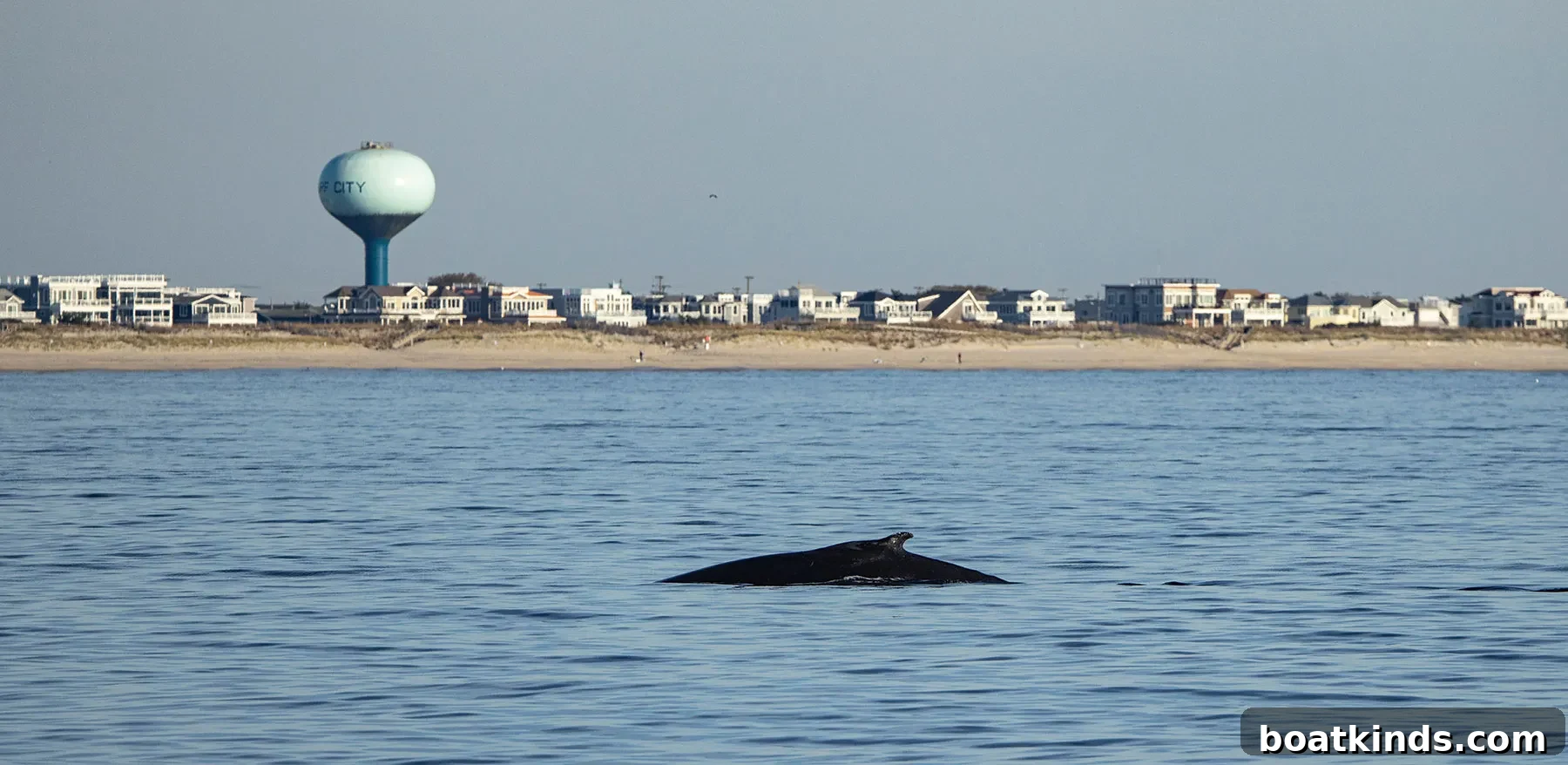
For me, a slow cruise down the Jersey Shore was a trip through memory lane. Before moving to Maine three years ago, I had lived along that coast for almost 45 of my 60 years—Sandy Hook weekend anchors in a two-person sailboat, big summer nights on seawalls, and a lifetime of fishing and shoreline memories. I entertained Onne with stories until a humpback whale surfaced about 50 feet astern with a loud puff of air—an unexpected, thrilling sight.
We’d intended to enter the New Jersey Intracoastal Waterway at Manasquan Inlet and run it end to end, but when we reached that inlet before 2 p.m. we decided to continue down to Barnegat Inlet, 25 miles farther. Onne fried some eggs—another Dutch favorite—and we ate as the coastline slipped by.
Near Seaside Park we saw a second humpback, but this one was grievously injured: its left fluke appeared nearly severed and we could see blood as it struggled to surface. We reported the sighting to the Marine Mammal Stranding Center in Brigantine; the Coast Guard called to ask whether we’d seen the animal struck, which we had not. There was nothing for us to do. The first whale lifted our spirits; this one pulled them down.
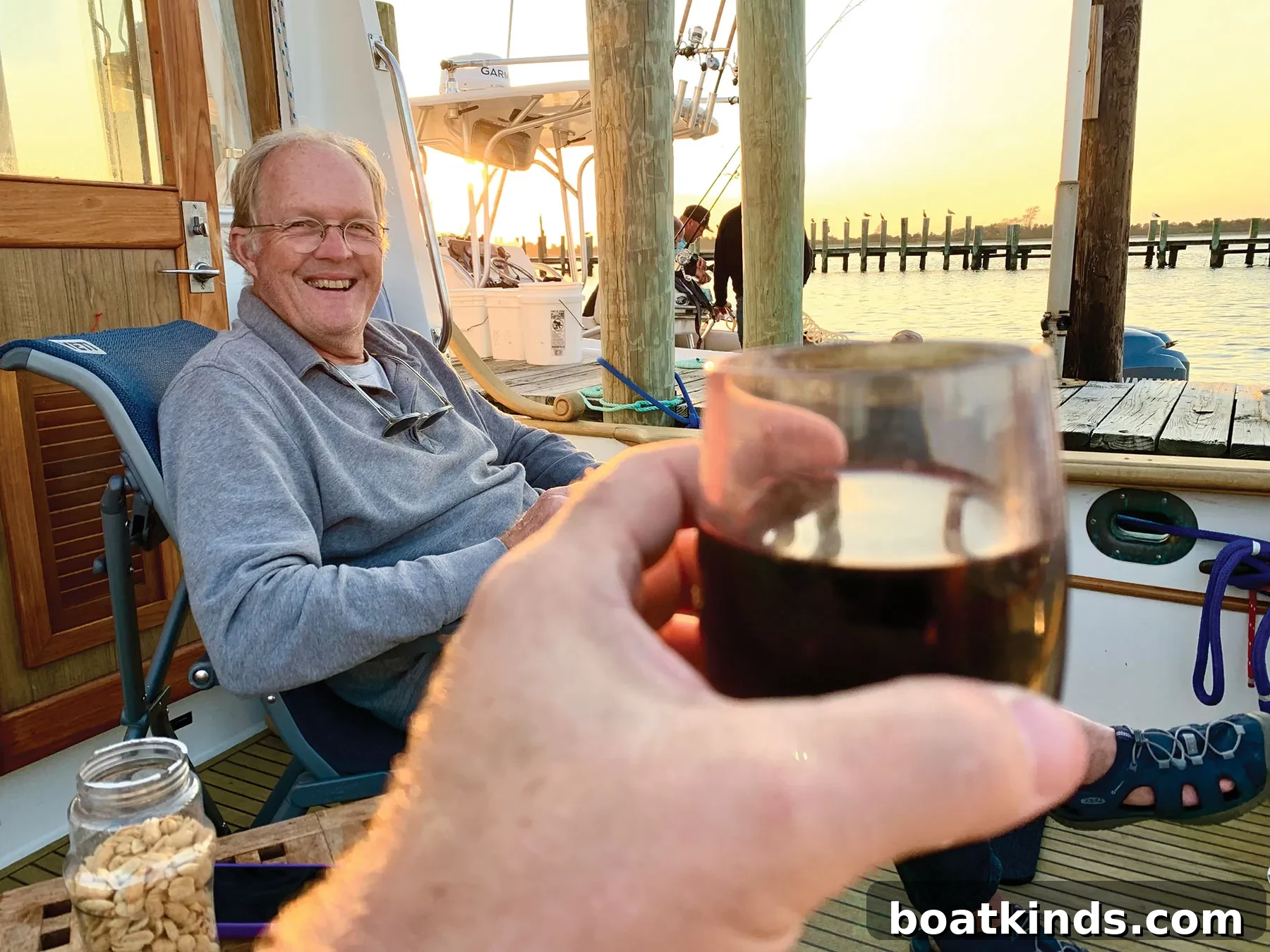
After entering Barnegat Inlet we tied up at Lighthouse Marina, poured a drink, and Onne cooked a dinner from the chicken Tenley had asked us to use first. We’d covered roughly 60 miles at around 8 knots—respectable for a small displacement trawler.
We left the dock at sunrise to put miles on toward Cape May before the forecasted afternoon chop. While transiting the inlet I noticed navigation markers displayed inconsistently across our charting apps: Navionics showed one channel marker in the wrong spot, AquaMaps on Onne’s iPad placed it correctly, and Raymarine’s Lighthouse overlay was missing several outer buoys. It was a good reminder to compare what you see through the windshield with what your electronics show and to trust your eyes.
Barely back on the ocean, we spotted a third humpback and spent two hours cruising a mile off Long Beach Island, passing long rows of expensive beachfront homes interrupted only by scattered water towers. Onne, who hadn’t seen the Jersey Shore in several forms, was struck by how developed the shoreline had become compared with protected stretches of barrier beach that remain largely undeveloped and wild.
We ate eggs on the flybridge, spotted two more whales to starboard, and watched a large pod of porpoises cavort alongside the boat. When Onne thought he saw false albacores, he trailed his South African fishing rig through a school to try for fresh fish. In the space of about 24 hours our tally of marine life was remarkable: multiple humpbacks, porpoises by the dozens, and many birds and fish that made the trip feel abundant and alive.
Before Absecon Inlet, a notice to mariners announced the Route 30 bascule bridge behind Atlantic City had been left in a fixed position for long-term construction. Rather than lower Snow Goose’s mast, we spent another hour on the ocean and entered the ICW at Great Egg Harbor Inlet. There a strong opposing current and conflicting GPS tracks almost sent us aground. One friend’s GPS track suggested one line, AquaMaps another; when Onne noticed decreasing depth beneath the keel he slowed and reversed just as the prop started to stir silt. The channel had shifted to the opposite side of the waterway. We eased back into the fairway and stayed glued to the depth sounder for the rest of the day.
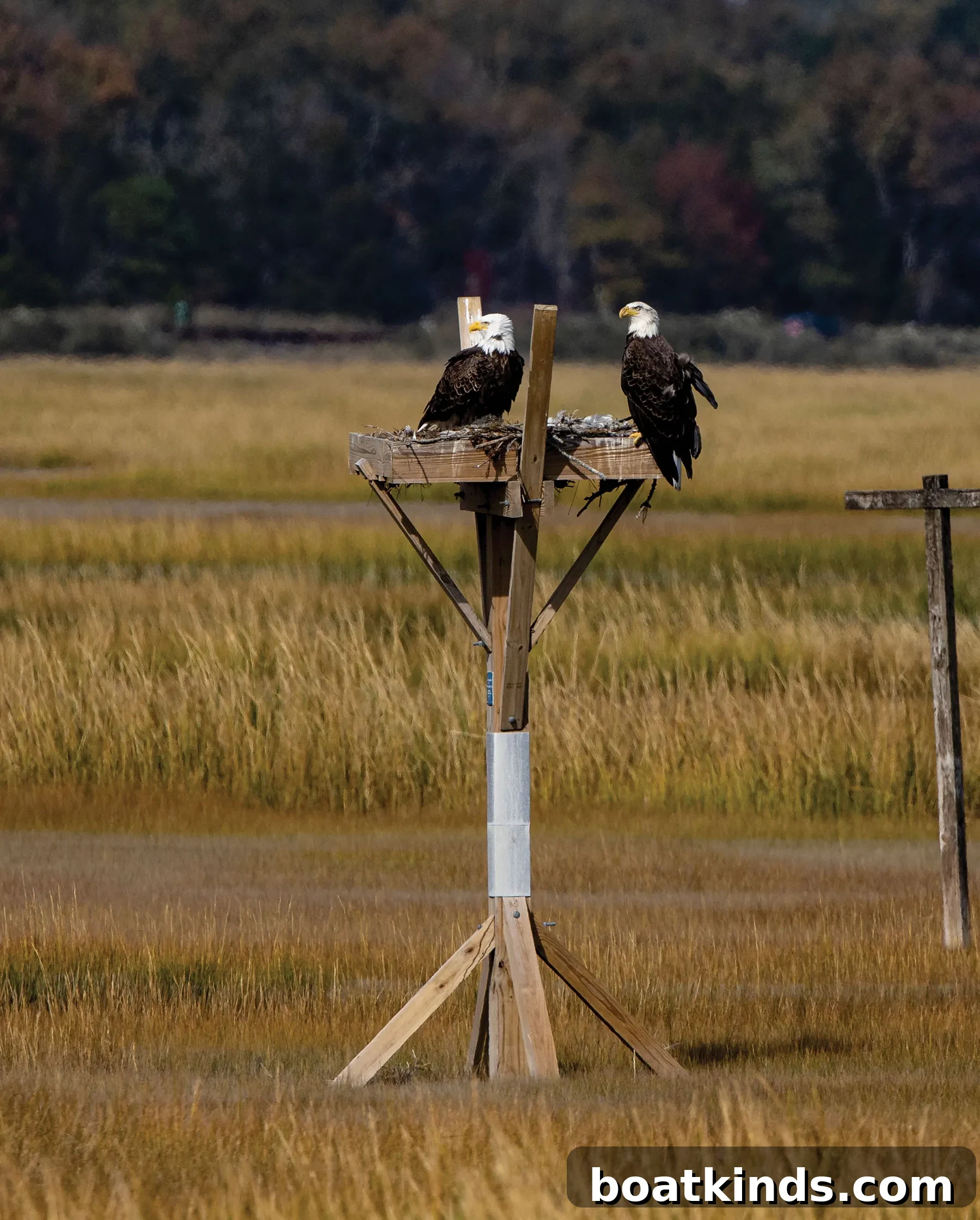
The ICW scenery alternated between attractive wetland and less appealing suburban sprawl: herons and egrets in one frame, rows of identical vinyl-sided houses set low to the water in the next. For lunch, Onne served crackers topped with ham, cheese and salmon—again with a tasteful smear of mayo.
At ICW marker 386 an Albin 36 DC lay high and dry on the right side of the channel. Onne called her skipper on the VHF; the man calmly told us to contact the dredge operator working nearby. After several unanswered calls the dredge operator waved us through. We threaded Snow Goose between a green buoy and the dredge with inches to spare while the depth sounder registered three feet—Snow Goose draws 3’8″. With falling tide ahead, we decided we’d had enough skinny-water gambling for one day.
We tied up at the Yacht Club of Stone Harbor, raided the refrigerator for sausages, cauliflower, cucumbers and mushrooms, and ate Dutch-style—pickled cucumbers with vinegar and salt, lots of butter on the hot items—and called it a night.
The next morning we topped off diesel at Stone Harbor Marina, but when Onne saw the price—$6.28 per gallon—he filled only enough to get us to Cape May with a reserve. “Heel duur,” he muttered—very expensive.
Approaching the last bridge before entering the lock in the Dismal Swamp Canal
Sunrise fishermen
Typical ICW scenery just south of the Dismal Swamp Canal
Tenley unties the tender to head back to Snow Goose from the dinghy dock in Oriental
Sunrise over the Chesapeake City bridge from Snow Goose’s flybridge heading towards the Chesapeake Bay and Annapolis
Pelicans and Cormorants waiting for a meal in the fish traps on the Chesapeake off of Smith Island, Virginia.
The Goose tied up with Soundings executive editor Pim van Hemmen at work
Sunrise from Snow Goose in Chesapeake City, Maryland
Cormorants in take off!
Snow Goose about to go under one of several bridges as she runs down the East River towards NYC
Navigation gear on the flybridge of Snow Goose as she heads south on the East River alongside Manhattan
The red and white navigation mark #NH on Long Island Sound at sunrise
On the way to Cape May we requested three bridge openings. After passing under the Two Mile Bridge, Onne steered to the correct buoy and into the Cape May Canal. Fifteen minutes later we tied up at Utsch’s Marina and filled the tanks at a more reasonable $5.18 per gallon before slipping into a slip.
After a hot shower in one of Utsch’s generous private bathrooms, I returned to find Onne frying eggs—Tenley’s provisioning had been excellent, but two Dutchmen had moved through the eggs and mayo faster than expected. We were out of eggs and running low on mayo, so a resupply was necessary. That afternoon we waited out rain and then went to dinner at the Lobster House, a Cape May institution. Because there were no supermarkets within easy walking distance, we popped into a nearby convenience store for mayo and eggs.
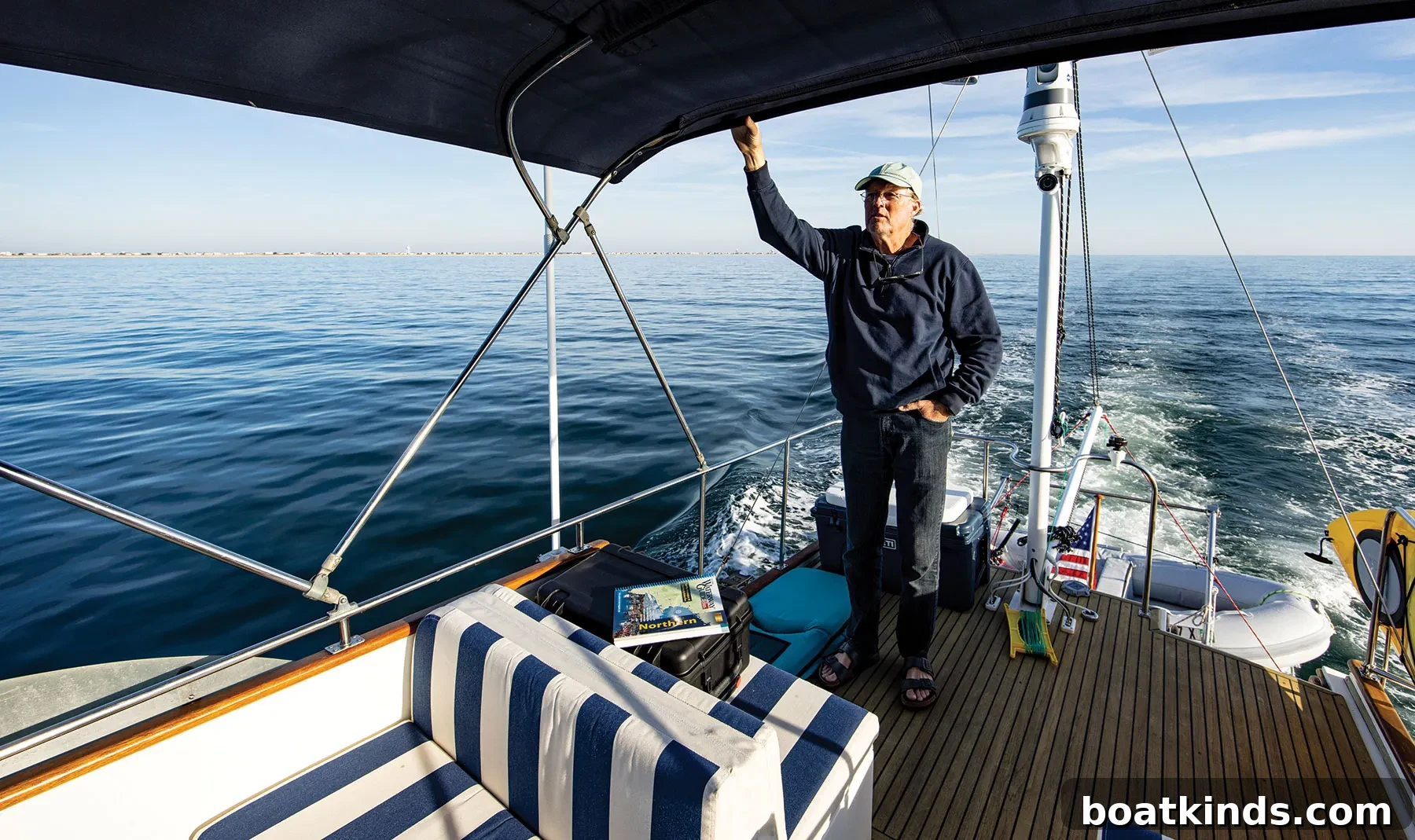
At midnight a forecasted gale arrived briefly and viciously, winds spiking to about 40 knots. The squall screamed through for roughly 40 minutes and then passed as quickly as it had arrived. By morning the marina was calm again, and by 8 a.m. we were back in the Cape May Canal. In Delaware Bay we encountered one- to three-foot seas and about 12 knots of wind on the bow; water occasionally splashed over the bow and we spent some time inside the cabin watching Raymarine sonar reveal schools of fish beneath our keel.
With skies clearing and tidal assistance we pushed up to 8.5–10 knots over ground, though the autopilot began to misbehave and Onne suspected a loose wire. Until we fixed it, we hand-steered. I don’t mind; steering is calming and it kept us involved while the boat moved well with the tide.
Onne repeated the ham, cheese and salmon cracker lunch and we continued to enjoy plentiful mayo. At the C&D Canal entrance we decided to press on to Chesapeake City rather than stop in Delaware City, and we snagged the last open spot at the town dock—another 60-mile day completed.
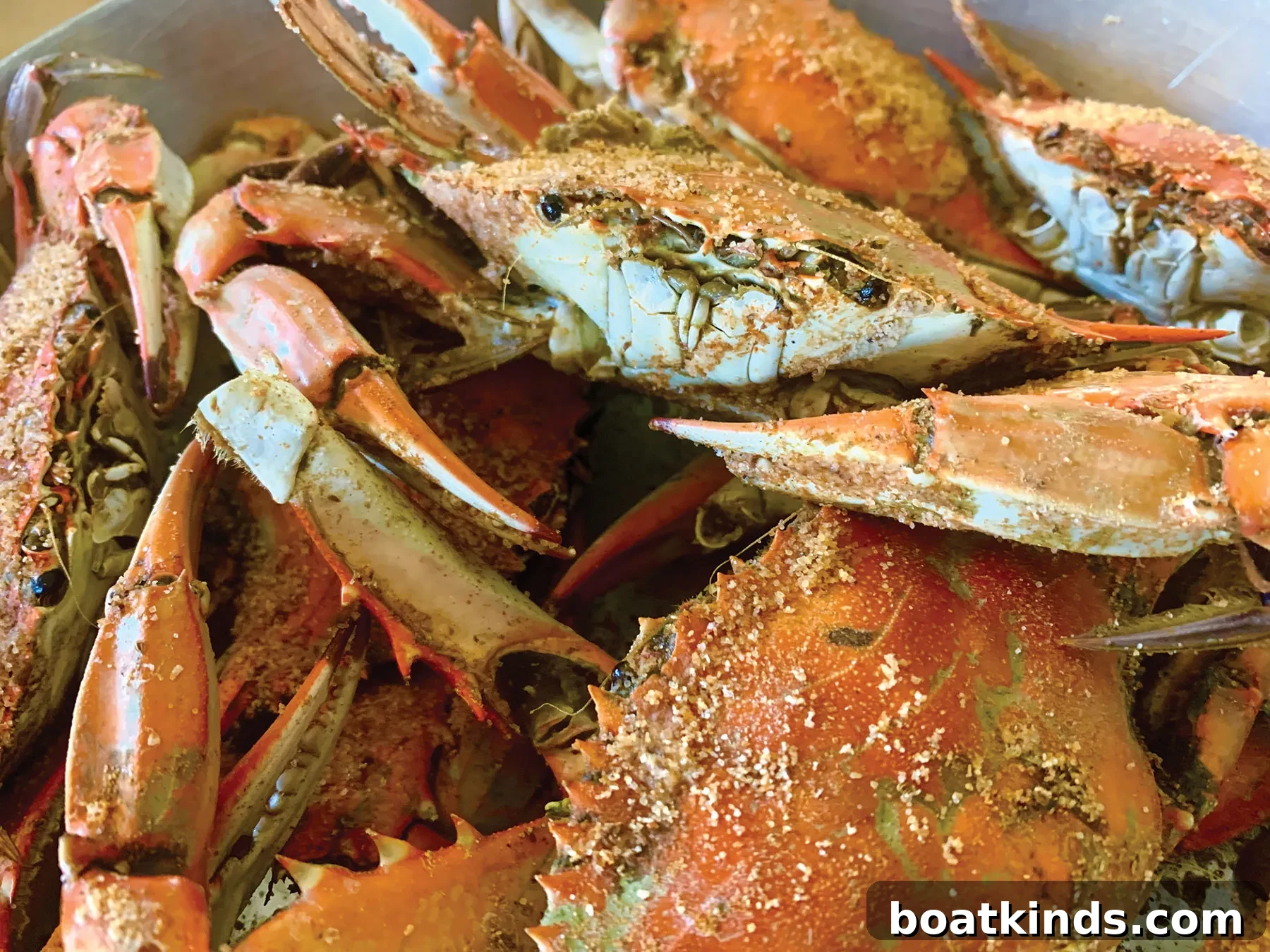
With few grocery options near the dock and Onne’s collapsible bicycles as our transport, we made a quick run to the local Dollar General the next morning. Selection was slim; we amused ourselves and kept provisioning simple. Back in town we honored the Chesapeake with a feast of local crabs and shrimp at the Tap Room, choosing a more modest dozen and supplementing our meal with fries—again with mayo on the side.
After dinner at The Deck and a late stroll to the ice cream shop that had already closed for the night, we spent one more quiet night in Chesapeake City. Before dawn we shoved off into a low fog and made a beeline for the Chesapeake Bay. Onne took photos in the diffused light while I steered. By midday he brought out ham-and-avocado crackers for lunch; it turned out avocado and mayo are a surprisingly good match.
This article was originally published in the January 2023 issue.