
On a seemingly ordinary August day in 2015, John Waldman stood at the edge of Hempstead Harbor on Long Island’s north shore and noticed something unusual in the water. Instead of the familiar blue of Long Island Sound, the surface was broken by a silver flash: menhaden, commonly called bunker, packed in dense schools.
“There was solid bunker from the inside of my harbor out to the middle of the sound,” Waldman recalls. “Acres and acres of them. Fishermen said they’d never seen anything like it.”
A few weeks later a humpback whale, believed to be feeding on those menhaden, swam into Hempstead Harbor and kept coming until it reached only about 15 feet of water. That same season a fisherman aboard a 22-foot boat captured a photo of a humpback breaching nearby—an image that surprised many who’d never expected whales so close to shore.
That fall Waldman drove to the south shore and surf-cast from Jones Beach. He describes a “solid ribbon” of mostly juvenile menhaden—often called peanut bunker—stretching from the shoreline hundreds of feet out, darkening the water for miles with their bodies. Around Rockaway, anglers reported whales surfacing within feet of their vessels while feeding, sometimes startling fishermen as whales rolled and opened their large mouths.
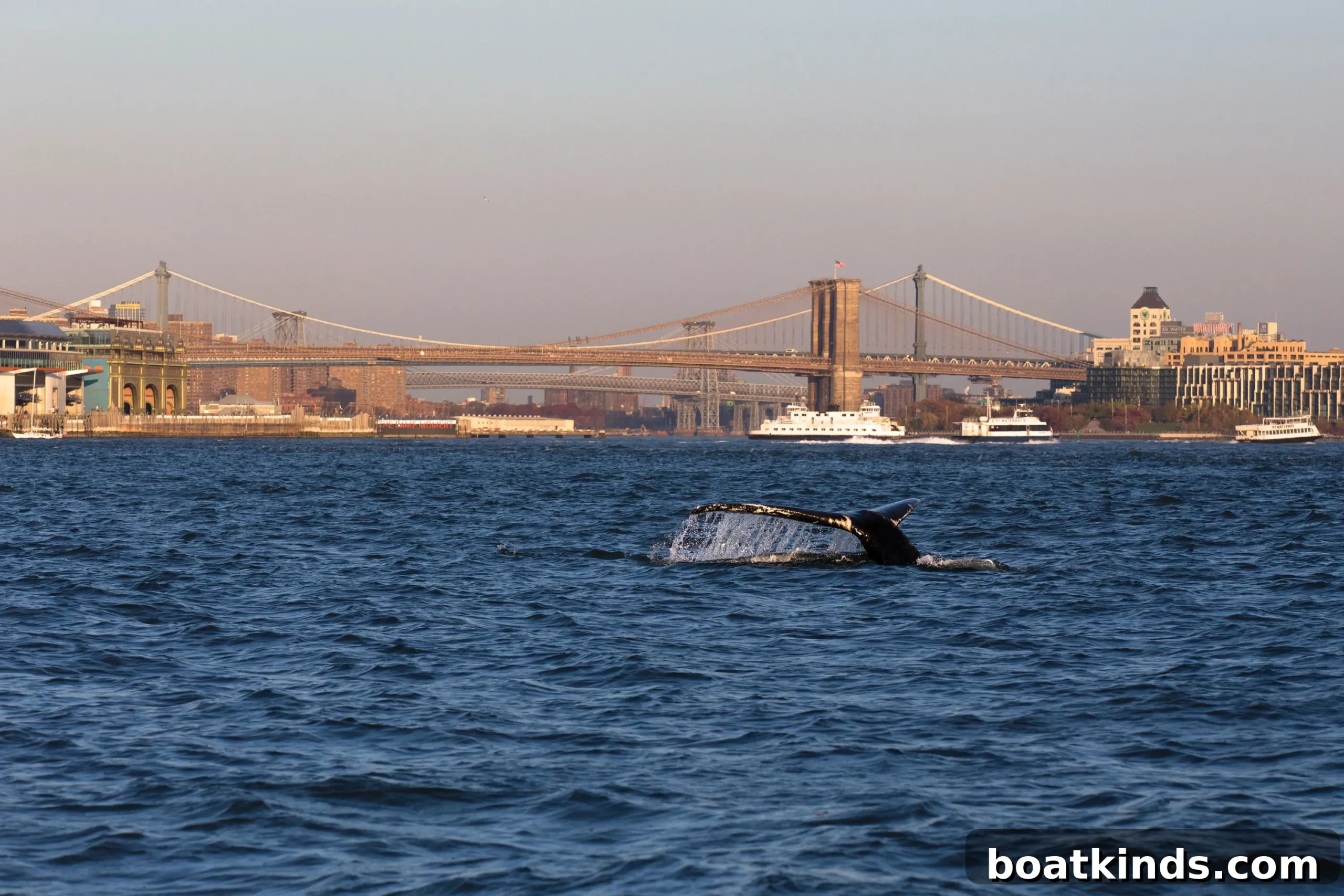
Whether New Yorkers call them menhaden or bunker, the whales treat them as a valuable food source. Waldman, an aquatic conservation biologist and professor at Queens College, and several other scientists believe the surge in inshore menhaden has drawn more whales closer to New York’s shores, producing the unusually frequent sightings around the city.
Whales in the region are not unheard of—humpback, minke, sei, fin, right and sperm whales have all been observed in waters near New York, and there are acoustic reports of blue whales farther offshore, according to Rob DiGiovanni, chief scientist with the Atlantic Marine Conservation Society. What appears to be new is the growing number of inshore sightings and strandings, prompting questions about whether the Western Atlantic whale population is increasing, changing migration paths, or simply returning to historical feeding grounds.
Local boaters and researchers alike have noticed the change. Gotham Whales reported an exponential increase in whales since 2011, and fishery groups noted strong menhaden numbers in 2015. In recent years whales have been seen in places once thought unlikely, including a humpback photographed in the Hudson River on Manhattan’s West Side—an event that led to numerous calls to authorities and an alert to mariners.
Experts point to several possible causes. The Marine Mammal Protection Act of 1972, which banned hunting and harassment of marine mammals, likely helped populations recover over decades. Improvements from the Clean Water Act may have boosted plankton, providing more food for menhaden and encouraging baitfish to thrive closer to shore. Conservation efforts and fisheries management that reduced commercial overharvest of menhaden may also have contributed to larger schools available as whale prey.
Scientists are still working to separate the influences of population recovery, behavioral shifts, and environmental change. DiGiovanni and colleagues conduct aerial surveys and collaborate with agencies like the National Oceanic and Atmospheric Administration to measure how many whales are present and where they travel. They want to know whether the increase near New York reflects more animals overall, shifts away from traditional areas like Georges Bank, or simply changes in where whales choose to stop and feed.
Human impacts that once pushed whales away—disease, contaminated food, harmful algal blooms, ship strikes, fishing gear entanglements, marine debris, and underwater noise—may have lessened in some ways. One small study after the Sept. 11, 2001 attacks found lowered stress hormones in whales when shipping traffic temporarily declined, suggesting reduced noise can improve conditions for mating and communication.
Regardless of the cause, rescues and strandings have become more common in recent years. “In the 1990s, we’d have a whale stranding maybe once a year,” DiGiovanni says. “Now we have multiple strandings a year.” His organization has responded to several live and dead whale incidents in recent seasons.
While ample menhaden appear to be luring whales inshore, whale movements are influenced by multiple needs: feeding, mating, and migration. DiGiovanni compares whale travel routes to a highway with rest areas that grow more inviting over time; better nearshore habitats mean whales may linger longer, increasing the chance of human encounters.
Waldman suggests the menhaden boom in 2015 likely resulted from favorable environmental conditions that year—conditions that allowed many eggs and juveniles to survive. Fish lay countless eggs that receive no parental care, so a year with ideal temperature, food and currents can produce a very large cohort. He emphasizes there’s no single human cause to claim credit for the spike in menhaden.
It’s also possible today’s scenes are a return to a long-standing natural pattern. Historical records describe whales migrating and feeding along Long Island’s shore in numbers that astonished early observers. The lack of sightings through the 20th century may owe more to heavy fishing, pollution and other human disturbances than to permanent absence. As habitats improve, inshore whale visits may feel novel to modern urban residents but could be closer to the historical norm.
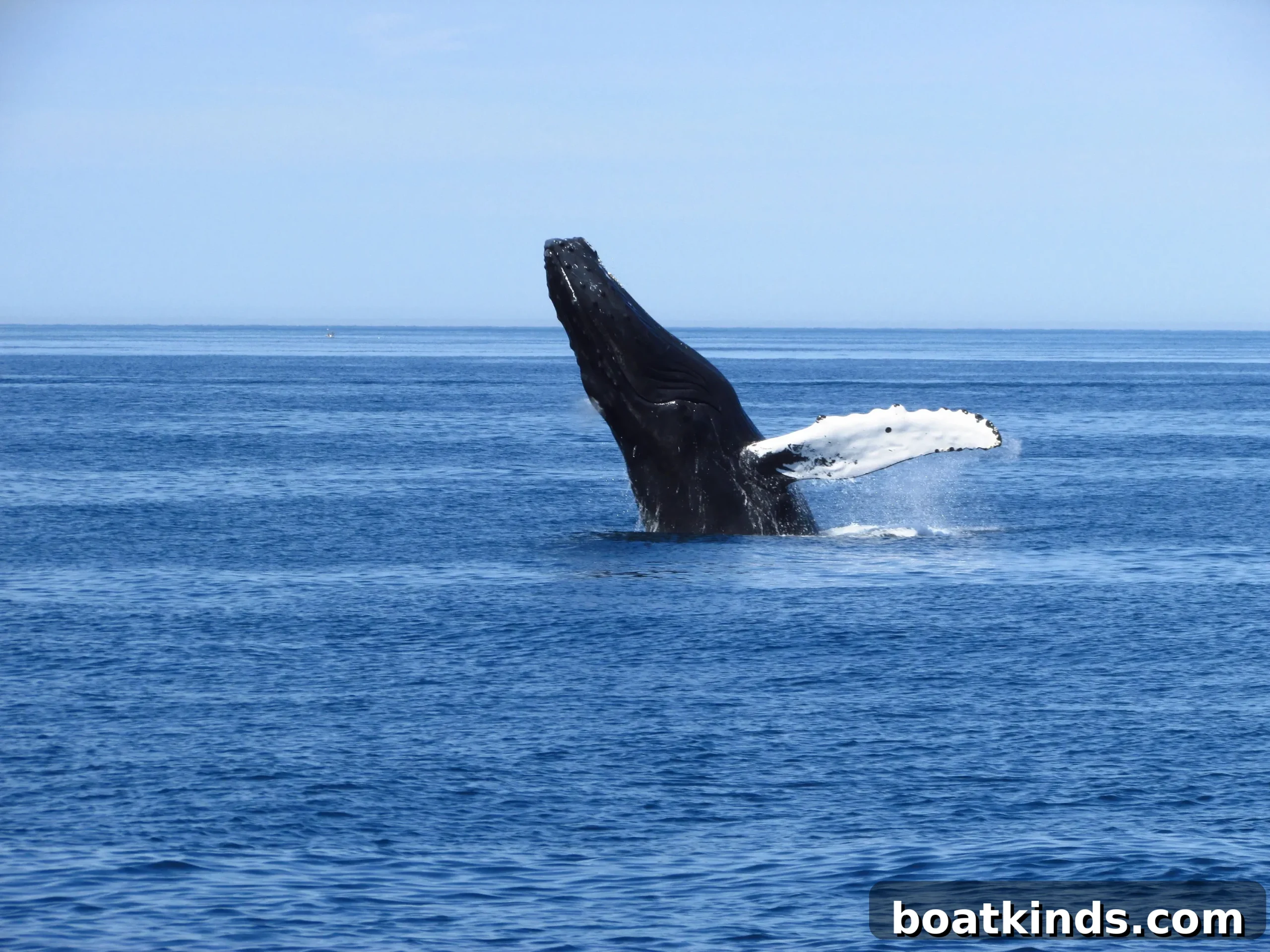
What To Do When You Spot A Whale
Boaters play an important role in whale research and conservation. If you see a whale, the most important step is to report the sighting with accurate location and environmental details. Rob DiGiovanni recommends recording GPS coordinates, water depth, and temperature if possible—data that are valuable to scientists tracking whale distribution.
When you encounter a whale, give it space and avoid disrupting its behavior. Slow down and stop if safe to do so, observe where the whale is heading, and keep at least 50 yards away. Sudden maneuvers can alter a whale’s behavior and increase risk to both the animal and nearby vessels.
To report a whale sighting with AMCS, visit http://amseas.org/report-a-sighting. To report an animal in distress, call the stranding hotline at (631) 369-9829.
VIDEO: Whales have been coming ever closer to shore—observe from a safe distance and follow recommended guidelines to protect both yourself and the animals.
This article originally appeared in the September 2017 issue.