
Bruce Kessler, the Loss of Zopilote, and the Hidden Danger of Seamounts
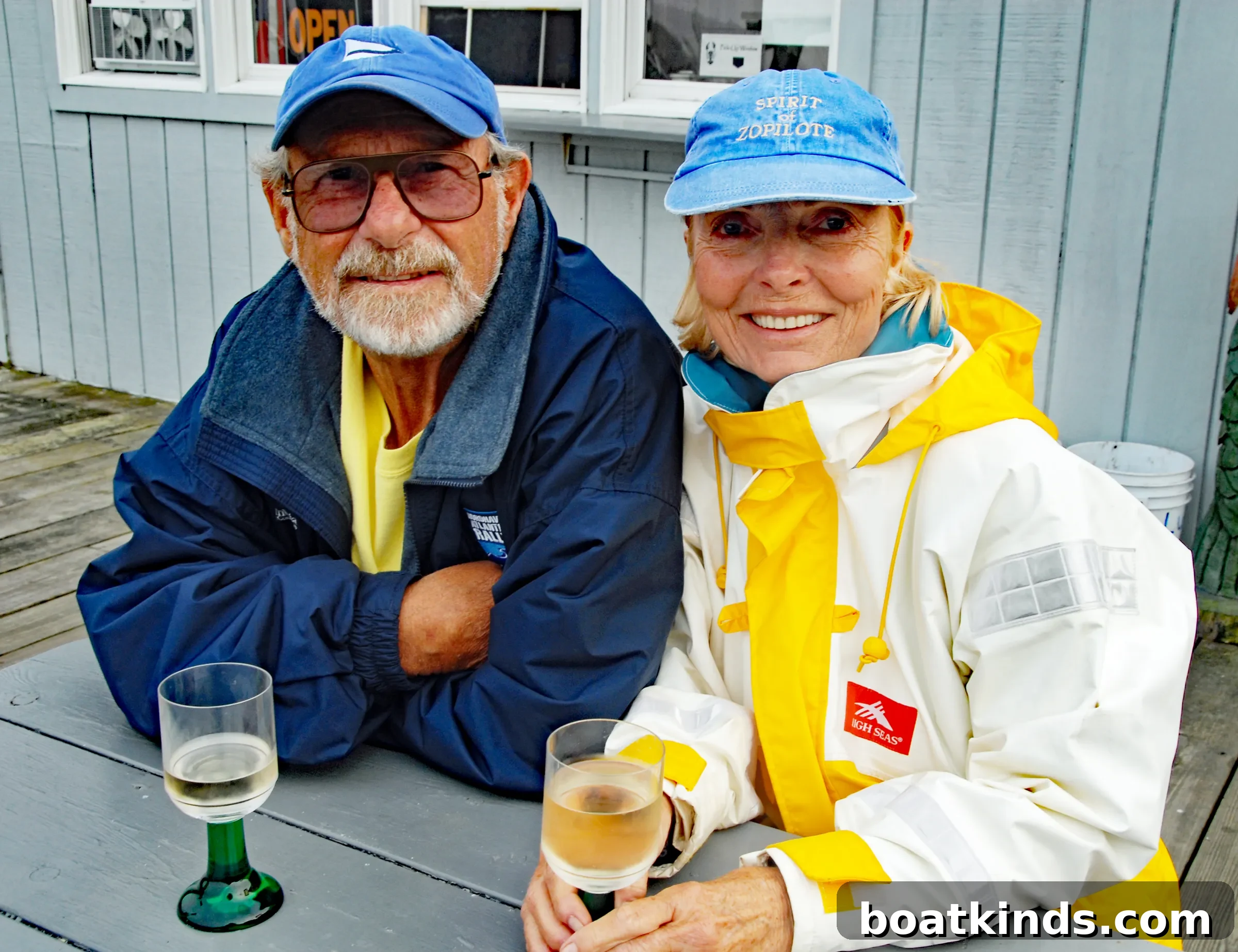
Tributes continue to arrive for offshore cruiser Bruce Kessler, who died in April at age 88. Kessler was a pioneering figure among powerboat cruisers, one of the earliest to circumnavigate by power and a major influence on the modern community of offshore power cruisers. His 70-foot Delta, Zopilote, was itself well known—and its dramatic sinking remains a reminder of how treacherous uncharted underwater features can be, even for experienced mariners.
The vessel sank in 1994 after striking what has often been described as an underwater seamount off Alaska. Kessler and his four crewmembers launched their life raft in time; there were no injuries and no loss of life. But Zopilote went down within minutes, a stark illustration of how quickly an encounter with a submerged peak can turn catastrophic.
What Is a Seamount?
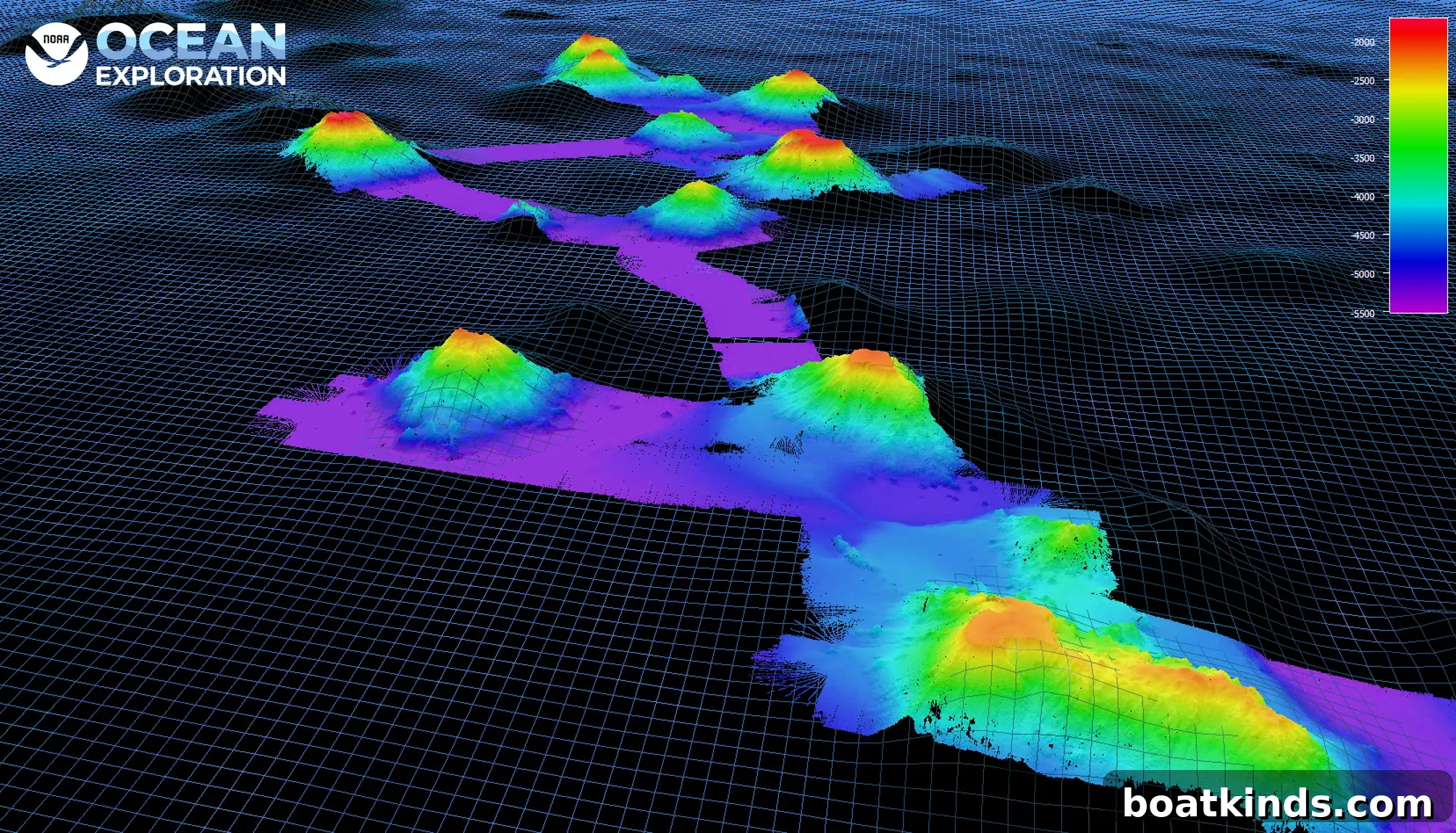
Seamounts are a specific type of underwater hazard: generally extinct volcanoes that rise from the seafloor. When a volcanic peak stays below the surface it is categorized as a seamount; if it grows high enough to break the surface, it becomes a volcanic island. By some measures, the tallest mountain on Earth is actually a seamount—Hawaii’s Mauna Kea reaches more than 30,000 feet from the seafloor, with roughly 18,000 feet rising above the ocean bottom to the surface.
Seamounts are also biologically important. Their steep slopes and the currents that flow around them cause nutrient upwelling that attracts fish and marine life, which is why anglers and local communities often know about productive seamounts. For example, off the Pacific coast of Costa Rica there is a seasonal seamount fishery tied to upwelling that concentrates marine life from May through November.
We Still Don’t Know the Ocean Floor Well Enough
Despite growing survey efforts, much of the global seafloor remains unmapped in detail. Recent discoveries by research teams highlight how much remains unknown: in February, an expedition from the Schmidt Ocean Institute discovered four previously uncharted seamounts—one more than a mile and a half tall—while transiting between Golfito, Costa Rica, and Valparaiso, Chile. Only months earlier the same team found a seamount over 5,200 feet tall in international waters off Guatemala.
Those finds underline the scale of the mapping challenge. “These incredible discoveries by Schmidt Ocean Institute underscore the importance of a complete map of the seabed in our quest for understanding Earth’s final frontier,” said Jamie McMichael-Phillips, project director of Seabed 2030, the international effort to accelerate ocean mapping. With approximately 75 percent of the ocean still unmapped at high resolution, the potential for new discoveries—and the need for better navigation data—remains large.
Peter Auster, senior research scientist at Mystic Aquarium and research professor emeritus of marine sciences at UConn, notes that many submerged features have always posed a risk. “As long as there have been boats, there have been crashes into submerged features, whether they’re seamounts or just part of the continent that are out of sight,” he says. He adds that by using satellite measurements of sea-surface height and gravity anomalies, scientists can infer where large masses beneath the water exist—identifying the likely presence of seamounts—but that detailed, boat-safe charts are still lacking in many regions.
Practical Risks to Cruisers—and Tools to Reduce Them
For recreational cruisers, the seamount threat is real but relatively rare compared with other causes of sinking or serious incidents. Auster points out that mechanical failures, flooding, and wildlife encounters (for example with whales) are frequently greater immediate risks than striking a submerged volcanic peak. Still, when charts are unreliable—outside main transit lanes, around small islands and lagoons, or in poorly surveyed regions—the chance of encountering an uncharted obstruction rises.
That uncertainty is driving an increasing number of offshore powerboat owners to adopt advanced detection equipment that until recently was found mainly on superyachts, research vessels, or government ships. Matthew Zimmerman, CEO of FarSounder, says his company’s forward-looking sonar systems are now being installed on owner-operator cruisers, including vessels as small as 58 feet—Kadey-Krogens, Nordhavns, and other trawler-style yachts.
FarSounder’s Argos 350 system can detect objects in the water column more than 1,100 feet ahead, and it scans to port and starboard as well as below the hull. It is rated for use at speeds up to 18 knots, providing a useful early-warning capability for many cruising yachts that typically operate at slower trawler speeds. Zimmerman emphasizes the added peace of mind such systems provide in areas with unreliable charts—places like parts of the Bahamas or remote New England coasts—where seafloor detail is often incomplete.
Balance Vigilance with Perspective
While improved sonar and mapping initiatives make the ocean safer, seasoned experts advise keeping perspective. Seamount strikes are uncommon relative to other maritime hazards. Good seamanship, regular vessel maintenance, reliable bilge systems, careful watchkeeping, and awareness of marine mammals and weather remain primary safeguards for cruisers. At the same time, expanded mapping efforts and technologies like forward-looking sonar continue to reduce the unknowns beneath the waterline.
This article was originally published in the July 2024 issue.