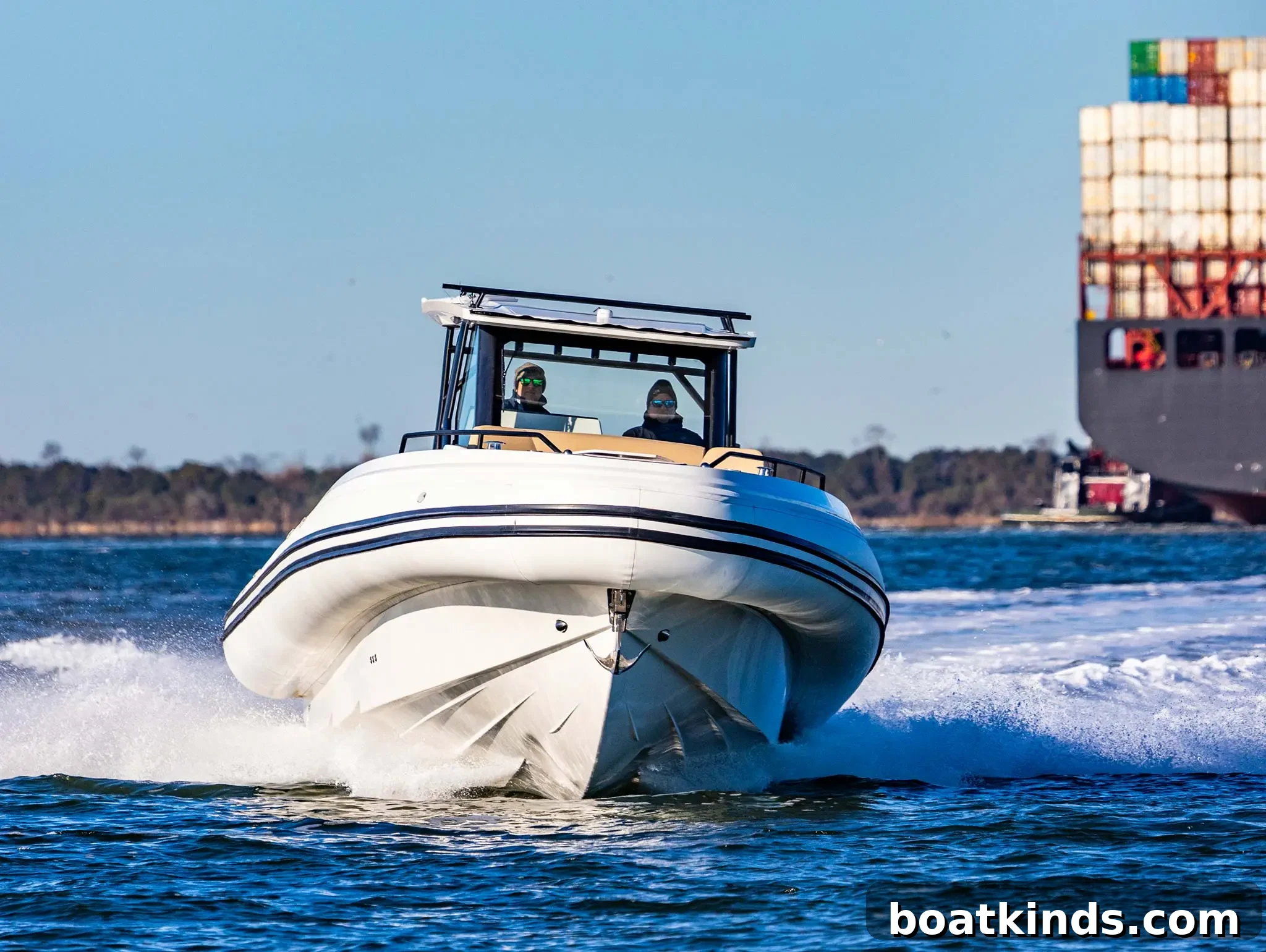
While zipping across Charleston Harbor aboard the Zodiac X10CC, I couldn’t help thinking Jacques Cousteau never had it this good.
Cousteau traveled the world’s most beautiful dive spots, but he never steered a Zodiac like this. Zodiac Nautic’s newest model, available in the U.S. in January 2025, is a different breed—big, powerful and distinctly modern. It bears Zodiac DNA but departs from the smaller inflatables most of us picture when we hear the name.
I first encountered the X10CC at the 2024 Fort Lauderdale International Boat Show, where Zodiac Nautic Regional Sales Manager Ryan Jaco and Zodiac Nautic COO Tim March walked me through the boat. I liked what I saw, but the 33-foot model—the largest Zodiac ever built—was sitting on a trailer and I wanted to drive it.
Full disclosure: I own a Zodiac and am a longtime Cousteau fan. I met him once and, when my wife insisted on adopting two cats, I agreed on the condition we name them Jacques and Calypso. Cousteau’s shows introduced me to Zodiacs, and for 15 years I’ve had a 16-foot, 5-inch Zodiac Pro 500 with a 50-hp Yamaha outboard.
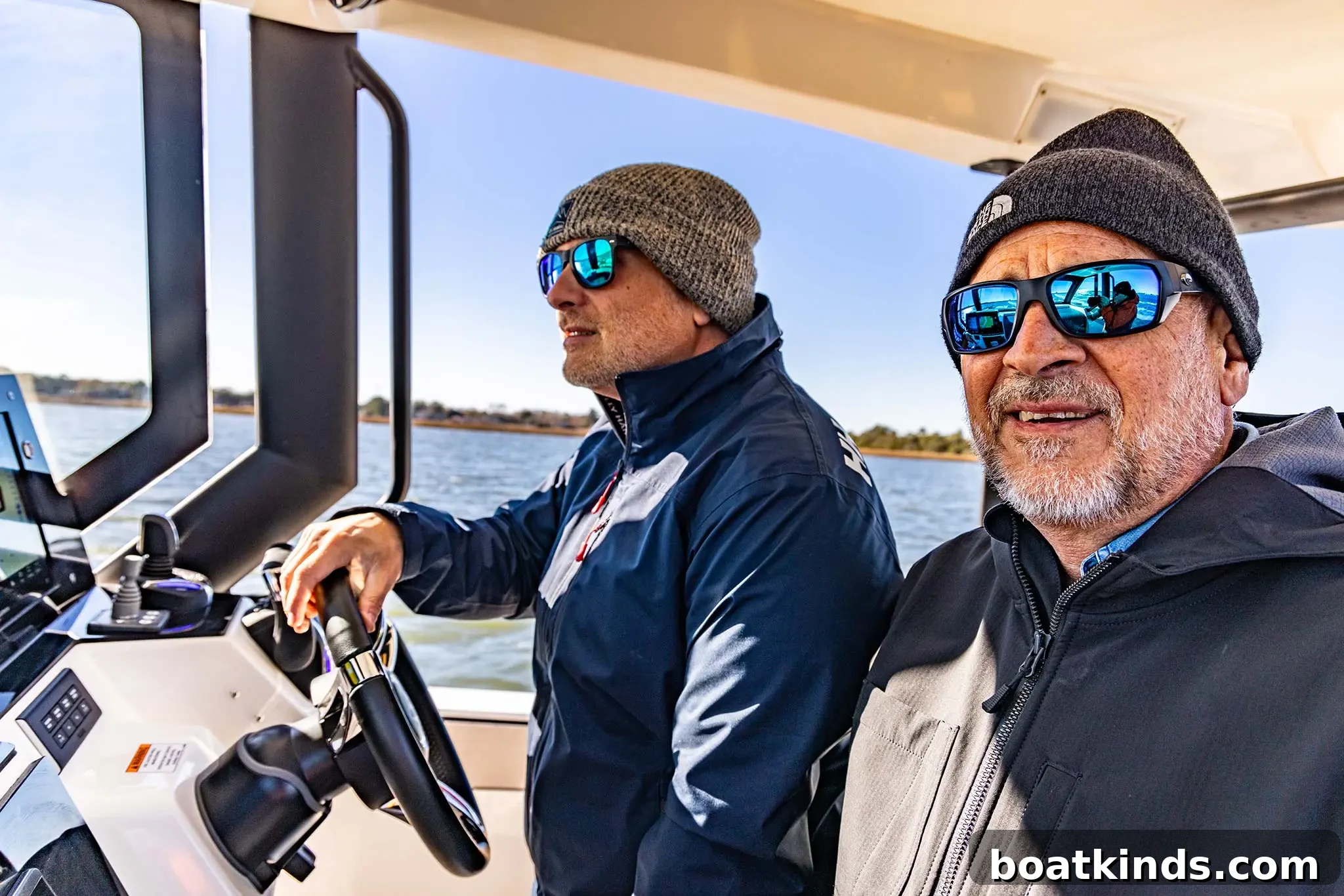
The X10CC, however, is twice the length of my RIB and carries nearly 20 times the horsepower. To give me a drive, Tim offered to trailer the U.S. demonstrator from Zodiac’s Summerville base to a nearby ramp—if I could make it to Charleston before January 9, when the first U.S. hull was scheduled to head to the Great Lakes.
Two months later, with a polar vortex keeping Charleston nights below freezing, Tim, Ryan and Zodiac’s Technical Director Alan Brocious met me and launched the X10CC on the Ashley River.
The X10CC isn’t the flat-bottomed, tiller-steered Zodiac of Cousteau’s era. It’s technically an inflatable RIB, but it blends that heritage with an American center-console layout. Instead of round tubes, the X10CC features an inflatable D-collar—similar in profile to the Coast Guard’s Defender models but fully inflatable. That D-collar frees up interior beam, improving usable deck space while retaining the benefits of an inflatable hull: lighter weight, added buoyancy, better fuel efficiency, increased carrying capacity and enhanced safety. Zodiac rates the X10CC for 20 passengers, where a comparable hard-sided boat might carry just 10.
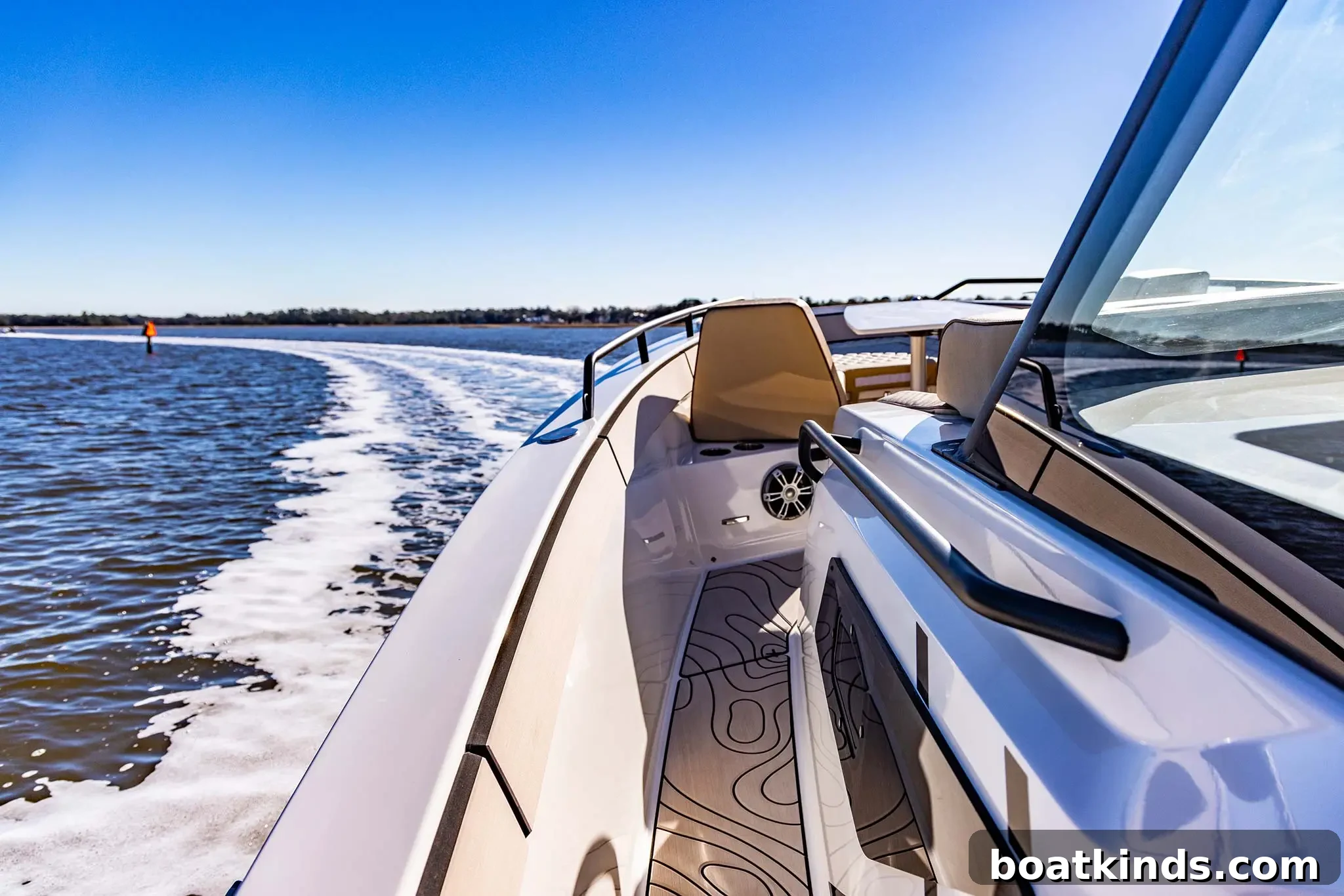
Purpose-built for American boaters, the X10CC is a center console with walkaround decks, large convertible social areas fore and aft, and a bow that converts into a sun pad. Options include twin 450-hp V8 XTO Yamahas for a wide-open-throttle (WOT) speed near 60 knots, a forward cabin with V-berth and head, tall bulwarks for safety, helm seating for three, and a cockpit bar/galley aft of the helm.
Its configurability is a major selling point: owners can set the cockpit up for fishing by swapping the galley for a fish station, converting stern seating to a large livewell and fitting a rocket launcher to the T-top. The ski mast also accepts rod holders. Anglers won’t have to worry much about punctures; the Orca Hypalon tubes are robust, designed to stabilize the boat in tight turns, add flotation in extreme conditions and protect the hull. Even if multiple chambers were compromised, the X10CC would remain buoyant and operable.
Available upgrades include EVA decking, a roof rack, forward and aft Biminis supported by carbon masts, a bow thruster, a Fusion entertainment package, underwater lighting, twin Garmin multifunction displays, radar, stern platform extensions, and climate control.
Zodiac tapped Finnish naval architect Jarkko Jämsén of Navia for the hull design; he brought experience from high-performance brands such as Axopar, Paragon and XO. Jämsén created the twin-stepped hull, while Zodiac’s Summerville team contributed heavily to the deck layout and features to suit North American tastes. Tim pointed out that the X10CC’s forward V-berth cabin is a differentiator among many 33-foot center consoles.
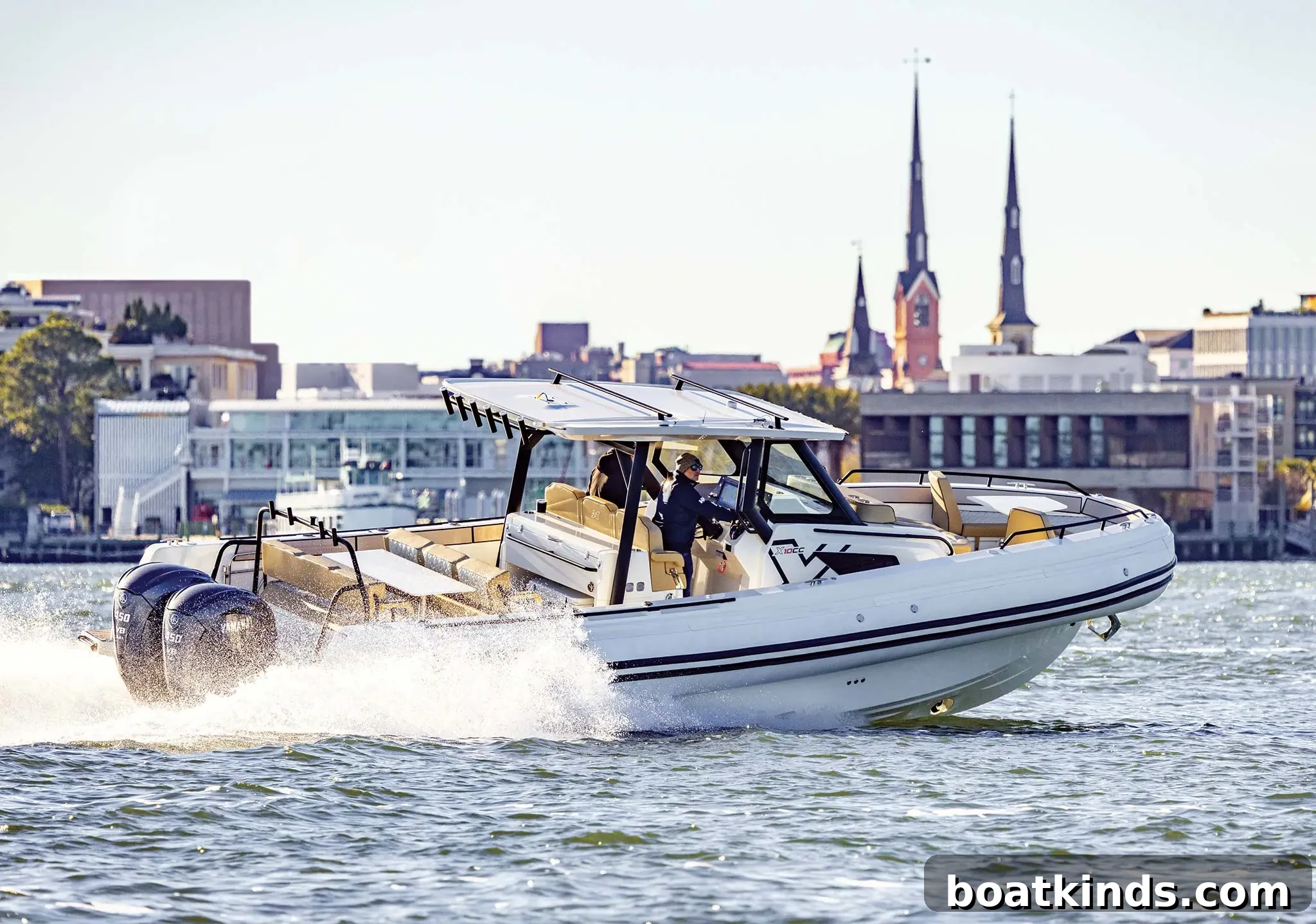
The American influence is obvious: the X10CC is versatile for towing skiers or tubers, fast point-to-point runs, cocktail cruising, dock-and-dine outings, overnights and beaching. It’s equally at home on a family day cruise or a serious fishing trip—load the bait, stow the rods and go.
Historically, Zodiac dominated the inflatable market—thanks in part to early long-distance crossings like Alain Bombard’s 1952 Atlantic drift—and later to Cousteau’s TV exposure. By the turn of the century Zodiac was synonymous with inflatables. But the brand suffered after private equity changes and missteps between 2006 and 2015, including quality issues and offshored production choices that damaged its reputation and led to receivership in 2015.
A trio of French investors led by Florent Battistella rescued the company and committed to rebuilding it as an industrial project rather than a nostalgic venture. They brought work back to France and Tunisia, overhauled core ranges like the Pro, Open and Medline, and have begun expanding with center-console models such as the X10CC—an effort aimed squarely at the U.S. market.
At the Charleston ramp, Alan and Tim made launching look effortless. With Tim at the helm, the X10CC slid off the trailer and accelerated down the Ashley River. At 50 knots a gust ripped my wool cap from my head; it tumbled to the stern two feet away. With the stern gate open and the wind pushing hard, moving aft felt precarious, so I returned to the console on hands and knees before hiking back up to my seat against a brisk headwind.
We passed under bridges into the low-wake zone by Safe Harbor Charleston City Marina. Despite the chilly low-40s air, other boats were out, including tour vessels and a J/Boat from Veterans on Deck. Dolphins and brown pelicans appeared as we approached Fort Sumter and watched container ships move to and from the ocean. Tim put the X10CC alongside an outbound containership and later crossed a bow wave at speed; even loaded to about 11,500 pounds, the boat handled the wave without harsh slamming.
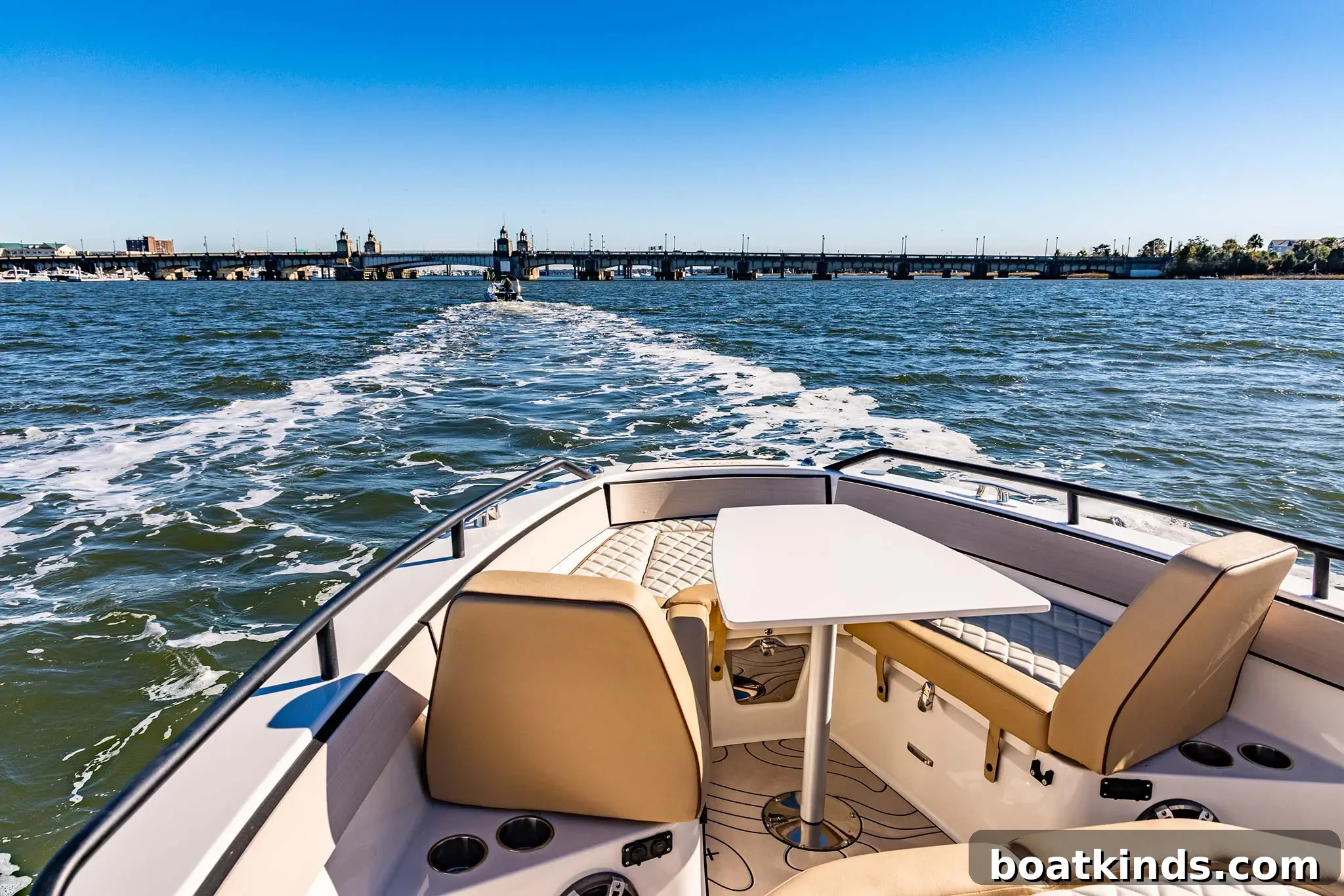
We pushed toward Patriots Point and the USS Yorktown and then ran under the cable-stayed Ravenel Bridge. A Charleston police boat briefly intercepted us after a maritime center call; the officers were courteous and let us continue. After more than two hours on the water, Tim—going shoeless to keep the boat clean—complained of cold feet. In open water, I took the helm briefly and watched the GPS climb through 50 to 55 knots; Tim later nudged the X10CC to 57 knots against the tide. Under optimal conditions, the twin 450-hp Yamahas should get the boat closer to its advertised 60-knot WOT.
Back at the ramp, as Tim re-trailered the boat, a local who’d just launched an old speedboat watched the 33-footer pass between two Spanish-moss-draped oaks and observed, “Wow, Zodiac’s come a long way.”
LOA: 32’9’’
Beam: 12’6’’
Draft: 2’6”
Weight (w/o engines): 7,716 lbs.
Fuel: 200 gals.
Power: (2) 350- or 450-hp Yamahas; 350- or 400-hp Mercurys
March 2025