Race to Alaska (R2AK): The Ultimate Human- and Wind-Powered Endurance Challenge
The Race to Alaska, known widely as R2AK, is an endurance event that calls to sailors, paddlers and adventurers who seek a raw, self-reliant challenge. The basic rules are intentionally simple: teams must travel without the aid of an engine, rely on human power or sail, and navigate from Port Townsend, Washington, to Ketchikan, Alaska. That simplicity forces competitors to focus on seamanship, navigation, logistics and endurance rather than on technology or motor power.
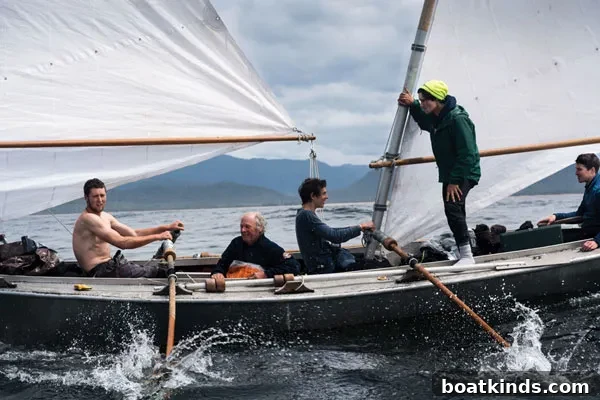
R2AK attracts an extraordinary range of craft. Past competitors have launched from paddleboards and sea kayaks to traditional rowboats, and both monohull and multihull sailboats. The variety of vessels creates a striking dynamic on the course: ultra-light human-powered craft may outpace larger boats in certain conditions, while well-sailed yachts can make steady, long-distance gains when the wind cooperates. The mix of disciplines—paddling, rowing and sailing—makes R2AK unique among long-distance races.
Why R2AK Is Different
What sets R2AK apart is not only its distance but the unpredictable environment. The route threads through remote coastal waters with strong tidal currents, complex channels and rapidly changing weather. Racers face sudden storm squalls, dense fog, and the constant navigational challenge of avoiding commercial shipping lanes. Wildlife encounters are part of the experience: orcas and other marine mammals may be nearby, and the shoreline can be home to bears and other wildlife. Competitors must plan for safety, wildlife awareness and self-sufficiency in places where assistance is not immediately available.
Because engines are prohibited, teams must be exceptionally careful about planning supplies, sailhandling, rest strategies and repairs. Mechanical failures that might be easily resolved by a motorized vessel become critical concerns when you depend only on human effort and wind. The requirement to be self-reliant turns R2AK into a test of resourcefulness as much as speed.
Logistics, Safety and Strategy
Successful R2AK teams combine careful route planning with flexible tactics. Understanding tides, reading weather forecasts, and knowing local currents can yield significant advantages. Teams work to balance speed with safety—pushing hard when conditions allow, while avoiding unnecessary risk in heavy weather or narrow channels. Crew composition matters: endurance, navigation skill, mechanical aptitude and the ability to work under sleep deprivation are all valuable. Some teams favor small, lightweight craft to maximize speed under human power; others choose larger sailboats for greater comfort and the ability to carry more provisions.
Race organizers emphasize safety and self-sufficiency. Mandatory safety checks, required equipment lists and briefing sessions help ensure crews are prepared. Yet once competitors leave port, they are largely on their own. That reality elevates the importance of prior experience in coastal navigation, first aid, and emergency planning.
Community and Culture
R2AK has developed a distinctive culture that blends fierce competition with camaraderie and creativity. Some entries are highly serious, focused on winning outright, while others are built for the adventure and the story—themed boats, quirky crew names and creative home-built vessels are part of the event’s charm. The race attracts seasoned sailors and novice adventurers alike, all drawn by the combination of remote wilderness, community spirit and the raw challenge of getting to Alaska without an engine.
The Northwest Maritime Center in Port Townsend has served as a hub for the race, supporting organizers, providing staging space and helping build a community around the event. Local chapters of sailors, boatbuilders and volunteers contribute to the race’s logistics and safety culture.
Memorable Stories
R2AK produces memorable human stories as much as it produces dramatic nautical action. One notable example involved a team of four high school friends accompanied by a patient father, who together campaigned a 25-foot home-built boat. Their effort highlighted the DIY spirit that often defines the race: careful preparation, creative problem solving and teamwork are as important as raw speed. Coverage of such teams appears regularly in regional boating publications and brings attention to the personal journeys behind each entry.
For sailors, paddlers and adventure seekers considering R2AK, the race offers an unparalleled test of endurance, navigation and self-reliance. It rewards those willing to accept logistical complexity and environmental risk in exchange for a rare and intense maritime experience.