
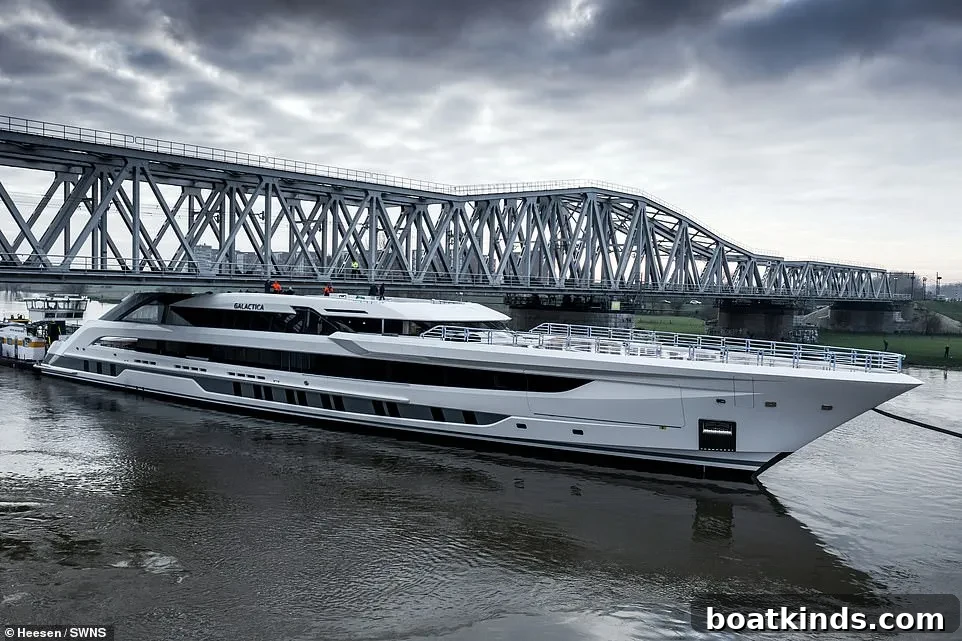
Heesen Navigates New 265-Foot Superyacht Galactica Through Dutch Waterways
The Netherlands is home to many prominent superyacht shipyards, some situated well inland. Building yachts far from open sea presents a unique set of logistical challenges when it comes time to move a newly completed vessel to saltwater. Earlier this month one of the country’s best-known builders, Heesen, began moving its latest creation, the 265-foot Galactica, toward the sea. The operation highlighted the precision planning and engineering required to transfer a large yacht through a network of low bridges, locks and narrow canals.
Moving a long, tall yacht from an inland yard into open water demands careful coordination with tides, water levels and local authorities. In this instance, Heesen timed the transit to coincide with a favorable water level so the yacht could pass beneath several bridges with only inches to spare. Arranging that margin of clearance is not left to chance: yards and contractors plan months in advance, monitoring weather and river conditions, and carrying out detailed surveys of the route.
To verify clearances and ensure a safe transit, the yard employed laser surveying equipment to measure the height of spans and the vessel’s superstructure. Laser measurement provides accurate, real-time data about vertical clearances and helps planners determine the exact tidal window when the yacht can pass. Using lasers reduces uncertainty and allows teams to confirm whether a vessel will clear bridges by a safe margin without relying solely on theoretical calculations.
Beyond lasers, moving a superyacht inland typically involves a range of engineering and operational measures: temporary removal or adjustment of rooftop fittings, precise ballast calculations to control the yacht’s draft and trim, coordination with tugboats, and communication with municipal authorities and bridge operators. Each of these elements must be sequenced carefully to avoid damage to the vessel or infrastructure and to minimize disruption to local waterways and traffic.
Heesen is experienced in these kinds of complex moves and has developed procedures to manage them safely. The company’s work on this transit illustrates how modern shipbuilders combine advanced technology, detailed surveys and meticulous scheduling to move large yachts from inland production halls to the open sea. The tight clearances under some bridges underscore how constrained parts of the Dutch water system can be and why comprehensive route planning is essential for inland-built superyachts.
The tight passage of Galactica through the Dutch water system attracted media attention, reflecting public interest in the engineering feats behind large yacht deliveries. Reports noted the narrow margins under certain bridges and described how the yacht’s designers and shipyard teams managed the transfer. Coverage praised the technical skill and operational planning that made the transit possible without incident.
For shipowners and builders, successfully navigating a large yacht from an inland yard to the sea is both a logistical achievement and a culmination of the build process. It requires collaboration among naval architects, shipyard engineers, surveyors and local authorities. When everything lines up—accurate measurements, predictable water levels and coordinated operations—a complex move becomes a demonstration of professional expertise and attention to detail.
While such transits are challenging, they are now a routine part of yacht construction in regions with extensive inland waterways. Shipyards like Heesen have refined their processes over many years, blending traditional seamanship with modern measurement tools to ensure safe, efficient deliveries. The move of Galactica is a reminder that behind every newly launched superyacht lies a careful choreography of planning, engineering and execution that makes the final voyage to open water possible.
Readers interested in the full sequence of events and detailed photographs can find additional coverage in recent news reports from the UK press, which followed the yacht’s multi-week journey through the Dutch system and highlighted the narrow clearances and careful planning involved.