
A successful one-design racing class depends on a boat that fits local waters, is reasonably priced to build and maintain, and—most importantly—is fun and competitive to sail. The Wianno Senior meets all of these criteria. A 104-year-old gaff-rigged sloop with timeless lines, it combines grace with performance and has become one of the longest-lived one-design classes in American yachting history.
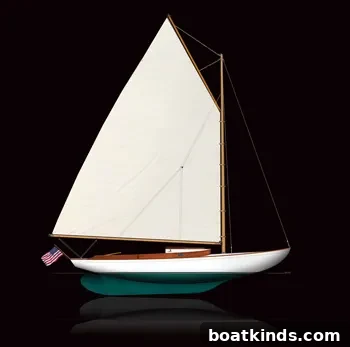
At 25 feet overall and just under 18 feet on the waterline, the Wianno Senior strikes a balance between manageable size and capable sea-keeping. Its long keel conceals a centerboard that adjusts the draft from under 3 feet to nearly 6 feet, allowing the boat to perform well in both shallow bays and deeper offshore breezes. That variable draft, combined with around 1,200 pounds of ballast, helps the hull carry a generous 366 square feet of sail while staying stable and controllable for a crew of four.
The cockpit layout is straightforward and practical for racing, with space to handle sail trim and strategy without crowding. Below decks there is a simple cabin area used primarily for sail stowage and shelter, reflecting the Senior’s roots as a racing dayboat rather than a cruising yacht. At roughly 4,100 pounds displacement, the hull was engineered to handle a wide range of conditions—light airs where nimbleness matters and heavier weather where sea-keeping and balance are tested.
Those design choices were intentional. In 1913, members of the Wianno Yacht Club asked Horace Manley Crosby, a respected builder of catboats, to design what they called a “fine gentleman’s platform” suited to racing on the shoal-strewn south shore of Cape Cod, Massachusetts. Crosby’s experience with shallow-draft, good-looking, and seaworthy boats made him an ideal designer-builder for the task. Crosby Yacht Yard itself traces its heritage far back; founded in the 18th century, the yard built a reputation for the distinctive Crosby catboats, beginning with Little Eva in the mid-19th century.
Over more than a century, more than 180 Wianno Seniors were built, and it is estimated that well over 140 still survive today. Initially constructed of wood, the class adapted to changing boatbuilding technologies and moved into fiberglass construction during the 1980s. That transition preserved the Senior’s classic aesthetic and sailing characteristics while allowing for reduced maintenance and improved longevity—factors that helped keep the one-design fleet active and accessible to new generations of sailors.
What has sustained the Wianno Senior class is not only its sound design but the tight-knit communities that race and maintain these boats. The Senior’s mix of graceful traditional lines and lively racing manners makes it appealing at club regattas and local series around Cape Cod. Because the boat is responsive in light air and rewarding when the breeze builds, crews must master sail trim, weight placement and tactical decisions—attributes that keep racing both challenging and entertaining season after season.
The Wianno Senior also has notable cultural associations. One of the class’s best-known owners was President John F. Kennedy, who sailed Victura (sail No. 94) for many years. That particular boat is preserved and displayed at the John F. Kennedy Presidential Library & Museum in Boston, a reminder of the class’s place in New England maritime life.
Preservation of the Seniors involves both traditional craftsmanship and modern maintenance practices. Owners and local yards work to keep original wooden Seniors well cared for while newer fiberglass examples are maintained to class standards to ensure fair competition. Class rules that protect the design’s essential characteristics have played a key role in maintaining close racing and the boat’s historic identity.
More than a century after its introduction, the Wianno Senior remains a living example of how thoughtful design, community stewardship and a clear one-design philosophy create enduring appeal. Whether sailed conservatively or pushed hard around the racecourse, the Senior continues to offer sailors a combination of beauty, tradition and competitive sailing that has kept the class vibrant along Cape Cod.
This article originally appeared in the June 2017 issue.