
No boat owner wants a vessel that behaves poorly. Thanks to the rise of adaptive vessel attitude control systems—often marketed as “smart trim tabs”—boats up to about 50 feet can now maintain much better pitch, roll and yaw control with little or no input from the captain. These systems use sensors and digital control to reduce excessive bow rise during acceleration, minimize listing and heeling, and soften pounding through wakes. The result is a more comfortable, efficient and confidence-inspiring ride for owners and passengers.
“Adaptive attitude control is a true game-changer for the industry,” says Victor Gonzalez, chief marketing officer at Sportsman Boats. Sportsman equips its 21- to 35-foot models with the Seakeeper Ride system and has adjusted some hull geometry to get the best performance from this technology. Gonzalez compares the systems to modern automotive features such as stability control and adaptive cruise: they remove a major learning curve for new boaters, letting owners simply throttle up and go. In some cases, Ride-equipped smaller models feel significantly more capable and comfortable under way.
FROM MANUAL TABS TO AUTONOMOUS CONTROL
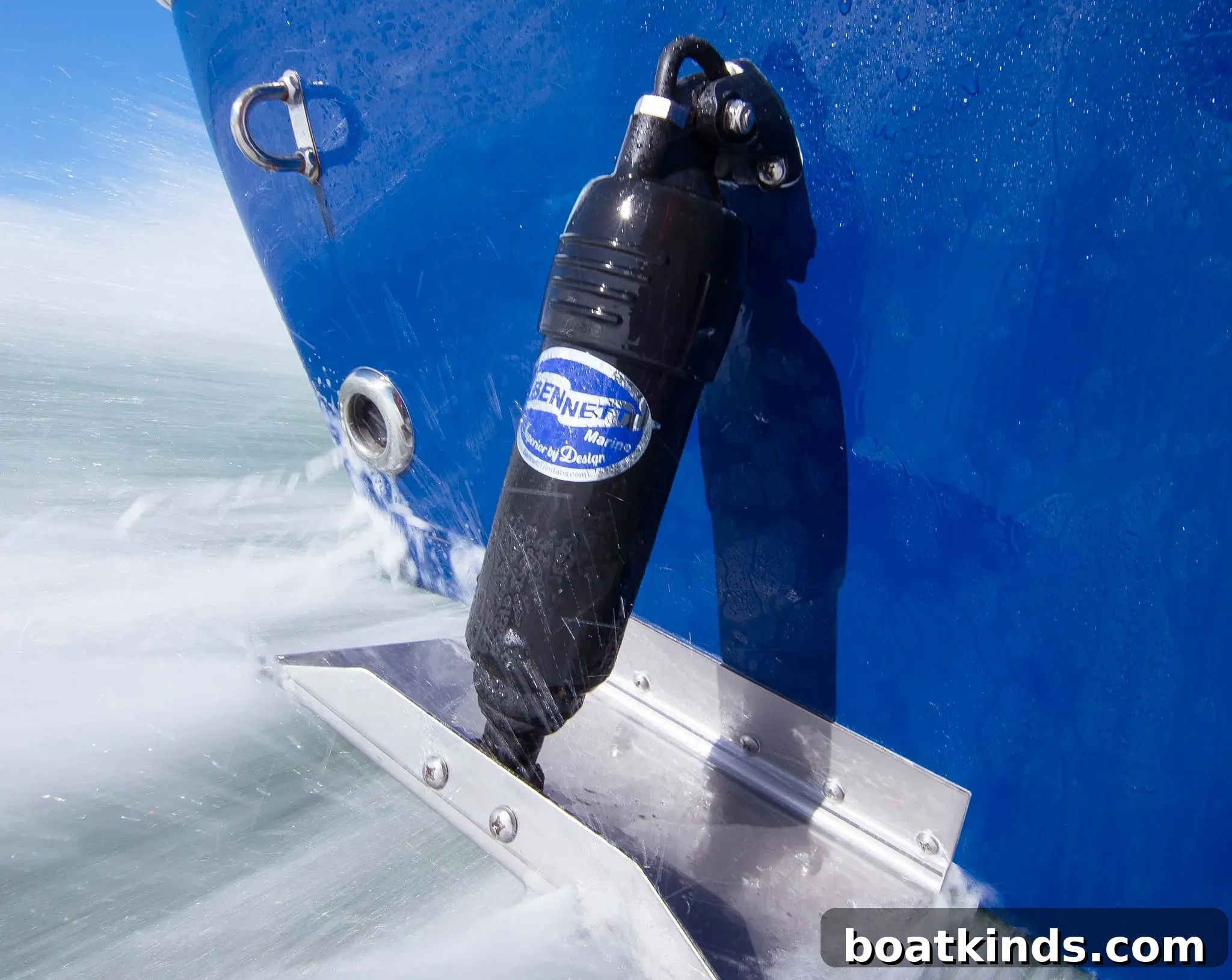
Remote-adjustable trim tabs were first popularized by Charles Bennett in 1960 through Bennett Marine in Detroit. By lowering plates into the flow of water behind the transom, tabs generate high pressure that lifts the stern and trims the running angle. Modern systems still rely on generating lift at the transom, but control has evolved from manually operated switches to autonomous systems that constantly monitor vessel motion and act in milliseconds.
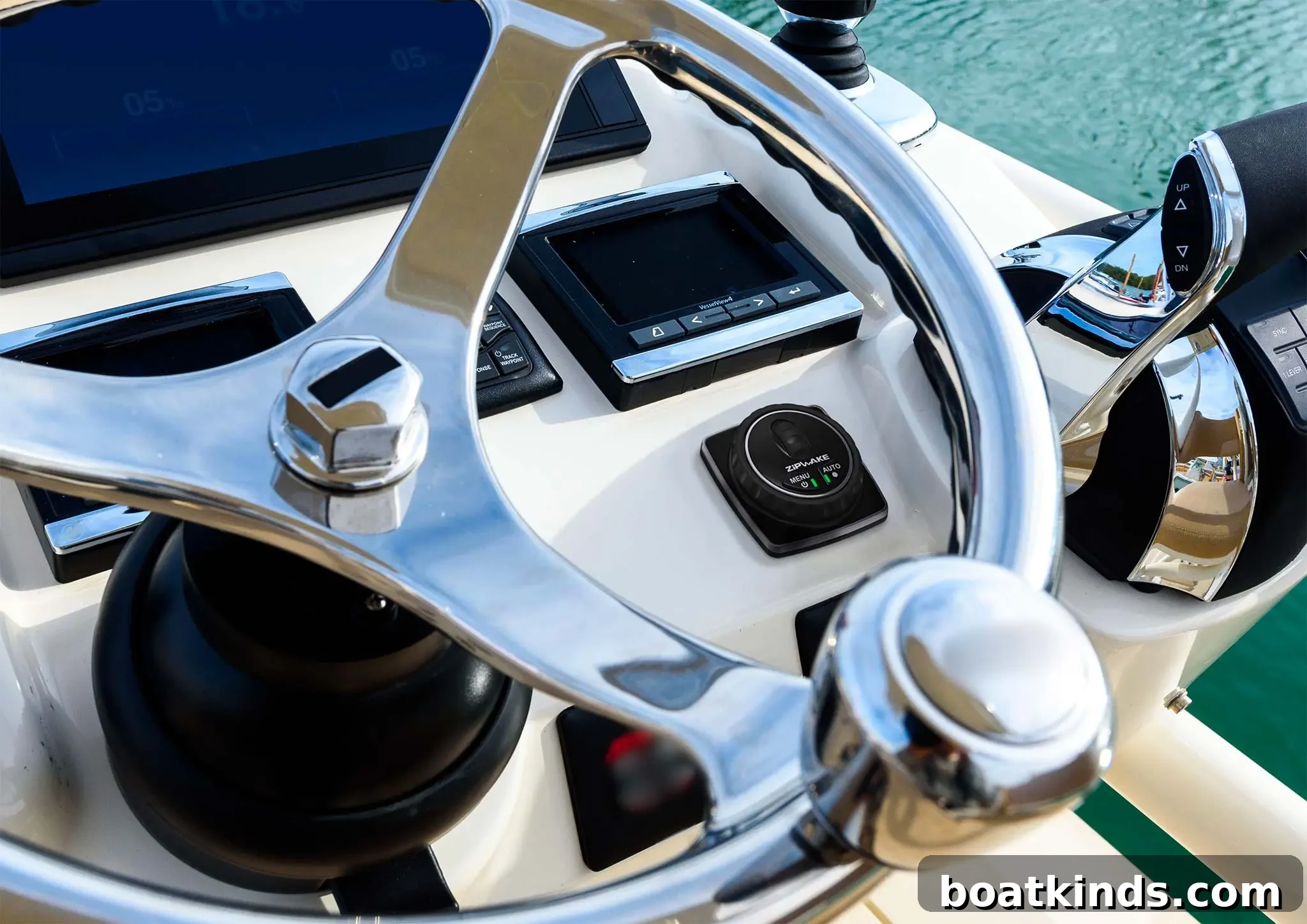
At the core of these systems is an inertial measurement unit (IMU) paired with a GPS receiver. The GPS reports vessel speed, while the IMU—made up of gyroscopes and accelerometers—measures forces and rotation rates in pitch, roll and yaw. These sensors can sample motion at very high rates (the IMU in these systems may take hundreds to as many as 1,000 measurements per second). The sensor data feeds a control algorithm that can command trim devices to respond as often as dozens or hundreds of times per second, making adjustments so small and fast that people aboard barely notice them.
Modern IMUs are compact, highly precise and widely used in many industries: spacecraft navigation historically relied on IMUs, and today they are part of vehicle stability systems, consumer electronics, and motion controllers for games. In the marine context, the IMU’s rapid measurements enable corrective actions far beyond what even the most experienced captain could manage manually.
HOW ADAPTIVE ATTITUDE CONTROL WORKS
Although designs vary, all attitude control devices aim to improve a boat’s behavior by generating or modulating lift at the transom and adjusting each side independently when needed. Their functions are commonly described as pitch control, roll control and yaw control.
Pitch Control: At slow speeds the systems typically move to a maximum setting to increase stern lift, which helps the boat get on plane faster and reduces excessive bow rise that can block forward visibility. Once on plane, the system maintains an efficient running angle—often set by the boatbuilder for best performance and comfort. When waves, wakes or swells change the boat’s pitch, the system senses those motions and adjusts the devices to damp the response, often reducing pitch by a large percentage compared with an unassisted hull. These devices can only lower the bow by creating lift at the transom; for bow lift the captain must still adjust prop thrust angle via outboard or sterndrive trim. All systems include manual override so the captain can choose a different trim strategy for specific conditions, such as entering an inlet.
Roll Control: Roll control keeps the boat level athwartships by adjusting port and starboard surfaces independently. This counters heel caused by crosswinds, quartering seas, uneven loading or passenger movement. Systems are tuned to allow appropriate roll in turns so the boat handles efficiently while keeping passenger comfort in mind.
Yaw Control: Yaw correction is used less often but is valuable when the bow begins to hunt—such as in the wake of another vessel or in certain following seas. Adding lift to one side can reduce undesirable yaw oscillation and help the boat track straighter.
AUTOMATIC SYSTEM OPTIONS
Today’s market offers three main approaches to adaptive attitude control: self-adjusting trim tabs, interceptor systems, and rotary control surfaces. Each approach has trade-offs in speed of response, drag, authority and ease of installation.
Self-Adjusting Trim Tabs: Established trim tab manufacturers like Bennett Marine and Lenco now offer automatic control packages. Bennett’s AutoTrim Pro (introduced in 2017, priced around $660–$700) can be paired with many electric or hydraulic tabs and is a cost-effective retrofit on boats already equipped with tabs. Lenco’s Pro Control Auto (introduced in 2024, priced from about $2,550) includes purpose-built tabs, electric actuators, a dash keypad and an IMU, and it earned recognition at major industry events. Traditional tab designs provide substantial control surface area, which manufacturers say delivers strong authority—particularly in rough or aerated water—and both systems are designed to be straightforward to calibrate after installation.
Interceptors: Interceptor systems, inspired by commercial-ship concepts, use vertically moving blade(s) located at the transom bottom to create lift. One well-known manufacturer introduced its interceptor system in 2017 and reports widespread adoption as an OEM option, with tens of thousands of units in service. Interceptors can act faster than traditional tabs—manufacturers claim up to several times the actuation speed—and are designed to produce lift with less drag and focused pressure directly under the transom. These systems are offered in multiple sizes and configurations and can be controlled via a dash panel or integrated with multifunction displays. Some interceptor units are made of composite materials and include anti-fouling or self-cleaning features to limit marine growth. Similar interceptor products are available from other suppliers.
ROTARY CONTROL SURFACES
Rotary-style systems use a concave control surface that rotates into the water flow beneath the boat. As the surface turns, it generates lifting pressure and can be very responsive across a range of speeds. One such system is available in multiple sizes to suit boats up to about 42 feet and becomes effective at speeds near 10 mph, with full stabilization benefits typically realized by 20–25 mph. Reported pitch and roll reductions vary by hull form and sea state—case studies show a broad range depending on the boat model. Rotary units are often controlled through a multifunction display and are offered with optional dash keypads; installation for retrofit may require careful bonding or fiberglass work and is commonly recommended for professional installation.
BENEFITS AND CONSIDERATIONS
Adaptive vessel attitude control systems represent a significant evolution from manual trim tabs. They deliver smoother rides, improved visibility, faster and more consistent time-to-plane, and better overall handling in varying sea conditions. For many owners, these systems remove a steep manual-trimming learning curve and let the captain focus more on navigation and safety. Retrofitting is possible in many cases, but buyers should consider installation requirements, compatibility with existing hardware, and calibration needs. Manual override remains an important feature so captains can adjust strategy for unusual conditions.
Adaptive attitude control is moving from a premium convenience into a widely expected comfort and safety feature on modern boats. For owners and builders aiming to improve ride comfort, efficiency and control, these systems offer tangible benefits that extend the original concept of trim tabs into the era of smart, sensor-driven onboard systems.
February 2025