
Even the best-maintained boats can suffer serious failures if small problems go unnoticed. A peaceful day on the water can turn quickly when a hidden issue finally breaks loose. Boats are complex systems with many potential failure points—metal parts exposed to stray electricity, cooling passages that clog over time, vibrating fuel lines, aging hoses, and neglected batteries among them. Regular, thorough inspections and prompt maintenance are the keys to preventing these surprises.

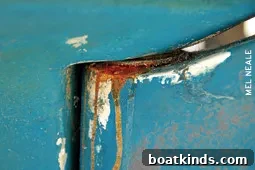
Consider a common real-world example: a couple bought their dream trawler and used it for a year before having the bottom painted. When the boat was hauled and blocked, the yard crew found a serious problem—a stainless V-strut that supports the propeller shaft had extensive material loss. Sections looked eaten away. Close inspection showed the strut was welded from different stainless parts and the weld areas were badly degraded. Worse, the bonding wire had not been attached to the strut bolts, so stray electrical currents accelerated the corrosion. What began as a subtle vibration could have led to complete running-gear failure or even sinking.
Creeping corrosion and shafts
Many boaters assume stainless steel is indestructible. That misconception is dangerous. Stainless has many grades and manufacturing quality matters. The propeller shaft is a critical example: it’s usually stainless and needs periodic attention. Regular stuffing box maintenance—adjusting the packing so a small amount of water seeps by while the shaft turns—is essential, and the packing must be replaced at intervals. When replacing packing, inspect the section of shaft that’s normally hidden inside the stuffing box. If the metal feels rough or doesn’t polish up with emery cloth, you may be seeing pitting from crevice corrosion. This form of corrosion develops in oxygen-deprived, trapped water and can progress unseen until the shaft becomes dangerously weakened. The only reliable way to determine how deep the damage is is to remove the shaft for inspection or radiography, and often replacement is the safest option.
Stainless parts can also fail from stress, manufacturing flaws, or poor installation in places above the waterline. A crack in a stainless fitting at the masthead, for example, can be invisible at normal inspection levels and catastrophic if it lets go.
Raw-water cooling and overheating
Small engines that rely on raw-water cooling are especially vulnerable to blocked passages. Over years, exhaust and salt deposits, rust, and organic buildup can restrict flow through narrow nipples or mixing elbows where raw water cools the exhaust. Even stainless components can foul with debris and burned organic matter. When cooling flow drops, overheating can occur suddenly—sometimes damaging exhaust hoses or allowing exhaust and water into the boat. Regular flushing, checking raw-water strainers, and periodic inspection of injection nipples and downstream passages will reduce this risk.
Machinery gremlins
The engine compartment is full of potential trouble-makers: vibration, chafe, and small parts that can slip free or work loose. A dramatic example is a missing cotter pin in the shift linkage. If the linkage disconnects, a skipper may think the transmission has reversed while the prop remains in forward, producing a violent and dangerous reaction—ramming docks or nearby boats. Similarly, set screws or clamps securing throttle and transmission shafts can vibrate loose, jamming controls or allowing shafts to spin out under load.
High-pressure diesel injector lines are another hidden danger. Even though they appear static, injector pipes vibrate with the engine and are normally supported by clamps. If a clamp is left loose after maintenance or works its way loose, a high-pressure line can rupture and spray diesel into the engine room. If that mist contacts a hot manifold or other ignition source, a fire can erupt quickly. Regular inspection of clamps and pipe routing is essential.
Electrical lapses and batteries
Loose wiring in the engine space can abrade insulation and cause arcing, shorts, and fires. Wires that touch vibrating metal for long periods are likely to fail. Equally important is battery care. Batteries endure rough service and require proper charging. Both undercharging and overcharging cause problems: low charging leaves you stranded, while excessive charging causes gassing, overheating, and potentially cell damage. “Maintenance-free” batteries aren’t immune—overcharging can still produce explosive gases and corrosive deposits. Corrosion around battery mounts, cloth, or wood indicates gassing and a charging-system issue that requires immediate attention.
Solenoids and starter relays are small components that often get overlooked. Repeated arcing at solenoid contacts causes carbonization and pitting, increasing resistance and eventually leading to failure or, worse, a solenoid that welds closed and overheats. Check solenoid operation and voltage regularly, and ensure connections are tight and protected from corrosion.
Hoses and ballooning
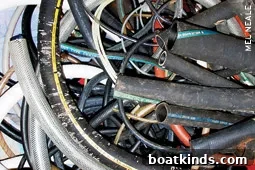
Hoses look harmless, but they age and degrade. Suction hoses with wire helix inserts can suffer internal wire corrosion that perforates the hose and causes collapse or leaks. A more subtle failure is “ballooning,” where an inner hose layer splits and water flows between layers, causing the inner layer to bulge and obstruct flow intermittently. The balloon collapses when removed, so a quick visual inspection often misses it. Use correct hose types, replace hoses on a schedule, and consider quality repair materials—silicone-based repair tape can be effective in emergencies where immediate hose replacement isn’t possible.
Simple systems, serious consequences
Simpler boats have fewer systems but still carry risks. Centerboards pivot on pins and bushings that wear; if the board’s pivot area or bushing fails, the board can fall away, damaging hulls or compromising control. Drop-down centerboards can suffer delamination at the well joint, often hidden until a gust causes a sudden failure. Tiller handles can fatique and break—wooden tillers especially can crack after repeated stress.
Wood used as structural backing under cabinetry, bulkheads, or stringers can delaminate or rot from leaks, weakening the bond to the hull and turning what appears to be a solid boat into an unsafe one. Transoms on outboard-powered skiffs deserve extra attention: repeated loads and flexing can crack gelcoat and glass, allowing water into the wooden core. Undetected water intrusion eventually weakens the transom and, in extreme cases, can allow the motor to pull away.
Boating inevitably involves managing risks. Regular, methodical inspections, attention to symptoms like vibration, leaks, smell, or changes in performance, and timely repairs dramatically reduce the chance that a small, hidden fault will grow into a major catastrophe. Take time to inspect shafts, struts, hull fittings, cooling systems, fuel lines, electrical connections, batteries, hoses, and structural woodwork—your vigilance will keep days on the water enjoyable rather than disastrous.
Tom Neale is technical editor for Soundings and lives aboard a Gulfstar 53 motorsailer. He is the author of the book All in the Same Boat.
This article originally appeared in the June 2009 issue.