Chesapeake Summer Storm — Photography by Jay Fleming
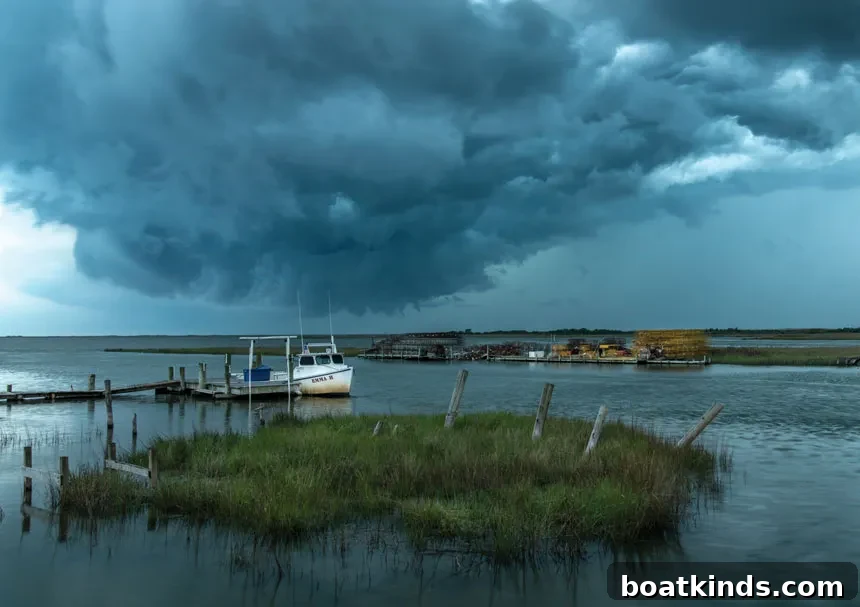
Photographer: Jay Fleming
Camera: Nikon D850
Shutter speed: 0.8 second
Lens focal length: 34mm
Aperture: f/5
ISO: 100
This article originally appeared in the July 2018 issue.
Capturing the Power and Calm of a Chesapeake Summer Storm
Jay Fleming’s image captures the dramatic mood of a Chesapeake summer storm, balancing motion and stillness in a single frame.
The composition draws the viewer into the atmospheric contrast between a restless sky and the coastal landscape below. The subtleties of color,
the texture of clouds, and the sense of imminent weather make this photograph a strong example of maritime photography and coastal landscape art.
Why the Technical Choices Matter
The Nikon D850 combined with a 34mm focal length gives a wide but natural perspective appropriate for seascapes and shoreline scenes.
Shooting at f/5 provides a compromise between depth of field and sharpness, allowing foreground and distant elements to remain distinct
without sacrificing image quality. The shutter speed of 0.8 second introduces a gentle motion blur—enough to soften moving elements like water
or drifting clouds while keeping larger forms recognizable. Using ISO 100 helps minimize noise and maintain rich tonal range in the shadows
and highlights, which is especially important when rendering dramatic cloud formations and subtle coastal light.
Compositional Notes for Maritime Art
Effective maritime images often rely on strong horizontal lines, layered depth, and clear focal points. In storm photography, those elements
can come from the horizon, shoreline structures, boats, or contrasting bands of light and dark in the sky. Leaving breathing room in the
composition emphasizes scale—the vastness of the bay and the way storms dominate the coastal scene.
Consider including foreground elements such as rocks, pilings, or marsh grass to anchor the viewer and provide a path into the image.
Practical Tips for Shooting Coastal Storms
Safety is the first priority: maintain a safe distance from rising water and sudden gusts, and keep gear protected from wind and spray.
A sturdy tripod is essential when working with sub-second exposures to ensure sharp detail where desired. Remote release or camera self-timer
reduces camera shake, and shooting in RAW preserves the most information for highlight and shadow recovery in post-processing.
Bracketing exposures can capture a wider dynamic range between stormy skies and darker foregrounds. Neutral density filters are useful when a
longer exposure is needed in brighter conditions, but in low-light or overcast storm scenes, the settings used here—0.8 second at ISO 100—often
yield pleasing motion without extra filtration.
Interpreting Weather in Your Images
Storms are as much about mood as they are about meteorology. Paying attention to light quality—how sunlight peeks through clouds, how storm
bands create contrast, and how reflections behave on the water—adds emotional depth to a photograph. The difference between a threatening sky
and a passing squall can be conveyed through tonal control and timing: anticipate changes, and be ready to capture the decisive moment when
light and cloud structure align.
Maritime Art and the Chesapeake Aesthetic
The Chesapeake Bay region inspires artists and photographers with its mix of open water, working waterfronts, and shifting weather patterns.
Images like this one by Jay Fleming contribute to a visual record of coastal life, reminding viewers of the bay’s seasonal rhythms and the
interplay between human activity and natural forces. Whether displayed in print or online, well-crafted seascapes offer both aesthetic pleasure
and a quiet invitation to reflect on the environment they represent.
Final Thoughts
This photograph is a study in contrasts—calm light against active weather, detailed foreground against sweeping sky. The technical choices and
thoughtful composition combine to produce an image that reads both as a document of place and time and as a piece of maritime art.
For photographers seeking to capture similar scenes, focus on preparation, composition, and timing; preserve detail by using low ISO and
bracketing when necessary; and always prioritize safety when working in dynamic coastal conditions.