
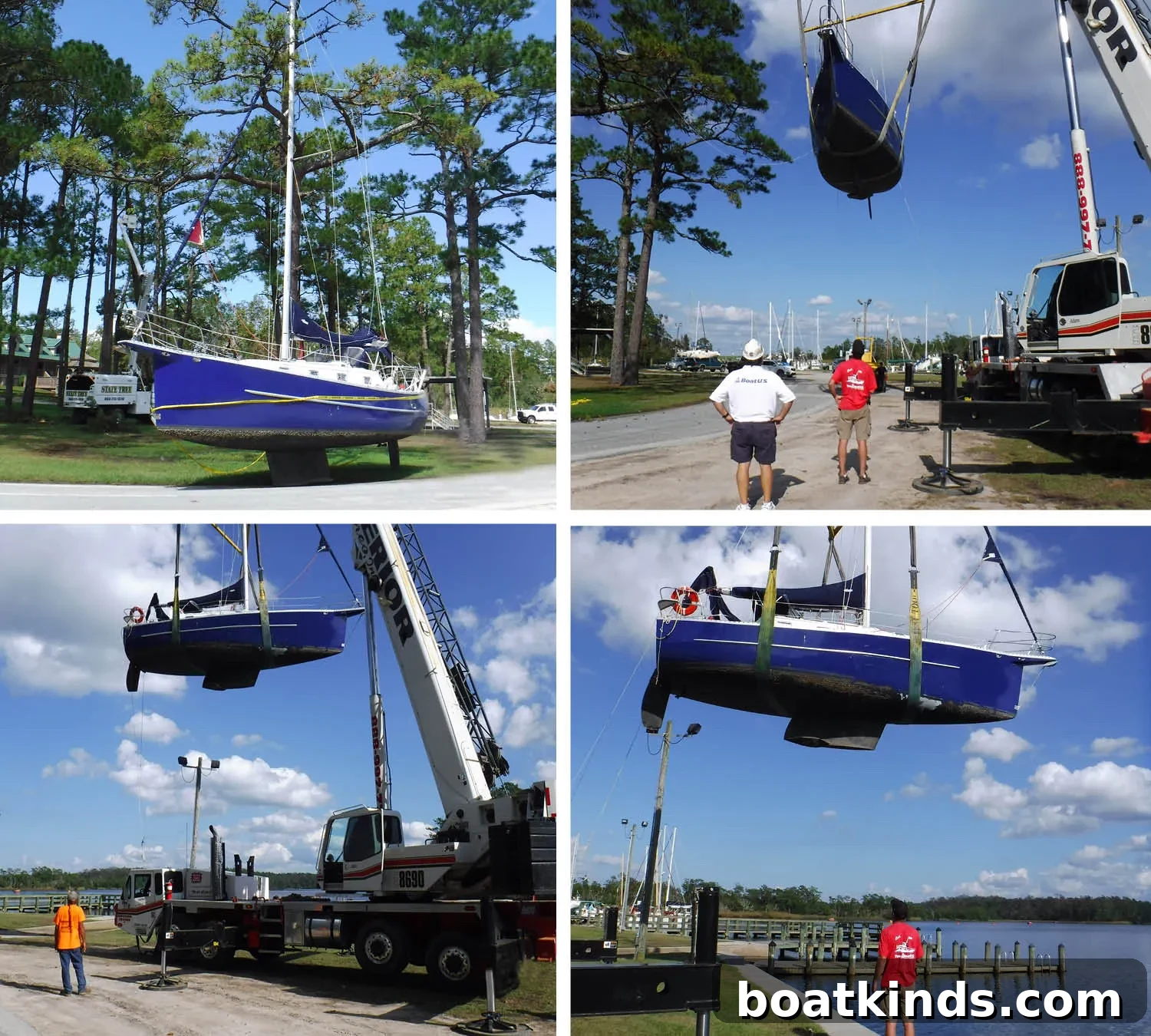
Sailboat Lifted and Recovered After Hurricane Florence Near Wrightsville Beach
In the wake of Hurricane Florence, an unusual scene unfolded when a sailboat that had been swept ashore was recovered near Wrightsville Beach, North Carolina. The vessel had been carried inland by powerful storm surge and winds, coming to rest on the grounds of Marine Corps Air Station Cherry Point. A Marine Insurance Catastrophe Response Team responded and worked to return the sailboat from the shoreline back into the water.
Eyewitnesses described a dramatic moment during the recovery when the boat was hoisted over a crane and shoreline terrain before being gently lowered back into the water. While the phrase “flew” was used by some observers to capture the sight of the hull moving through the air, the operation was a deliberate salvage effort handled by experienced responders focused on safety for personnel and protecting nearby property.
Teams that handle post-storm recoveries typically follow a careful sequence: assessing the condition of the vessel, stabilizing it for transport, documenting damages for insurance and reporting purposes, and finally moving it to a safe location or relaunching it when conditions allow. The responding insurance catastrophe unit on site performed these standard tasks while coordinating with local authorities and the military installation to ensure the work complied with base access and environmental safeguards.
BoatUS, an organization that monitors boating incidents and assists owners after severe weather, noted that many owners took steps in advance of Florence to secure or relocate their boats to safer places. Because of that preparation, catastrophic total losses—where a boat is completely destroyed—appear to have been limited in number for this event. That said, many vessels did sustain damage that will require repair, ranging from cosmetic hull scuffs and rigging issues to waterline flooding and mechanical problems.
Recovering a boat from an inland location after a hurricane involves more than simply returning it to the water. Responders must check for structural damage to the hull, inspect the mast and rigging, ensure that fuel, oil and batteries are secured to prevent spills, and look for contamination or debris trapped in bilges. Documentation of the vessel’s condition at the time of recovery is important for owners who will file insurance claims or make repair arrangements.
Operations near military installations, such as Marine Corps Air Station Cherry Point, require additional coordination. Access permits, safety briefings, and environmental precautions are generally part of the process whenever civilian responders and insurance teams work on or adjacent to federal property. In this case, the coordinated effort allowed the sailboat to be moved safely without creating hazards for the base or the surrounding community.
After heavy storms, local boatyards, marinas, and salvage specialists often assist with longer-term recovery: hauling vessels to repair facilities, performing temporary patches, pumping out water, replacing damaged rigging, and conducting mechanical checks before allowing a boat to return to active use. Boat owners should keep careful records of damage, take photographs, and contact their insurance providers promptly to begin the claims process.
For many recreational boat owners and commercial operators along the North Carolina coast, Florence was a reminder of the importance of pre-storm preparedness—relocating vessels when possible, securing them properly, and having a plan for post-storm assessment and recovery. While dramatic images of a sailboat being lifted back into the surf capture headlines, the broader recovery effort involves a network of insurers, salvage crews, marinas, and local authorities working to minimize environmental impact and restore safety to affected waterways.
As clean-up and repairs continue in the aftermath of the storm, officials and boating organizations emphasize vigilance and patience. Weather-related damage can be complex to resolve, and many boats that appear intact initially may reveal hidden problems once inspected more thoroughly. Owners are advised to obtain professional surveys and follow recommended repair protocols to ensure vessels are seaworthy before returning to open water.