
I could pretend I’m not old enough to remember Loran-A or the eerie beeps of radio direction finders, and I might deny the old navigator’s trick of shutting down the engine to listen for buoys in fog. But those memories remain useful reminders that reliable navigation doesn’t always depend on the latest gadget.
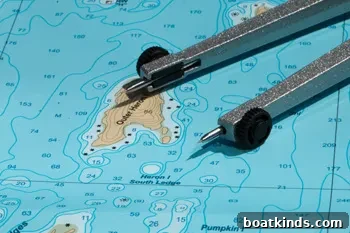
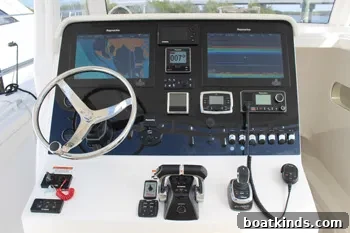
Today’s market overflows with sophisticated navigation equipment, and most boaters trust a suite of electronics: a GPS/chartplotter, radar, a backup battery-powered GPS and perhaps a chartplotter app on a smartphone. I use and value that gear. Still, there are moments when I want to practice self-reliance without black boxes. For me, that’s when I return to applied basic navigation—dead reckoning, paper charts and the navigator’s tools.
Essential gear for reliable non-electronic navigation includes up-to-date paper charts, a set of dividers for measuring distances, a plotting tool (parallel rulers or a Breton plotter), a properly adjusted magnetic compass and a dependable depth sounder. Equally important is an accurate sense of your boat’s average speed, which you can develop by comparing rpm and wake characteristics with the GPS ground speed—turn it into a small onboard game: “How fast do you think we’re going right now?” The most valuable instruments are curiosity, the pursuit of accuracy and the willingness to double-check your work.
Dead reckoning is straightforward in principle: confirm where you are, then proceed to the next planned point and repeat. Start by marking your departure time and precise position on the chart at a fixed reference, such as a navigation aid, buoy or inlet. Note the expected set and drift of any current and the forecast wind that could influence your course.
Next, determine the course to your next waypoint. On a nautical chart, a true course is read directly from the chart’s true compass rose and is not corrected for magnetic variation. A magnetic course is adjusted for variation between true north and magnetic north. A compass course further corrects for the individual error of your boat’s compass—known as deviation. The compass course is what the helmsman actually steers to compensate for both variation and deviation.
On my boat I work in magnetic courses and calibrate the GPS and autopilot to match the compass. When plotting on paper charts I check whether labeled bearings are true or magnetic and I double-check chart soundings—are depths in feet, fathoms or meters? These small verifications prevent mistakes that can accumulate over a passage.
Distance, speed and time form the core calculation: distance = speed × time. Measure distance on the chart with dividers and apply it to the latitude scale: one minute of latitude equals one nautical mile. Speed is expressed in knots, or nautical miles per hour. So if you’re making 8 knots through the water, you will travel 8 nautical miles in one hour. At that rate you will cover 4 nautical miles in 30 minutes, 2 nautical miles in 15 minutes, and so on. Using the chart’s tenths of a minute scale makes these conversions quick and accurate.
To verify your dead-reckoned position, use visual cues—visible aids to navigation, shorelines and landmarks—along with soundings and changes in bottom contours detected by your depth sounder. Audible cues, such as fog signals, can also confirm bearings. Each verified fix becomes the starting point for the next leg: plot the next course, set the proper compass heading, note the departure time and repeat the process.
Practice helps. Regularly compare your dead-reckoned positions with your electronic fixes to refine estimates of set and drift and to better judge boat speed under various conditions. Calibrating your instruments, maintaining accurate charts and keeping a disciplined log are habits that improve both confidence and safety.
Technology will continue to evolve, but the fundamentals of seamanship remain constant. We still watch for seagulls resting on the water, look for waves breaking where they shouldn’t and value precision, curiosity and the discipline to re-check our work. Those skills keep us safe and make arriving on time for dinner all the more satisfying.
Pat Mundus is a retired merchant ship deck officer.
This article originally appeared in the June 2017 issue.