
Why Dual Console Boats Are So Popular
When I was a boy in the 1960s we had a Bonneville convertible and a Pontiac station wagon — a practical pairing for a family with a father who commuted and a mother who ferried children around town. Back then vehicles were generally one thing or the other, until innovations like Jeep’s Grand Wagoneer and Lee Iacocca’s minivan blurred the lines between car types. Those hybrids combined multiple functions into a single, versatile platform, and the same idea applies to boats.
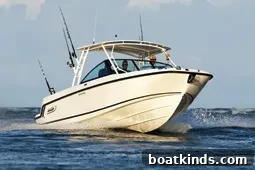
Dual console (DC) boats first appeared in various forms decades ago. I remember Mako and Grady-White DC models along Pleasant Bay in the early 1970s — boats with an open bow like a cuddy but with a center-console style cockpit aft. At the time they were unusual, but their mix of functions made them increasingly popular. Today the market clearly favors dual consoles: they outsell many center consoles and small cabin boats because they serve a wide range of uses for families and anglers alike.
Manufacturers have responded to consumer demand by expanding their DC lineups. Brands that once focused on center consoles and express models now offer dual consoles in multiple sizes. The growing selection reflects a broader trend: buyers want one boat that can handle fishing, cruising, watersports, family outings and occasional overnighting, rather than several single-purpose boats.
Why Dual Consoles Appeal to Many Boaters
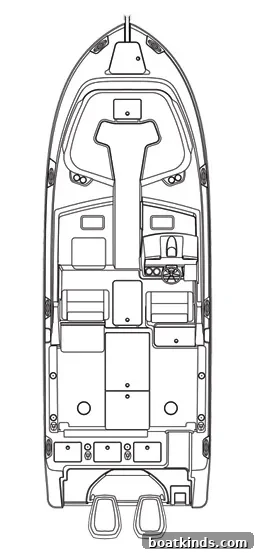
There are practical reasons for the DC’s broad appeal. Anglers appreciate the open aft deck for fishing. Families appreciate that, in models 20 feet and larger, an enclosed head is often located opposite the helm. Kids like the bow seating with a convertible windshield that separates them from the cockpit when needed. And for recreational users, these boats tow skis, boards and tubes effectively.
Compared with many sterndrive bowriders, dual consoles typically feature a fiberglass deck without carpet that drains overboard, making them easier to clean and more seaworthy. Most DCs use outboard engines, which are generally lighter, conserve cockpit space, are easier to service or replace, and can provide more sustained horsepower at cruising rpm than comparable sterndrives.
When evaluating a dual console, the most important consideration is how the boat rides. If a boat performs poorly in rough water, it will limit when and where you can use it. Look for a hull with a finer entry and adequate deadrise through the midsection; these characteristics let waves meet the hull more gradually and yield a smoother, safer ride. If the chines are wet less than about a third of the way aft from the bow at the waterline, be cautious about expecting a comfortable ride in chop.
Beware of putting too much emphasis on transom deadrise alone. For boats that don’t run at very high speeds, transom deadrise is not a reliable indicator of ride quality. Excessive deadrise aft — generally over about 20 degrees — can make a boat tender at rest, slow to plane at low speeds, and prone to more bow rise when getting on plane. Excessive bow rise at the hump reduces visibility and requires more power to accelerate, while more trim at speed can make the ride harsher because of the angle at which waves hit the hull.
Safety, Comfort and Practical Features to Prioritize
I strongly recommend considering an unsinkable construction approach where the bilge is largely filled with foam. Foam provides positive buoyancy if the hull is breached, helps limit water intrusion, and reduces noise at speed. It’s a sensible safety measure — why risk buying a craft that will sink quickly if punctured?
More forward freeboard helps keep ocean spray and waves out of the cockpit and places passengers lower in the boat, where motions are less severe. The bow tends to have the most pronounced motions underway, so a boat with deeper forward cockpit coaming, longer rails and secure handholds will be safer for children and adults alike. For any family-oriented boat, a smoother-riding hull with adequate freeboard and reachable rails matters a great deal.
Avoid interior finishes that increase glare; bright white interiors can strain the eyes in strong sun and create distracting reflections at night. Choose a boarding ladder that can be deployed easily from the water; retractable or detachable ladders designed for other purposes are often impractical for general use and can be unsafe. If the boat includes a head, verify that the access is comfortable and practical for all users. Ensure the windshield height provides a clear field of vision through glass rather than framed gaps when seated. Finally, controls and service points — battery switches, seacocks, and shore-power connectors on larger models — should be logically and conveniently placed for both normal operation and emergencies.
Dual consoles have evolved into genuinely versatile platforms that serve families, anglers and recreational boaters. Their combination of usable deck space, seating flexibility, storage, and safety-oriented design features makes them one of the most practical choices for saltwater boaters who want one boat that does many things well.
See related articles:
- Split decision
- In its element
April 2013 issue