
I value the weight of the analog world — where real objects have heft, texture and patina, and where touch and feel are measures of worth. I like things built to last and designed to be repaired. The taped, worn handle of a surf rod; the subtle pitch and roll of a skiff as it shoulders into the first wave of a rip; a good knot tied at midnight, wet with spit, pulled snug, trimmed close but not so close it can slip — these familiar marks of a life outdoors feel like currency.

After too many hours sitting behind a desk, the soul craves the physical world with all its scrapes and imperfections. Dirt under the fingernails, palms chafed from handling rough fish, a trickle of blood down the shin from scraping a barnacled rock while hauling yourself aboard — you often don’t notice those reminders until you look down and remember you were actually there, alive in the moment.
Technology accelerates constantly, reshaping habits and tools. Change is nothing new, but the pace now is relentless: the digital wind blows day and night. This cybernated universe moves at breathtaking speed, and yet its rhythm rarely matches the cadence of the places where we fish and cruise. Too much virtual reality and not enough bumps, bruises and bug bites. The water world answers to moon and tide, weather and wind, migrations and chance — forces no app can fully predict.
I know the feel of my gear in my sleep: the measure and power of a 9-weight fly rod, the broom-handle stiffness of an old surf pole, the black deceiver I tied on last week, and a hand-painted, half-ounce lead head a friend handed me over coffee before I slipped into the fog. It’s strange to imagine what a tiny chip holding a terabyte actually weighs. The ease of getting lost in the virtual is real. As Emily Dickinson observed, a sailor may not see the north star but he trusts the needle of the compass.
There’s an old line that many lures are made to attract fishermen more than fish. The same could be said for the flood of outdoor products marketed as innovative or one-of-a-kind — adjectives repeated so often they lose meaning. Will the latest gizmo actually make you a better angler? In salt and fresh water alike we prize gear that’s overbuilt, bulletproof and reliable. Today’s good equipment often surpasses what our parents used, but the market still contains impostors: things that promise much and deliver little.
When you’re deep in the backcountry or 90 miles offshore, the last thing you want is for a vital part to fail. There’s integrity in gear that simply works: a steadiness and peace of mind you can’t put a price on. On the water, functionality, durability and dependability are the most valuable currency. Can a piece of gear be too tough? For most of us, the question becomes whether it’s built to last without being needlessly heavy or complicated.
These ideas guided my packing for a recent Alaska trip. I focused on clothes and kit that were dry, warm, lightweight, waterproof and durable — items that would fit into a couple of float bags and stand up to hard use. In an era of gadget overload, traveling light has become a rare skill. By temperament I lean minimalist, preferring fewer things that do their jobs well.
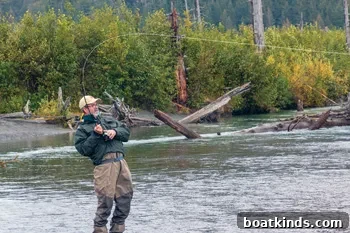
Nearly 25 years ago my wife and I spent two weeks living and fishing from a double kayak on an unguided trip in Alaska. We carried everything we needed and relied on what we could catch. Our clothing was budget-minded Gore-Tex, early-generation fleece, polypropylene base layers, wind pants, wool hats and socks — no cotton. Navigation meant charts, topo maps and compass; there was no outside communication. A commercial fishing boat dropped us off and picked us up on a prearranged schedule. Young, strong and self-reliant, we traveled light — and it remains one of the best feelings I can recall.
The “go-light” ethic is hardly new. Aldo Leopold, in A Sand County Almanac, criticized the gadgeteer who crowds an outdoorsman with “an infinity of contraptions,” claiming they often substitute for real skills rather than enhancing them. “Gadgets fill the pockets, they dangle from neck and belt,” he wrote. “Each item of outdoor equipment grows lighter and often better, but the aggregate poundage becomes tonnage.”
Leopold’s point — use mechanical aids in moderation, and don’t let them use you — still rings true. The goal is to travel light but with things that have substance and soundness, gear that carries a whiff of the indestructible without being excessive. In the end, the tactile world rewards care, experience and well-made tools more than any flash of novelty.
This article appeared in the April 2016 issue and was reprinted from Anglers Journal