
ANMM Presents New Evidence Claiming HMS Endeavour Wreck Found in Newport Harbor
Last year, the director of the Australian National Maritime Museum (ANMM) announced that the shipwreck remains discovered in Newport Harbor, Rhode Island, in February 2022 were those of the historic HMS Endeavour. That initial conclusion was met with skepticism from local experts affiliated with the Rhode Island Marine Archaeology Project. Now the ANMM has released additional findings that it says strengthen its claim that the vessel is indeed the famous ship once commanded by Lieutenant James Cook.
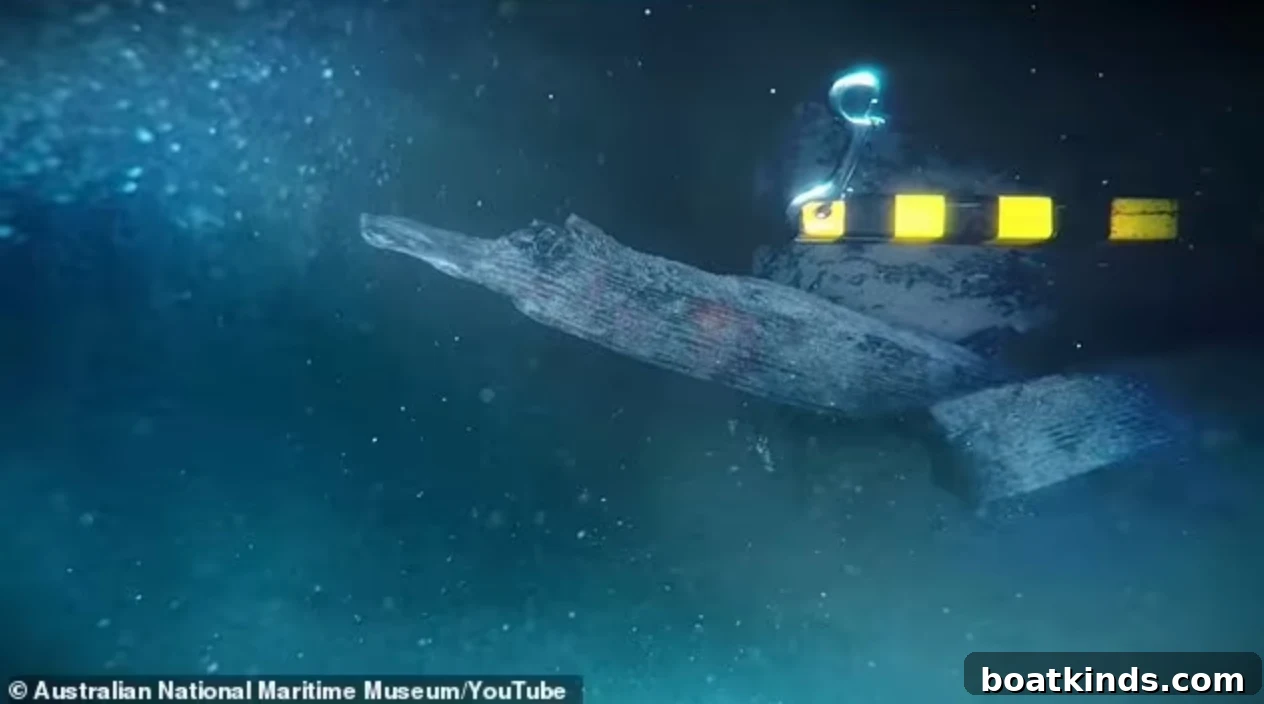
According to researchers at the ANMM, the new evidence focuses on the bow of the wreck. The museum team compared timber from the wreck with archival plans for the Endeavour dating to 1768 and identified a particular type of joint in the bow timbers that matches the original design drawings. In addition, the researchers report the discovery of a pump well at the site that corresponds with features shown on the 1768 plans. Together, the museum says, those two structural matches provide a strong argument linking the Newport Harbor remains to the vessel known historically as the HMS Endeavour.
Marine archaeologists emphasize that establishing the identity of a shipwreck requires careful, corroborated evidence. The ANMM’s approach—matching measured features from the wreck to contemporary ship plans—is a standard method in ship identification. The identification of an uncommon joinery pattern in the timber and the presence of a pump well that aligns with archival plans are cited by ANMM researchers as particularly significant because such features can be distinctive to a single vessel or ship design.
Despite the ANMM’s claims, the conclusion is not universally accepted. The Rhode Island Marine Archaeology Project and other local experts have previously raised questions about the identification, and the ANMM’s latest announcement is expected to intensify scientific scrutiny and public debate. Independent verification through further excavation, dating of recovered materials, and peer-reviewed analysis will be necessary to reach a widely accepted consensus on whether the wreck is indeed the Endeavour.
The Australian team has expressed a desire to cooperate with Rhode Island authorities and local archaeologists to expand investigation of the site. The wreck lies within an area where researchers have been searching for the Endeavour since 1999. That search has focused on a two-square-mile region of Newport Harbor known to contain several British vessels scuttled during the American War of Independence.
Background on the ship helps explain why the identification, if confirmed, would be important. The vessel launched in 1764 as the Earl of Pembroke and was later taken into Royal Navy service, renamed Endeavour, and fitted out for scientific exploration. Under the command of Lieutenant James Cook, the Endeavour carried out voyages that produced significant contributions to navigation, mapping and natural history. After her period as a research vessel, she was sold into private hands and subsequently employed by the Royal Navy to transport troops.
During the American War of Independence, troops aboard the ship that had been the Endeavour took part in operations against colonial forces. In 1778, the vessel was deliberately sunk as part of an effort to block British ships from entering Newport Harbor. The site now contains several British hulls sunk in that period, and the wreck identified by ANMM is one of five known British ships beneath the harbor’s waters.
Given the historical importance of the Endeavour—especially its association with James Cook and early scientific voyages—the claim draws intense interest from historians, archaeologists, and the public. Experts caution that more fieldwork and rigorous analysis are required before the wreck’s identity can be confirmed beyond reasonable doubt. The ANMM has framed its new findings as a meaningful step forward and has called for collaborative, transparent investigation with Rhode Island authorities to expand documentation of the site and to allow independent specialists to examine the evidence.
As the discussion continues, scientific methods such as dendrochronology, material analysis, and careful mapping of the wreck site, combined with archival research, will be essential to either corroborate or refute the ANMM’s identification. Until such independent verification is complete, the claim that the Newport Harbor wreck is HMS Endeavour remains a significant and contested hypothesis that highlights the challenges and excitement inherent in maritime archaeology.