
Peter Seidenberg: Laser Sailing’s Great Grand Master
“You know you’re getting old when kids call you ‘Mister,’” says Peter Seidenberg, one of the world’s top Laser sailors in the Great Grand Master class for competitors 65 and older. He understands the courtesy behind the address, but to him the formality is more amusing than flattering.
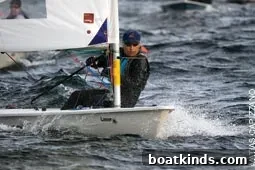
The suggestion of being past his prime only fuels Seidenberg’s competitive fire. He has sailed Lasers exclusively and competitively for decades. At the 2010 Laser Masters World Championships at Hayling Island off England’s south coast, he placed second, bringing home a silver medal as one of six U.S. medalists. That result was another milestone in a career that includes competing in 27 of the 28 Masters world championships.
Sticking to his game
Seidenberg first sailed a Laser in 1973 and never switched to another class. His record includes eight world championship titles and multiple Masters titles across North America: six North American Masters, eight U.S. Masters and six Canadian Masters championships in various age divisions. Scott Ferguson, the 2009 and 2010 Laser Masters world champion, has known Seidenberg since 2003 and calls him the “Iron Man of the Laser.” Ferguson, then 49, has said Seidenberg is a role model he hopes to emulate.
Seidenberg’s commitment is simple: he enjoys man-against-man competition in a strict one-design class. The Laser appeals because it’s affordable, widely sailed and easy to own for practice and racing. Those qualities keep participation high at every level—Masters regattas draw large fleets, and the 2010 world championship saw about 350 competitors—so he keeps returning year after year.
An escape by boat
Seidenberg’s life was shaped by his early years in East Germany. Born in 1937 and raised in landlocked Magdeburg, he earned a degree in naval engineering and worked as a mechanical and structural design engineer in shipbuilding. He began sailing at age 12 in a two-person plywood dinghy called a Pirat, but he also watched West German television and listened to radio across the border, which widened his view of the world and increased his desire to leave the oppressive East German regime.
On Oct. 25, 1963, Seidenberg and a friend made a perilous escape by kayak, paddling from Warnemünde across the Baltic Sea to Gedser on the Danish island of Lolland. It was a moonless, calm night chosen for concealment. The crossing covered roughly 25 nautical miles and took about seven and a half hours. At the time, East German sailing was limited to a three-mile coastal zone, and the border areas were heavily patrolled by military forces, police and informants. The risks were extreme: a failed attempt could mean imprisonment by the Stasi or worse.
After his escape he lived in Hamburg and later emigrated to Canada in 1967, settling in Toronto until 1991 before moving to Portsmouth, Rhode Island, where he lives today.
A Laser and a dolly
Seidenberg initially sailed the physically demanding Olympic Finn, but at about 165 pounds he was lighter than the typical Finn competitor. When the Laser appeared in the early 1970s, its lighter, simpler single-handed design was a better match. What bothered him most in those early Laser days was the difficulty of transporting the hull from car to shore. Early launching trolleys were fragile and poorly designed, so Seidenberg applied his structural-engineering background to design a better dolly.
He built a sturdy, lightweight, corrosion-resistant trolley that disassembled for easy shipping and storage. The product was a hit, and his company, Seitech, expanded to dollies for other boats and storage racks for kayaks. He sold the business in 2001 to begin a gradual retirement, but instead of slowing down he devoted more time to Laser sailing.
Advances in equipment—improved sail controls and the introduction of smaller rigs like the Radial—have made the Laser more manageable and attracted new sailors while keeping veterans like Seidenberg competitive.
The Energizer bunny
When asked how long he will keep competing, Seidenberg is emphatic: he plans to continue as long as he feels fit. He maintains his fitness with daily yoga stretches, weight training every other morning and frequent cycling when weather permits. He sails as often as possible—most summer weekends and local Tuesday-night races in nearby Bristol Harbor. For him, regular training and competition are the fountain of youth that prevent rapid deterioration with age.
In recent seasons he has traveled to regattas around the world, including the Asia Pacific Championship in Thailand, and returned to Germany to win the Masters class at the International German Championships in Neubrandenburg. Above all, he relishes competing against sailors of his own generation and those young enough to be his grandchildren.
So go ahead and call him “Mister.” Just don’t expect that formality to slow him down.
This article originally appeared in the Home Waters section of the December 2010 issue.