
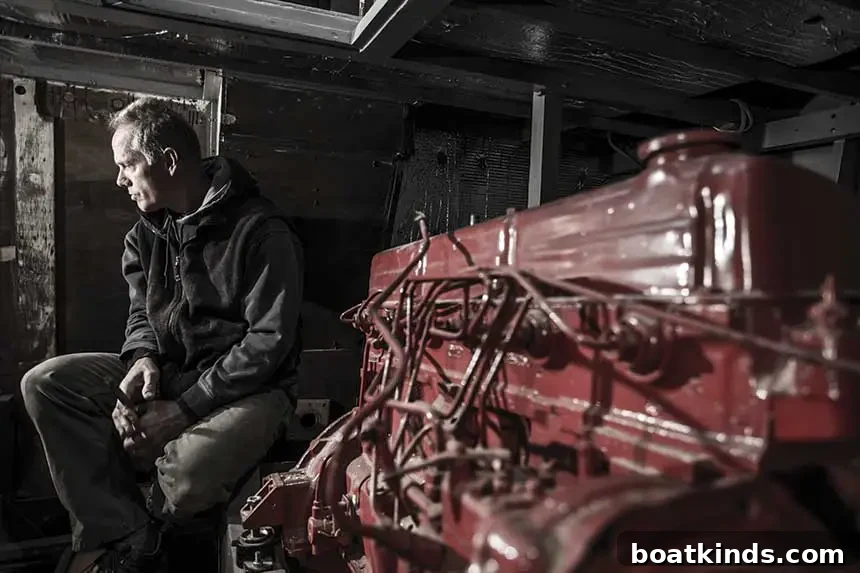
“If I’d known what I was getting myself into, I probably wouldn’t have bought the boat in the first place,” admits Eric Paulsen. He’s talking about Splinters, a 1968 Grand Banks 42 Classic that he and his wife, Kim, purchased in 2008. They wanted a boat that could one day become a comfortable liveaboard and a retirement cruising platform. Like many restoration enthusiasts, Eric was drawn to the Grand Banks 42 Classic for its reputation for solid construction and timeless lines.
Originally launched in the late 1950s from a modest yard in Junk Bay, Hong Kong, the Grand Banks 42 Classic established a standard for coastal power cruising. Designed by naval architect Ken Smith, the Classic’s workboat-inspired profile, separate forward and aft trunk cabins, and practical layout made it an economical, safe, and comfortable choice for extended cruising. Over the decades Grand Banks built more than 1,500 hulls in this line, and many of the Hong Kong-built wood models (produced between 1958 and 1973) continue to cruise today, well maintained by devoted owners.
When Eric and Kim found Splinters, she had been neglected for years in a California marina and showed significant rot and deterioration. Still, the couple could see the boat’s potential. They bought her, had her trucked 1,000 miles to their home in Loveland, Colorado, and set about a comprehensive restoration. Eric planned to do most of the work himself.
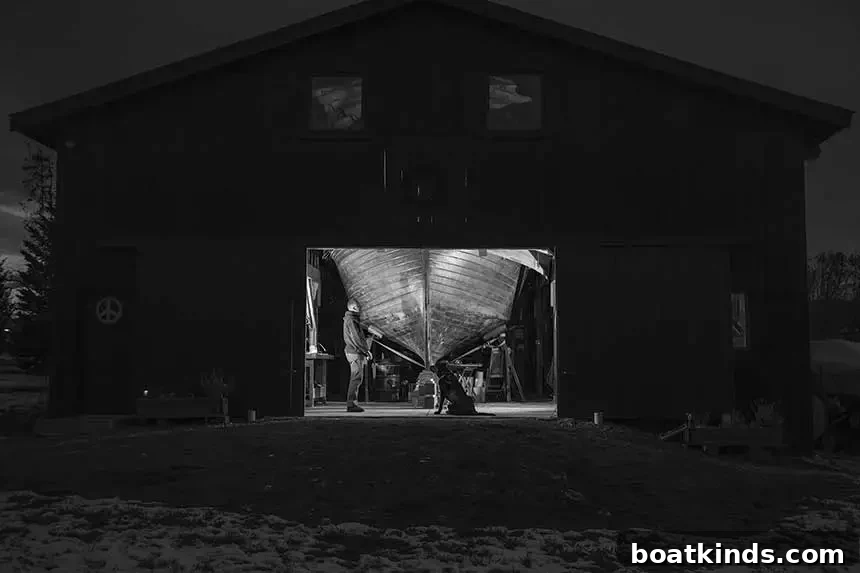
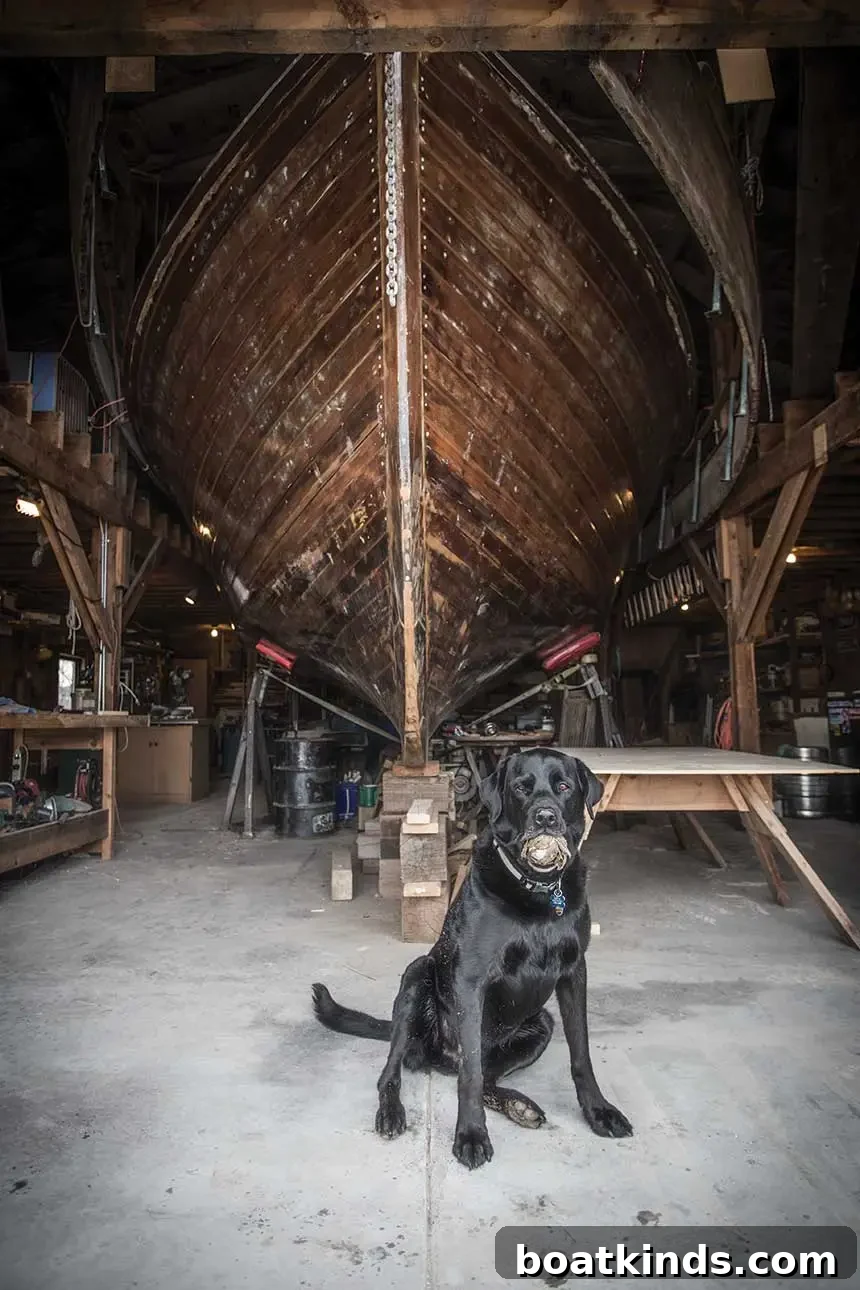
A barn on their property was adapted to shelter Splinters during the long rebuild. When I first visited in November 2015, the boat filled the timber-frame structure, sitting just feet from the rafters. Eric stripped the hull down, recaulked and splined planks, sanded, applied epoxy coatings, and rebuilt the house and decks that had been ravaged by rot. The scope of what was required was immense, and with a family and other responsibilities, progress came in fits and starts.
The restoration quickly became a topic around town. Neighbors joked that the project resembled “Noah’s Ark,” a nickname that inspired an early article on Eric’s efforts titled “Noah’s Work.” “Most of our friends and family thought I had gone nuts,” Eric recalls with a laugh. Despite the skepticism, he steadily advanced the renovation, tackling woodworking, systems work, and finishing over many years.
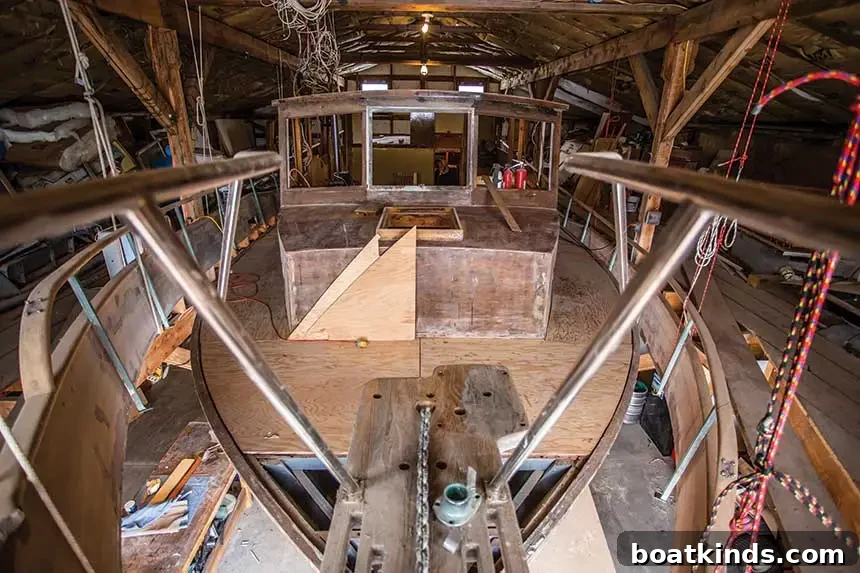
When I saw Splinters again after a few years, I was torn between amazement at Eric’s craftsmanship and the clear enormity of the task that remained. He had accomplished a remarkable amount on his own, but there was still plenty to do. Periodic updates with progress photos arrived over the next three years, and the project seemed to inch forward.
The turning point came when Kim’s job took the couple to San Diego. That impending move provided the push Eric needed to complete the restoration. Eleven years after the boat arrived in Colorado, Splinters was afloat and berthed in a San Diego slip. Eric, sun-tanned from California and marked by a few scarred and bandaged fingers, reflected on the journey with a quiet pride. “I don’t think it’s quite settled in,” he said, when asked how it felt to finally be finished.
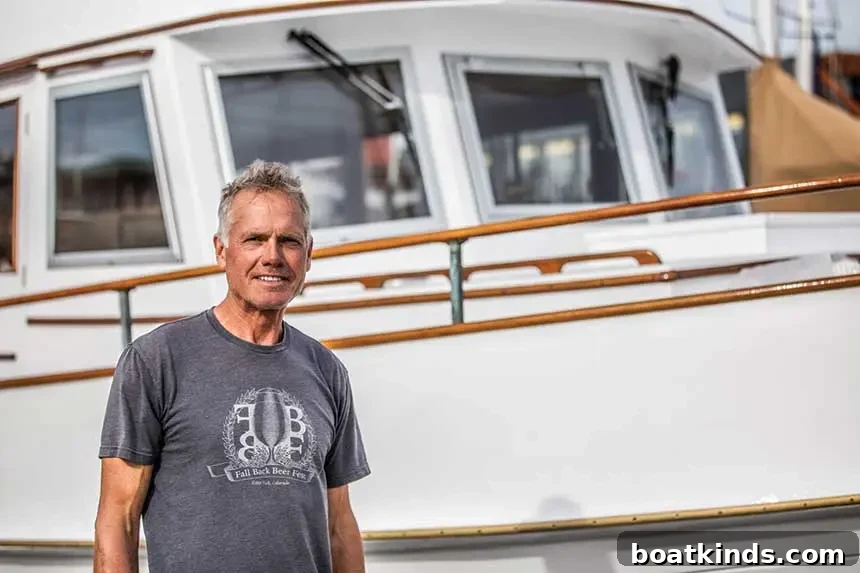
“Launching the boat was obviously a high point,” he added. “But it really started to feel like the project was winding down when the furniture began to take shape inside. At that point it felt less like construction and more like finishing.”
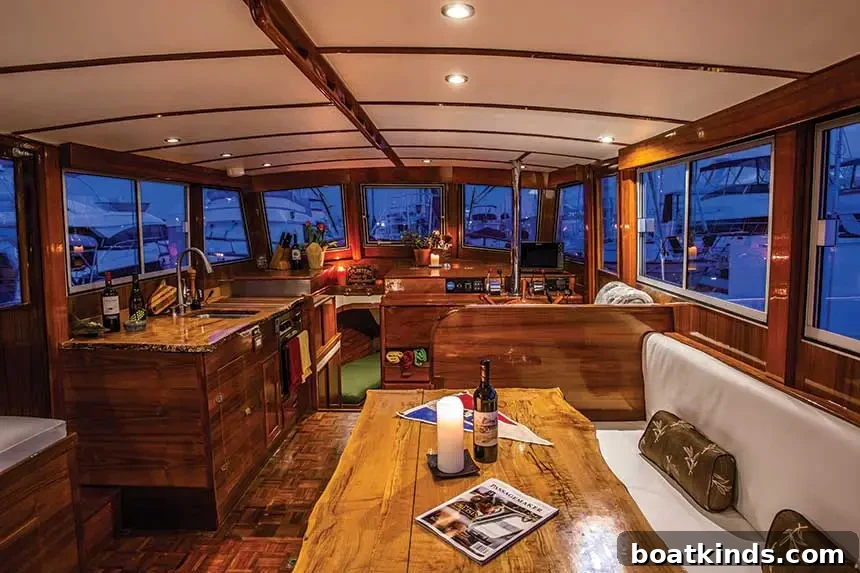
The low points were the cold, monotonous days back in the Colorado barn—sanding, scraping, and sawing in freezing temperatures with multiple pairs of gloves. Progress could be painfully slow, and doubt crept in. But standing in Splinters’ salon now, watching the varnish gleam on custom woodwork, those doubts have become part of the backstory rather than the narrative’s end.
“I might be a little surprised at myself for sticking with it,” Eric admits. “Maybe I should have thrown in the towel and done something more productive, but I don’t regret the time I put in. Having the boat in the water makes it all worthwhile.”
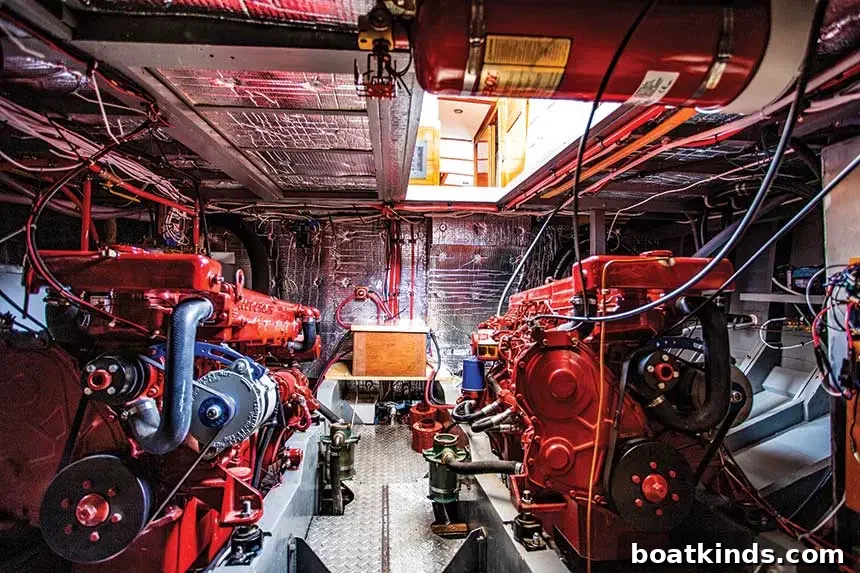
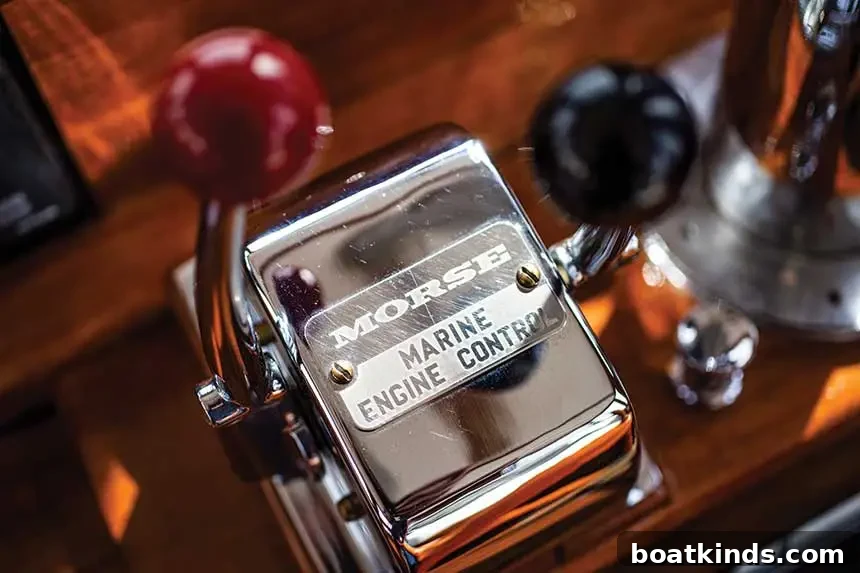
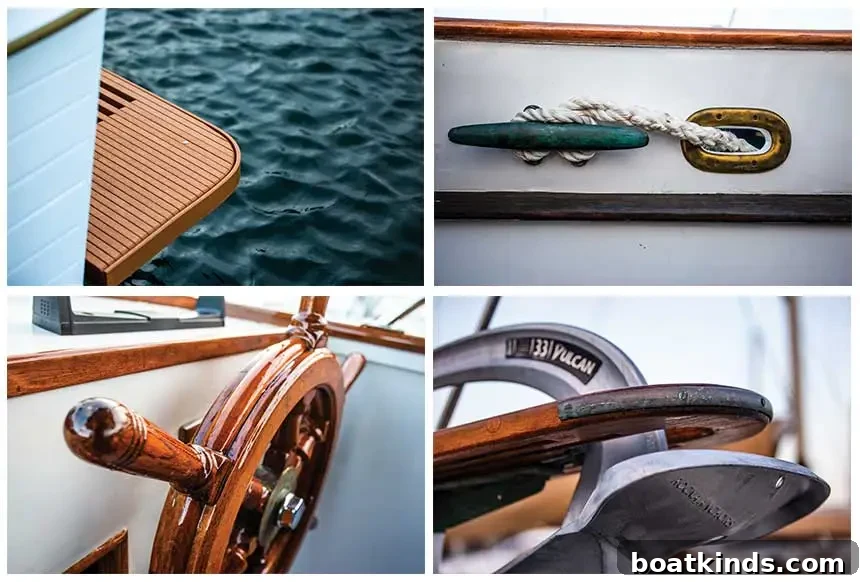
The Paulsens kept many classic Grand Banks elements—teak cabinetry, the traditional helm wheel, and the parquet cabin sole, which Eric plans to refinish. They also introduced personalized touches that make Splinters uniquely theirs. Eric fashioned countertops in the galley and head and built a striking salon table from live-edge Western maple planks sourced from a Pacific Northwest sawmill. To open up the salon, they sacrificed some galley storage by removing the standard L-shaped return, creating a more inviting living area.
Eric built a bench in the aft port corner of the salon to replace a chair; it houses a freezer and creates a cozy reading nook positioned to take advantage of the view. Kim repurposed a whiskey-barrel hoop into a mirror frame for the master head, and the couple carefully selected lighter fabrics to offset the salon’s dark wood. Other modifications include built-in flybridge and salon seating and reorienting the master berth athwartships.
Eric approaches his work without fanfare. He doesn’t blog or boast, but he has every reason to be proud of what he and Kim achieved together. He acknowledges that the restoration would not have been possible without Kim’s support; maintaining their relationship while tackling a project of this scale was critical to its success. The couple now live aboard Splinters, and while a few small systems and finishing details remain—sticky locker doors, a finicky fuel filter—Eric is already planning short cruises to Catalina and the Channel Islands and dreaming of longer passages, perhaps even to Alaska.
For now, the work continues in smaller ways; those hardworking fingers will be busy a while longer. But the transformation from a neglected hull in a California marina to a lovingly restored Grand Banks 42 Classic sitting in a San Diego slip is a testament to patience, craftsmanship, and the reward of sticking with a restoration project from start to finish.
This story first appeared in the May/June 2019 issue of Passagemaker.