
Bruce Kirby: The Story Behind the Laser and a Lifetime at Sea

Bruce Kirby has collected so many sailing stories that, even after nearly 63 years of marriage, his wife Margo admits she hasn’t heard them all. At 90, he still recalls vivid moments from a life spent on and around boats.
“I’m probably the only person left who remembers listening to the America’s Cup on the radio before the war,” he says, remembering the Canadian Broadcasting Corporation’s live coverage. “My father and brother listened in 1934. By 1937, when Ranger beat Endeavor, I remember listening to it clearly.”
Sitting at their dining table in Rowayton, Connecticut, Kirby traces his sailing life back to Ottawa, where he grew up carving wooden models and sketching boats as a child. He worked for years as a full-time newspaper journalist while designing boats on the side. In the 1950s the International 14 class provided early success, and his progressively faster designs in the 1960s and early ’70s drew the attention of top sailors worldwide.
Sailing was ever-present and he was competitive. After moving from the International 14 to the Finn class, Kirby represented Canada at the 1956 Melbourne Olympics, where he forged a friendship with Paul Elvstrøm, the Danish legend who won multiple Olympic golds. Kirby skipped the 1960 Rome Olympics after the birth of his daughters but returned to Olympic competition in the Finn at Tokyo in 1964.
At Tokyo he had a memorable moment in heavy air: chasing a Russian competitor, he caught a gust and a wave while the other boat broached and capsized in a collision. Convinced he might be at fault, Kirby reported himself to race officials. Later, Elvstrøm gave him a dry comment that relieved him: “If he was upside down, he couldn’t have hoisted a protest flag.”

By 1968 both Kirby and Elvstrøm had switched to the Star class. They weren’t having their best regattas that year, but in a later race they found themselves first and second. “As we crossed the line he said, ‘What are we doing up here?’” Kirby remembers, smiling at Elvstrøm’s famous sense of humor.
Kirby’s most enduring contribution to recreational sailing began in 1969 when, at a Canadian friend’s request, he sketched a preliminary design that would become the Laser. Decades later he still keeps that original drawing—the so-called “Million Dollar Doodle”—in a basement drawer. The friend, who had been building Kirby’s International 14s in Canada, produced a prototype for a design competition and it won. At the 1970 New York Boat Show, 144 Lasers sold straight off the floor, a record that Kirby believes still stands.
The Laser changed Kirby’s life. While he stayed on as a yachting journalist for a time, Margo handled the flood of orders that arrived at the family PO box. “The Laser paid for our house,” he says, referring to the larger Rowayton waterfront home they later sold. Royalties from the Laser also allowed him to leave his editor’s job in the 1970s and commit to boat design full time.
He often joked that a phone call might one day ask him to design a 12 Metre—and that call eventually came. In 1981 Canadian lawyer Marvin McDill proposed that Canada compete for the America’s Cup. Kirby designed Canada One for the 1983 campaign and later revised her into the wing-keeled Canada II for 1987. Though Canada II didn’t advance past the round-robin stage in 1987, she scored a high-profile victory in a light-wind duel against Dennis Conner in Fremantle, Australia—an outcome that threatened Conner’s path to the semifinals and left a lasting memory for Kirby.
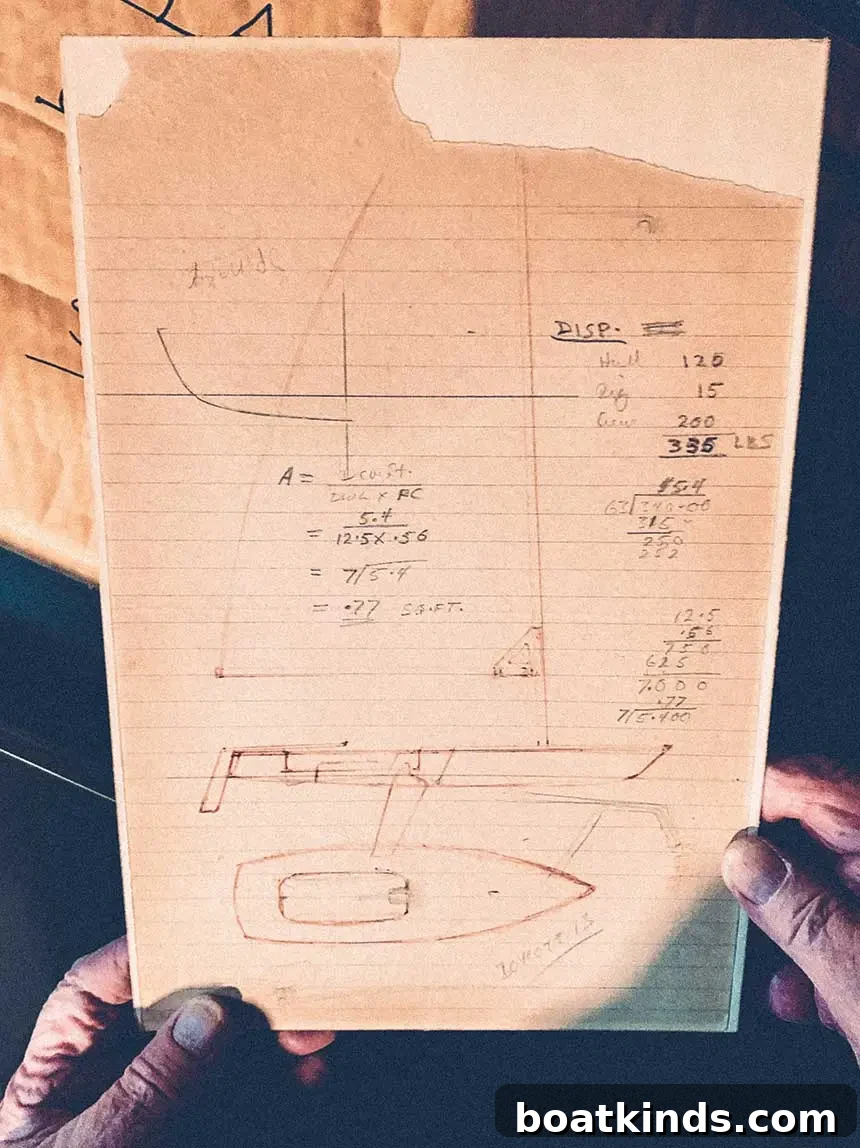
Throughout his career Kirby produced many influential designs beyond the Laser: the San Juan 24, which spawned numerous fast keelboats, and the Sonar, later adopted as an official Paralympic sailboat among others. He sailed actively for more than eight decades—racing Lasers in his 80s, crewing on larger boats, and cruising with Margo in the shallow-water Sharpie he designed for their local waters—until a broken vertebra curtailed his sailing last year.
Today Bruce Kirby is widely regarded as one of the great yacht designers of his generation. The Laser has exceeded 220,000 sales, and his career has been recognized with many honors, including induction into World Sailing’s Hall of Fame in 2012. Despite age-related macular degeneration that now limits his ability to draw, he and Margo still laugh about answering the phone in case someone wants him to design another 12 Metre.
Not everyone in his early life understood his devotion to sailing. Margo remembers her mother asking, “When are you going to get this sailing thing out of your system?” Kirby’s answer, in practice, was simple: he never did.
This article originally appeared in the June 2019 issue.