
Mariners are often labeled superstitious because so many things can go wrong on a boat. I disagree. Boats are inanimate. I’m educated enough to know they don’t respond to spells or rituals. Still, after years aboard, I’ve learned to listen to my boat—she communicates in practical ways, not omens. When I follow those signals, things tend to go better. Here are a few concrete lessons she’s taught me:
- If you leave a laptop under a porthole, you’ll likely find the porthole leaking into it.
- If you invite guests over for dinner, the head may back up at the worst moment.
- If you wash your hair with lots of shampoo, the freshwater pump might decide to quit.
- If you want to unplug shore power by accident, do it from the priciest power pedestal with everyone watching.
- If you back into a slip like a sportfisherman, the shift linkage can fail.
- If you hang from a snap shackle, there’s a good chance it will break.
Those are not superstitions—just predictable consequences of behavior. Yet there are the old maritime myths that persist. I’ve tried to stay skeptical, but coincidence has a way of looking like fate. The only time I left harbor on a Friday the 13th, the engine failed three days later and never ran again. A mechanic blamed a defective part, which might be accurate, but that part had worked fine for 15 years. I don’t believe in magic, but that experience put a dent in my confidence about repeated trips on unlucky dates.
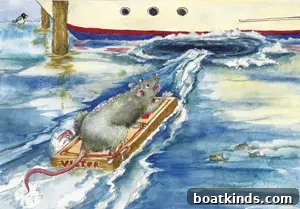
Rats are another source of lore. The old warning goes that if a rat jumps off your boat, it’s a bad omen. I think the superstition is backward: a rat jumping ship would be good luck for me. I don’t want rats aboard. I’ve seen birds fly off and fish flop away, but never a rat jumping free under its own power. Once we trapped a rat at night in a marina; when the trap snapped, the rat was still alive and struggling to free a trapped leg. I used a long-handled crab net to fling him off the boat. He floated toward a megayacht’s intake and, despite not seeming drenched, was soon crushed by that vessel’s systems. Superstition would say the rat escaping meant safety for that yacht—reality disagreed.
On another occasion a rat was aboard briefly and bit our pet parakeet’s leg. We didn’t notice until days later in Fort Lauderdale, and the aftermath included an avian vet visit and splints. That short encounter cost a small fortune. If any superstition were at work I would have preferred the rat stayed on board—maybe it would have brought luck like winning a lottery—yet the practical truth was damage and expense.
Cats are supposed to bring good luck on a boat, provided you don’t offend them. That’s a complicated checklist no one needs. I avoid having a cat aboard partly because a sensible rat would jump ship the moment it saw a cat—if rat departure is the ominous sign, having a cat could be dangerous. So I keep things simple and cat-free.
Birds carry their own set of stories. The albatross gets the most reverence: it follows your boat and is said to bring luck, but harming one invites doom. I had an albatross trail our boat and took every precaution—no lines trailing, no food scraps overboard, and constant watch—largely out of respect and a little nervousness. I pictured a bone catching in its beak and catastrophe ensuing. The bird eventually left on its own.
Not all seabirds are so revered. Off Palm Beach we saw anglers frantic as a pelican had hooked bait in its beak and circled, tethered by fishing line. They called mayday. The incident drew a marine patrol boat, partly because catching or injuring protected birds can bring legal trouble. That result had a rational cause: regulations and enforcement, not necessarily an act of avian magic.
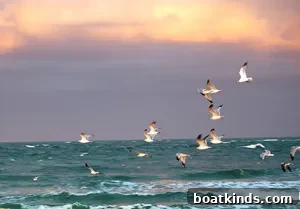
Fishermen interpret bird behavior as signs of fish. Diving birds usually mean fish beneath the surface. A large flock of gulls sitting calmly before suddenly erupting into flight is often heralded as an omen of a big bite. In truth, the sudden mass takeoff is more mundane—sometimes triggered by a predator or by one gull startling the others. And yes, sometimes the sudden commotion is caused by a less noble reason: one gull’s gas can send the whole flock airborne, which is less poetic than prophecy but just as real.
Other superstitions are simpler and easier to test. Stepping aboard with your left foot is said to bring bad luck; I’ve often done it with no immediate penalty. Stepping off left-foot-first can certainly be hazardous if the dock is missing, so I’ll take common-sense precautions over ritual any day. Spitting over your left shoulder to rid yourself of the devil is theatrical; I’d rather not invite anyone to spit on my boat at all.
One superstition I’ve learned to respect is “puttin’ mouth on it.” Talk about consistently good weather or a flawless engine and something will very likely go wrong. Praise a calm passage and you may invite a blow; crow about an engine’s perfect performance and it could fail shortly after. I once boasted about fixing a dinghy outboard and promptly dropped it overboard the next day while reinstalling it. Call it streaky coincidence or call it lore—after enough similar incidents, I’ve found it safer to keep quiet.
After years afloat, the clearest lesson I’ve taken from maritime lore isn’t about curses or charms—it’s restraint. Watch the boat, fix what’s needed, and avoid tempting fate with loud declarations. In short: listen, be cautious, and maybe keep your mouth shut.
This article originally appeared in the July 2015 issue.