
How a Seattle Couple Turned a Pandemic Quarantine into a Liveaboard Adventure
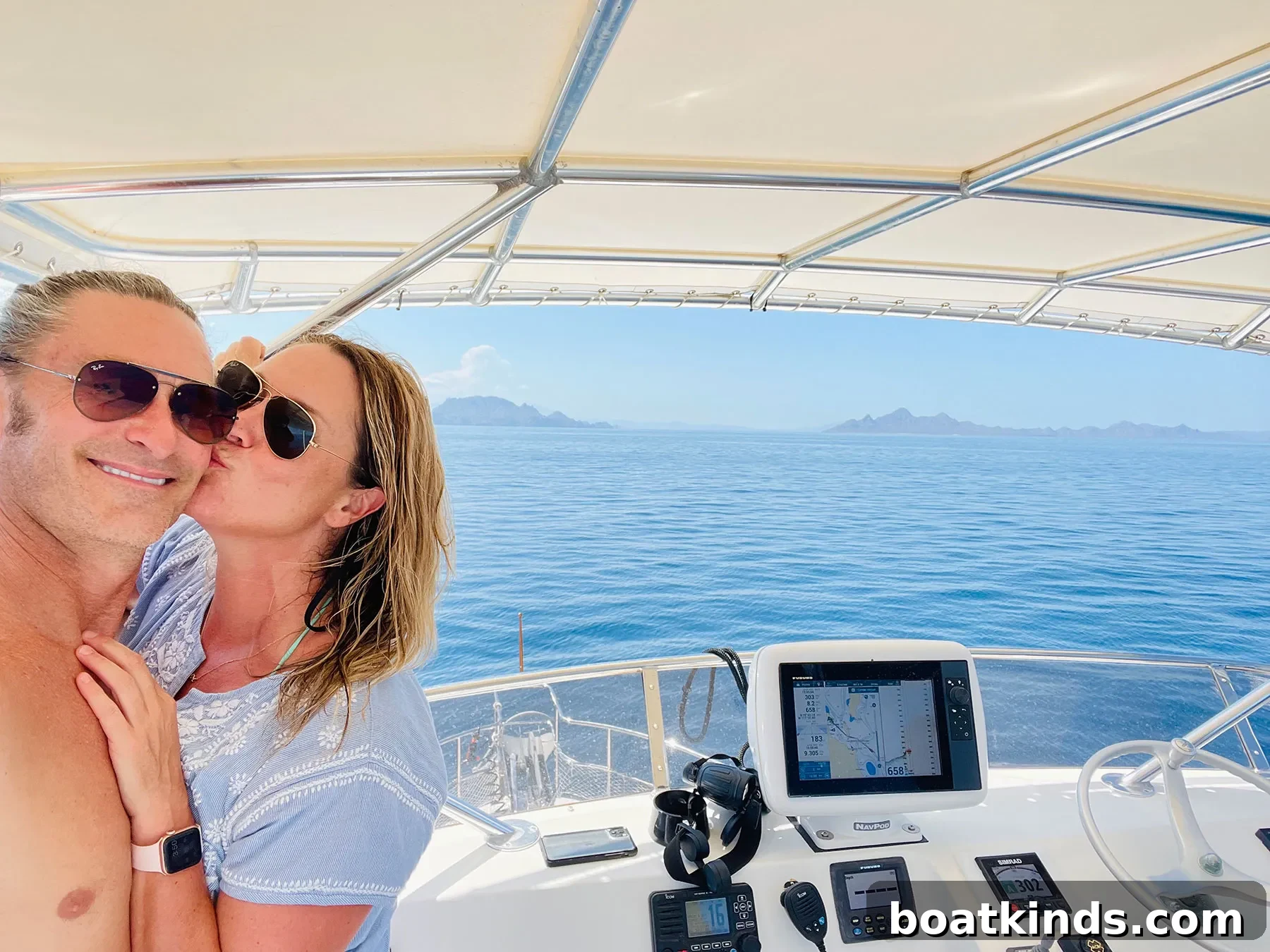
Heather Brewer and Paul Bultema, both based in Seattle, Washington, met on the dating app Bumble in March 2020. Heather noticed Paul’s profile right away—he had visited 91 countries, while she had seen 72—and she liked the idea of traveling with someone equally curious. They connected immediately on their first date, and by the third they were boarding a plane bound for Guatemala with plans to explore Central America. Heather remembers the gamble: friends warned her it was risky to travel with someone she’d just met, but shared professional contacts and a mutual appetite for action reassured her. “I had a good feeling about him,” she says.
Their trip was going well until the Covid-19 pandemic abruptly curtailed travel everywhere. Rather than return to separate homes to quarantine, the couple chose a different path: they decided to quarantine together on Paul’s Sea Ray 310 Sundancer and spend the weeks that followed living and working out of the boat while exploring Washington’s San Juan Islands. What began as an emergency plan quickly became their experiment in remote work from a small floating home.
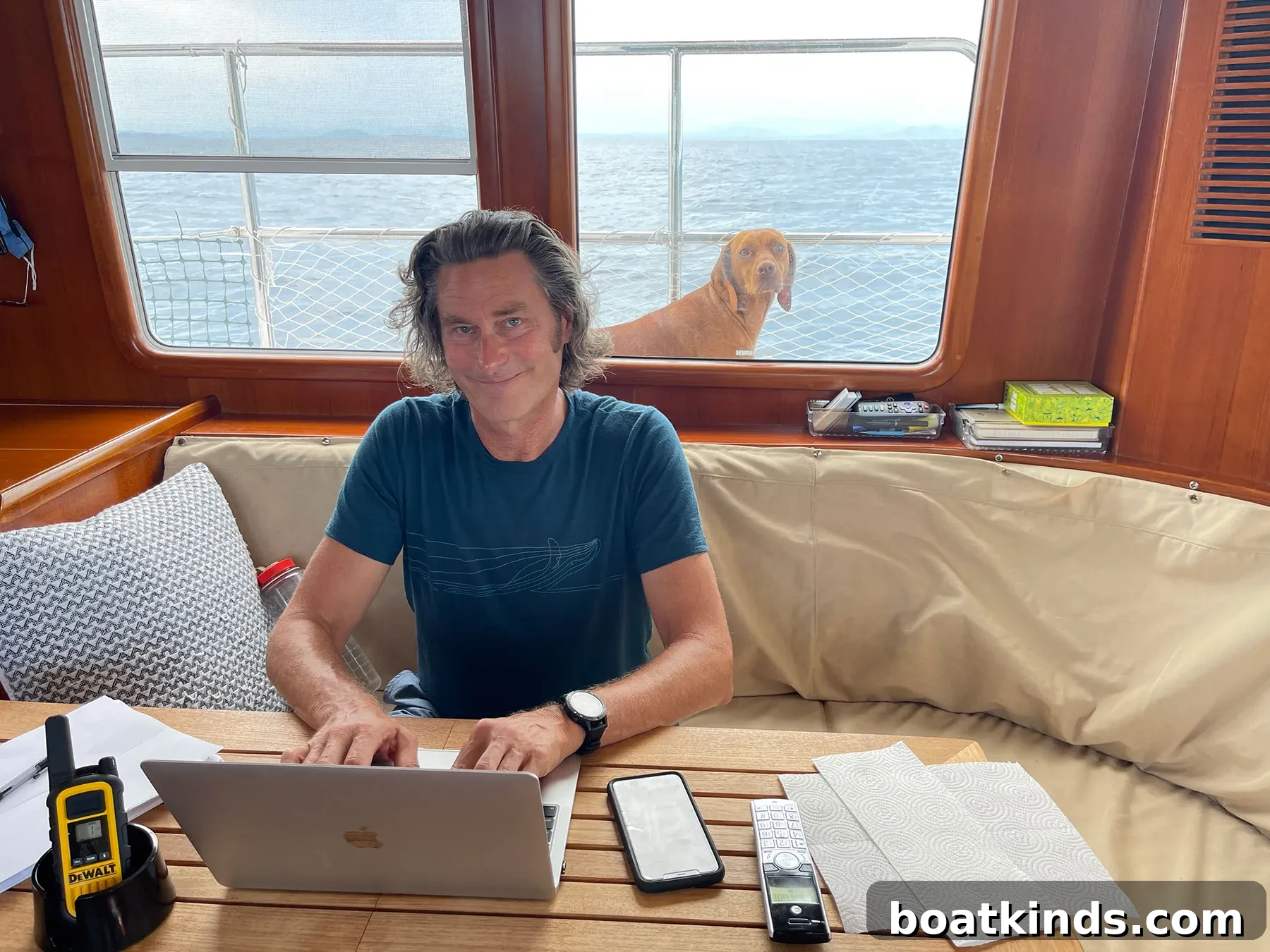
Neither Heather nor Paul had professional experience working from a vessel, but both were prepared to adapt. Paul, who works as a director of workforce development at Amazon, created a workspace in the cabin while Heather, a management consultant, improvised a deck office. They bought a T‑Mobile hotspot, set up their laptops, and used beach towels secured with bungee cords to cut screen glare. The result was a functional, if unconventional, remote office with water views.
Living and working on the Sea Ray taught them practical seamanship and relationship lessons in equal measure. “We both had limited boating experience—some childhood sailing for me, little for Heather—and we made every possible beginner mistake,” Paul admits. Those early challenges, from anchoring to provisioning, forced them to learn quickly and to communicate well under pressure as they built confidence handling life afloat.
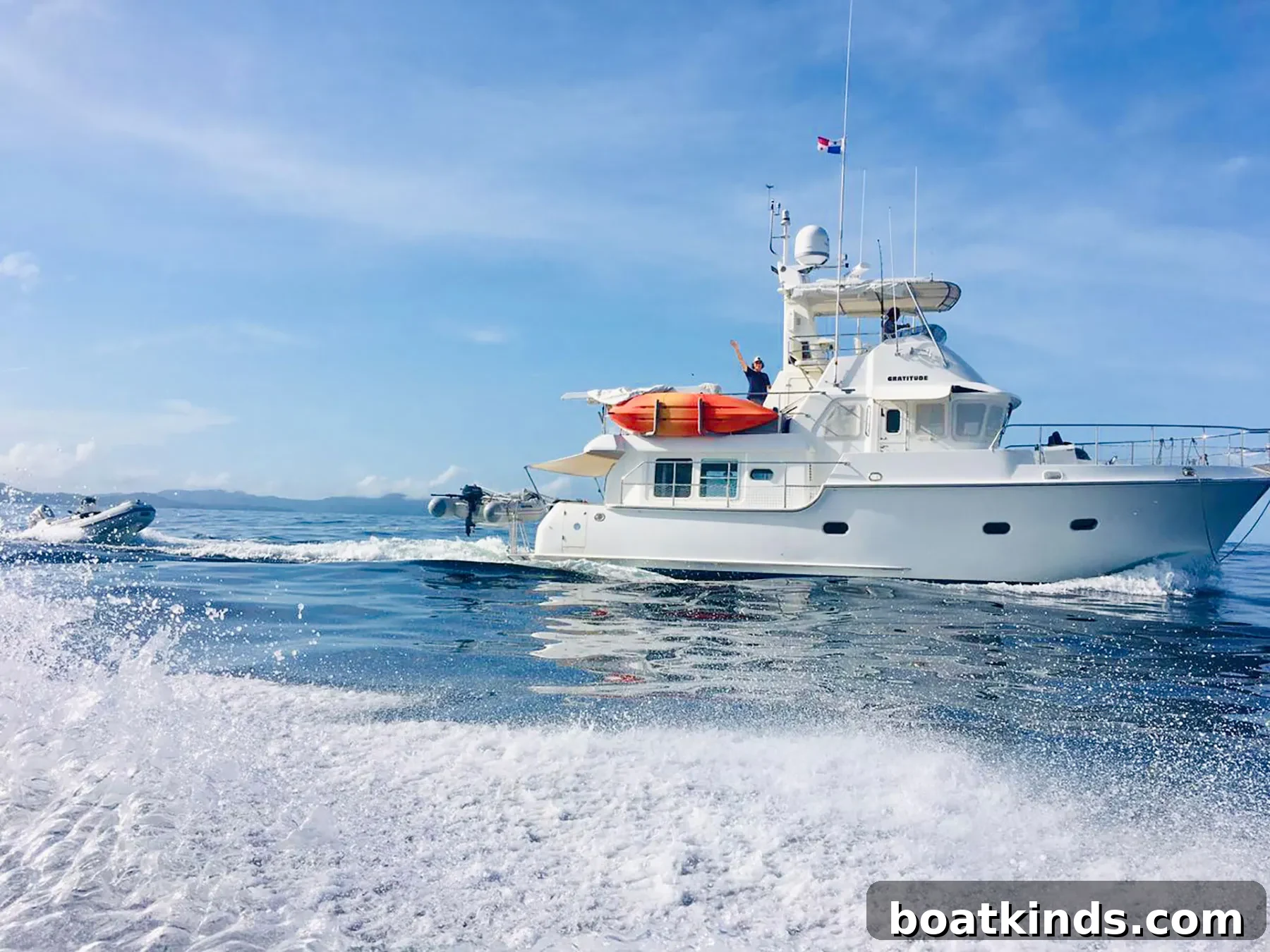
After about five months, the couple decided they needed a larger, more capable vessel for longer passages. In Florida they found a used Nordhavn 43 with a quoted range of 2,500 nautical miles—exactly the kind of seaworthy trawler that would let them travel farther and stay comfortable at sea. They moved aboard on Christmas Day and, practical as ever, had supplies shipped to a nearby hotel while they completed the transition.
They drafted a clear float plan: depart Florida, cruise the Bahamas and the Caribbean, transit the Panama Canal, then continue north through Costa Rica and Mexico. To accelerate their learning curve, they hired a captain to sail with them while they absorbed navigation skills and systems knowledge. Before departure, Lauderdale Marine Center upgraded their communications with a new satellite system and telecommunication gear so both could keep full-time jobs while cruising. They wanted reliability for remote work, and the improvements enabled that.
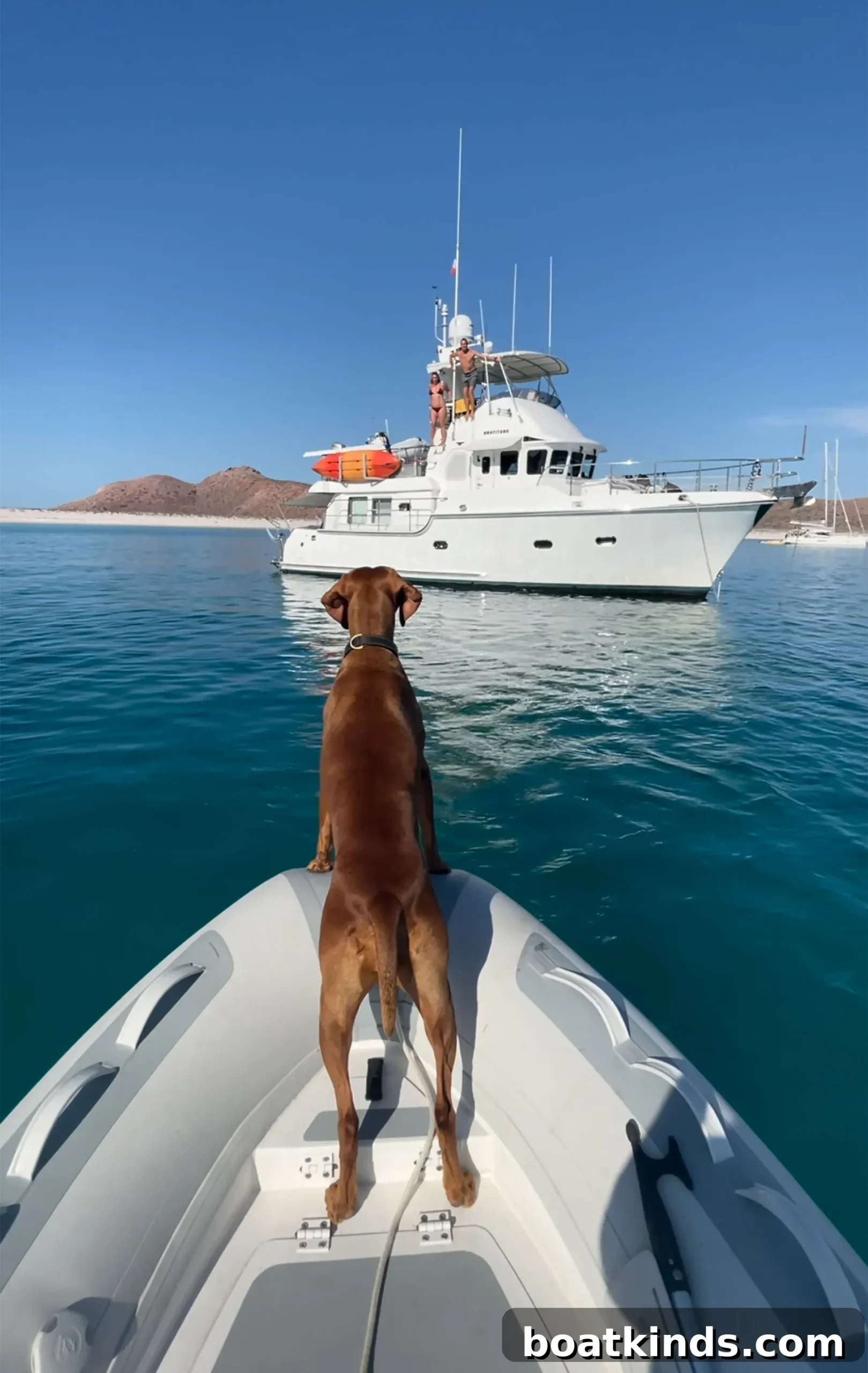
They chose a name that reflected their mindset: Gratitude. Friends and family had questioned whether two people in a relatively new relationship could endure extended liveaboard life together, yet Heather and Paul felt thankful to have found each other and the opportunity to learn and travel as a team.
Eight months into their liveaboard experiment—what Heather jokingly calls living and working “reboatly”—the couple had logged roughly 8,000 nautical miles. When Heather called from Puerto Escondido on Mexico’s Pacific coast, she described a routine that blended professional responsibility with cruising life: scheduled meetings over reliable internet, watch rotations with the captain when passages demanded, and downtime exploring shorelines and small coastal towns. Their plan was to return to Seattle by May and resume hybrid office schedules a few days each week, but they intend to keep using the boat for the days they don’t need to be physically in the office.
For both, the pandemic-era decision to live aboard transformed into a long-term passion. They had traveled independently for years, but the shared experience of navigating storms, provisioning for long passages, and balancing remote work with seamanship revealed something deeper: they both love the water and the outdoors. That shared passion has made boating not just a temporary solution, but a lasting lifestyle.
Jeanne Craig
[email protected]