
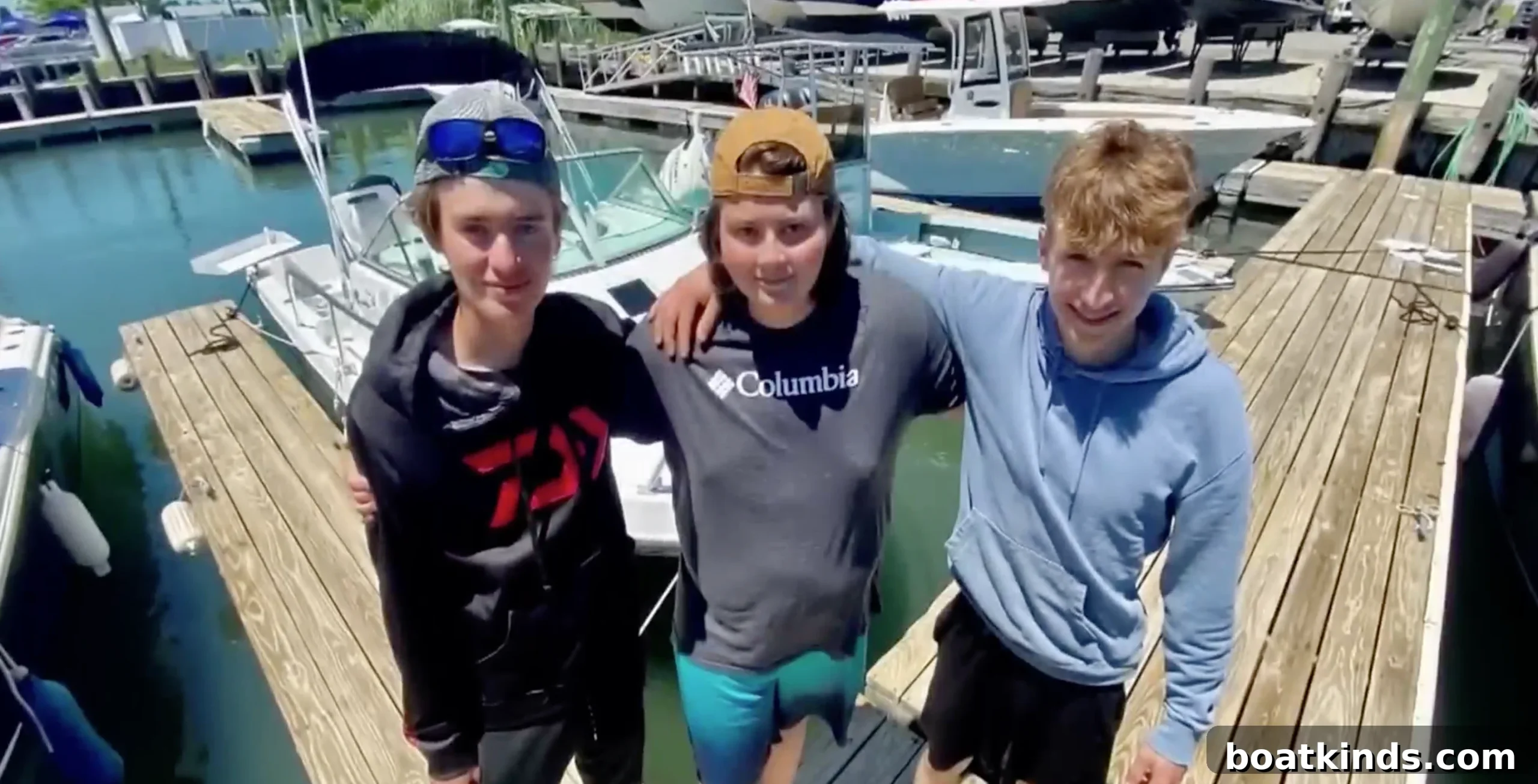
Teenagers Race to Rescue After Boat Overturns in Long Island Sound
Three local teenagers sprang into action last week when a nearby boat suddenly began taking on water and then capsized, throwing its occupants into the chilly waters of Long Island Sound. The quick response by the teens helped save five older men who were on the overturned vessel.
The rescuers — 18-year-old Evan Kamoen of Killingworth, Connecticut, along with friends Luke Voegeli and Ryan Kelly — had been fishing together when they heard a VHF distress call from the struggling boat. They navigated toward the source of the call and arrived moments before the situation escalated: according to Kamoen, the other vessel “slowly…and then whoosh, right over.”
Authorities from the Connecticut Department of Energy and Environmental Protection (DEEP) reported that five men between the ages of 72 and 80 were aboard the capsized boat. The teens told rescuers that three of the men could not swim. Working quickly, the teenagers pulled four men from the water, while another nearby boat reached the scene in time to recover the fifth person.
DEEP Environmental Conservation Officer Alexandra Blackwell credited several key safety factors that helped prevent a tragic outcome. “Lifejackets, the use of Marine VHF Radios, and the monitoring of Channel 16 by the Good Samaritan rescue vessels saved the lives of these five men,” she said. The rescued men declined to be identified publicly, but they expressed deep gratitude and called the teenagers “lifesavers.”
Kamoen later described the group simply as kids doing what they had to do. “We were just a bunch of teens,” he said. “If you come across a situation like that, you just have to do what you have to do.” That straightforward response reflects the urgency and calm decision-making that often make the difference in on-the-water emergencies.
What Happened and Why It Matters
The incident underscores several important boating-safety principles. A working Marine VHF radio and attention to Channel 16—the international distress frequency—allowed nearby vessels to become aware of the emergency quickly. Lifejackets, worn or readily available, remain the most effective immediate protection against drowning after a vessel capsizes. The presence of multiple Good Samaritan vessels on the water and the fast actions of the teens helped ensure all five occupants were recovered safely.
While the men involved have chosen not to be identified, their gratitude toward the teens is clear. The coordinated response — hearing a distress call, moving quickly to the scene, and assisting those in the water — demonstrates how preparedness and willingness to help can save lives.
Resources and Further Coverage
Local media outlets covered the rescue, including news reports that feature interviews with the teenagers and body camera footage from responding agencies. Those reports provide a fuller account of the sequence of events and firsthand reactions from the people involved.
Safety Takeaways for Boaters
This incident is a reminder to anyone who spends time on the water of a few simple, lifesaving precautions:
- Always carry and monitor a VHF radio on Channel 16 while underway.
- Wear or have accessible lifejackets for every person aboard.
- Keep a clear plan for emergencies and be ready to assist others if it is safe to do so.
- Report distress calls and render help when possible; Good Samaritans often make the difference in critical moments.
The swift actions of Evan Kamoen, Luke Voegeli and Ryan Kelly on Long Island Sound serve as a powerful example of how quick thinking, basic safety gear, and community-mindedness can avert disaster. Their courage and the cooperation of nearby boaters helped bring five people home safely.