
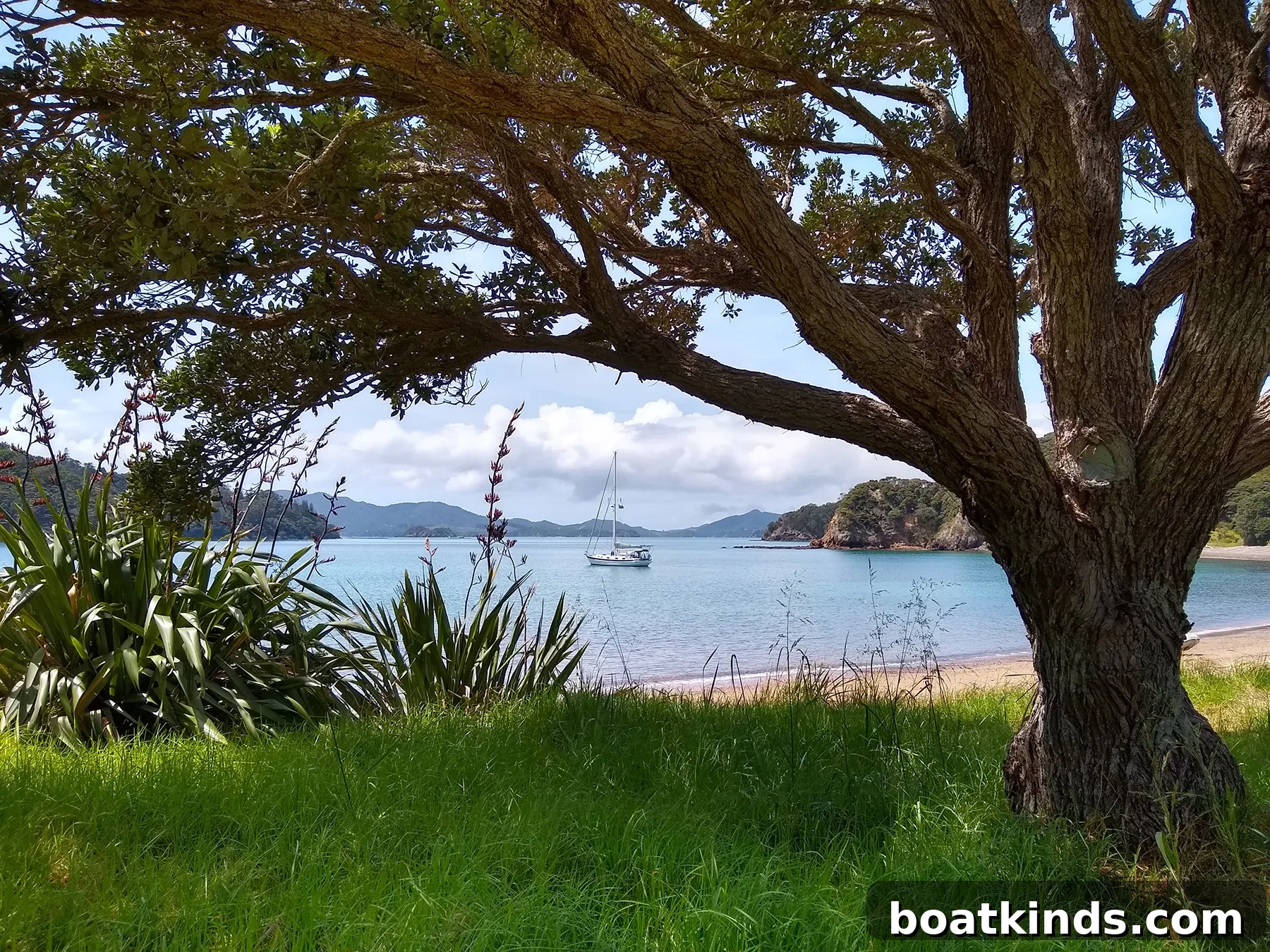
Setting out from Portsmouth, New Hampshire, in 2018, Jeff Bolster and his wife, Molly, intended to circumnavigate on their Valiant 40. After calls in the Caribbean, Panama, the Galapagos, French Polynesia, the Cook Islands and Tonga, they reached New Zealand just as South Pacific cyclone season was ending—only to have the Covid-19 pandemic interrupt their voyage. Faced with that disruption, they cruised New Zealand’s northern coast for 19 months, then left the boat and flew home to the U.S. Jeff and Molly planned to return to the boat in late 2022. Jeff’s reflections on making this once-in-a-lifetime journey appear in several installments; this is the third.
For Molly and me, the crossing from New Hampshire to the eastern Caribbean was only the prelude. We love the Caribbean—comfortable and familiar—but we had sailed those islands many times. After a month ashore, we mentally began our long voyage at Îles des Saintes off Guadeloupe and set a course for Panama: roughly 1,400 miles downwind. That westbound leg in the trades felt like a real milestone. We hoisted the mainsail, poled out the genoa wing-and-wing, and watched dolphins play in our bow wave as the Valiant 40 rolled under us. As Chanticleer rose to each sea, we smiled—the dream was unfolding.
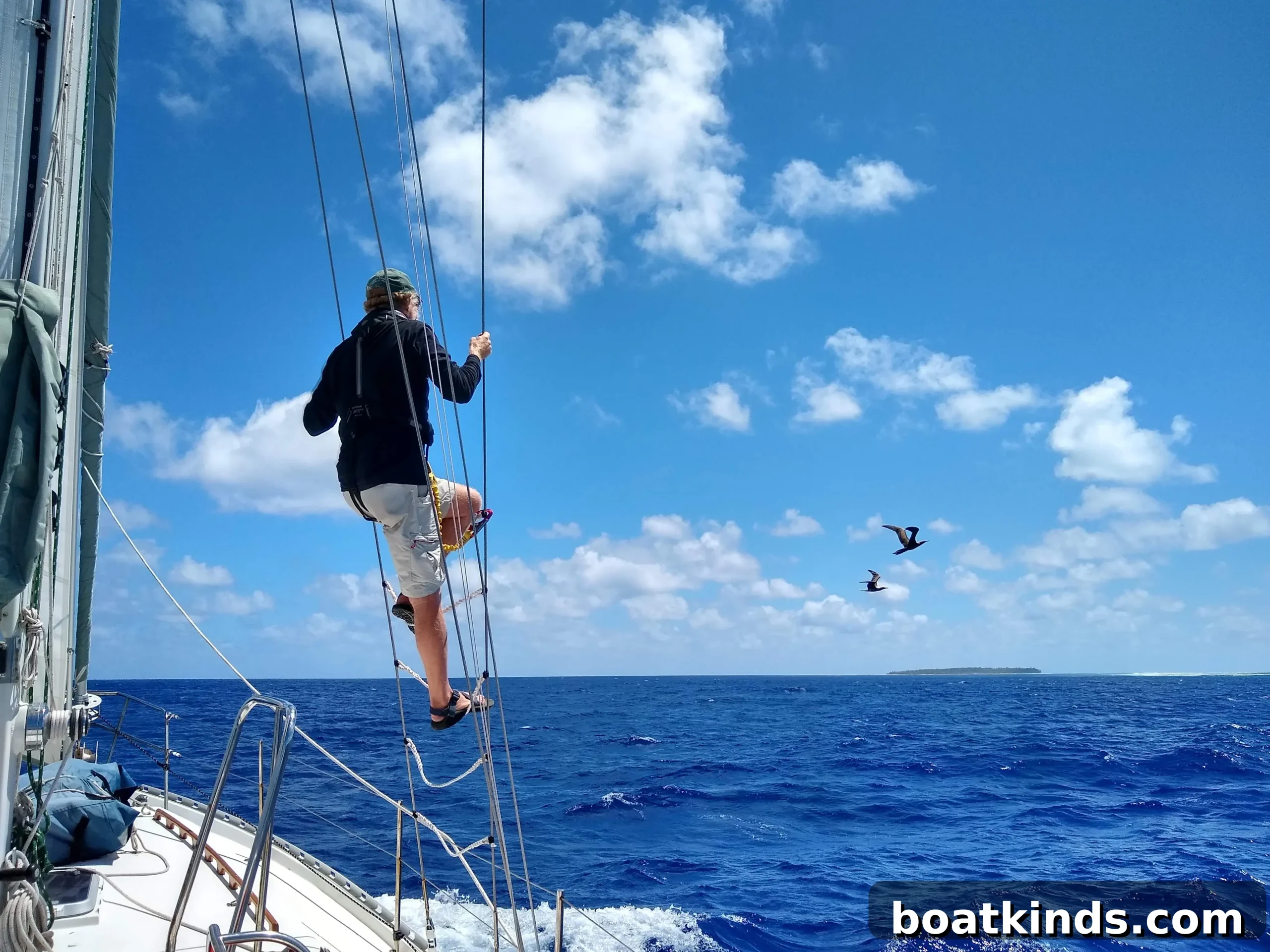
At sea we kept a disciplined scan pattern so no one aspect of the voyage consumed our attention. Weather, navigation, traffic, sail trim, pumps, mechanical systems and crew welfare all demanded regular checks. Someone was always on watch. Our routine included hourly bilge inspections and log entries, and, except in heavy weather, I walked the deck before dark each day looking for rig problems, chafe, or odd surprises—from pungent flying fish tucked into a Dorade box to a gooseneck loosening. Staying vigilant let us relax in between.
With Guadeloupe behind us we established a rhythm that would define the next year: offshore passages, island hopping and local exploration, then another offshore leg. When we weren’t underway or tied to a dock, we swam each morning before coffee—a small luxury. After a nine-day passage, which included the sometimes boisterous stretch north of Colombia, we spent a month in Panama. We began in the San Blas Islands, where Kuna communities live on tiny islets and make daily trips to the mainland in dugout canoes to tend gardens, gather wood and fetch water. Semi-autonomous and vulnerable to rising seas, the Kuna community was both fascinating and sobering. Their grass houses were often fitted with small solar panels for phones and lights, and their intricate molas—reverse-appliqué textiles made by women and frequently sold by men—were stunning. Surrounded by evident poverty, we found it hard to haggle over prices.
In Panama I replaced our old Edson steering cables and hired a Raymarine technician to tune a balky autohelm. Long-distance cruising means routinely repairing and adjusting your boat in unexpected places. We were not the first cruisers to be inspected by wary customs officials, nor the first to be mesmerized by exotic birds, large crocodiles near the marina and the jungle’s immediate presence. At night we could hear howler monkeys from our bunk. Yet Panama’s great marvel remained the Canal: transiting the isthmus—ascending three locks and descending three more—took a day and felt like passing from one world to another. On the Pacific side, the ocean’s vastness unfurled before us and we paused long enough to breathe in the enormity of it.
Our confidence in the boat and in each other never faltered, which made the long passages exhilarating instead of intimidating. After a week of steady trade winds and no doldrums, we crossed the equator at 0140 on April 4. By mid-morning sea turtles surrounded the boat in numbers we had rarely seen, a reminder of the ocean’s bounty. That afternoon, when our anchor dropped off San Cristóbal, we celebrated with high fives and a glass of wine—we had arrived in the Galapagos.
Some cruisers bypass the Galapagos because of strict regulations and high fees, but we wouldn’t have missed them. We spent a richly memorable month exploring five different islands. Santa Cruz’s interior felt like a Dr. Seuss landscape with prehistoric ferns and moss-covered stunted trees; Isabela’s lava fields resembled a moonscape. The Galapagos—swept by the cold Humboldt Current and straddling the equator—seemed otherworldly in its variety and wildlife.
From the Galapagos we faced our longest leg: more than 3,000 miles to Hiva Oa in the Marquesas, with not a hint of land between. That passage was a study in constancy—sunrises astern, sunsets ahead, and steady trade winds that let us reel off miles. The ocean offered daily spectacles: shifting cloudscapes, starlit nights, moonlit seas and endlessly changing wave patterns that kept every day distinct.
Friends back home joked that we were “insane,” and perhaps a little of that was true. Life at sea felt elemental: often naked and unkempt, sourcing food we caught or harvested ourselves, and out of regular human contact. Even simple tasks like making coffee or washing dishes could be awkward when the boat was moving underfoot. But the trade-offs were massive—the night sky, the ocean’s scale, and the deep satisfaction of doing this together made it worth every discomfort.
After 21 days at sea we spent three months soaking up French Polynesia’s islands—Tahiti, Bora Bora and many others spread across 1,600 miles of blue. The Cook Islands and Tonga followed, and the South Pacific’s culture and scenery were more enchanting than we had imagined. Women wearing flower crowns and colorful textiles, outrigger canoe races, and powerful choral singing in church all reflected the islands’ deep ties to family, faith and tradition. White-sand beaches rimmed by reefs and green volcanic mountains became our everyday scenery.
For cruisers the voyage itself is as important as the destinations. Pulling it off demanded seamanship: wrestling a whisker pole on a rolling foredeck, troubleshooting systems and responding to a hundred small challenges of offshore life. Those moments were not always easy, but they pushed us to work together and appreciate aspects of life and teamwork we might never have encountered on land.
Six days out from Minerva Reef, with no threatening weather on the horizon, we sailed into New Zealand’s spectacular Bay of Islands—23 months and about 14,000 miles from our New Hampshire slip. Every mile of that run was a reminder to be thankful for a strong boat, good health, supportive family and the commitment that made the trip possible after 34 years of dreaming. We had intended to keep sailing beyond New Zealand, but the Covid pandemic forced us to pause. Still, we hold hope for future landfalls: few things match the thrill of seeing a tropical island rise off the bow after a long passage.
This article was originally published in the December 2022 issue.