
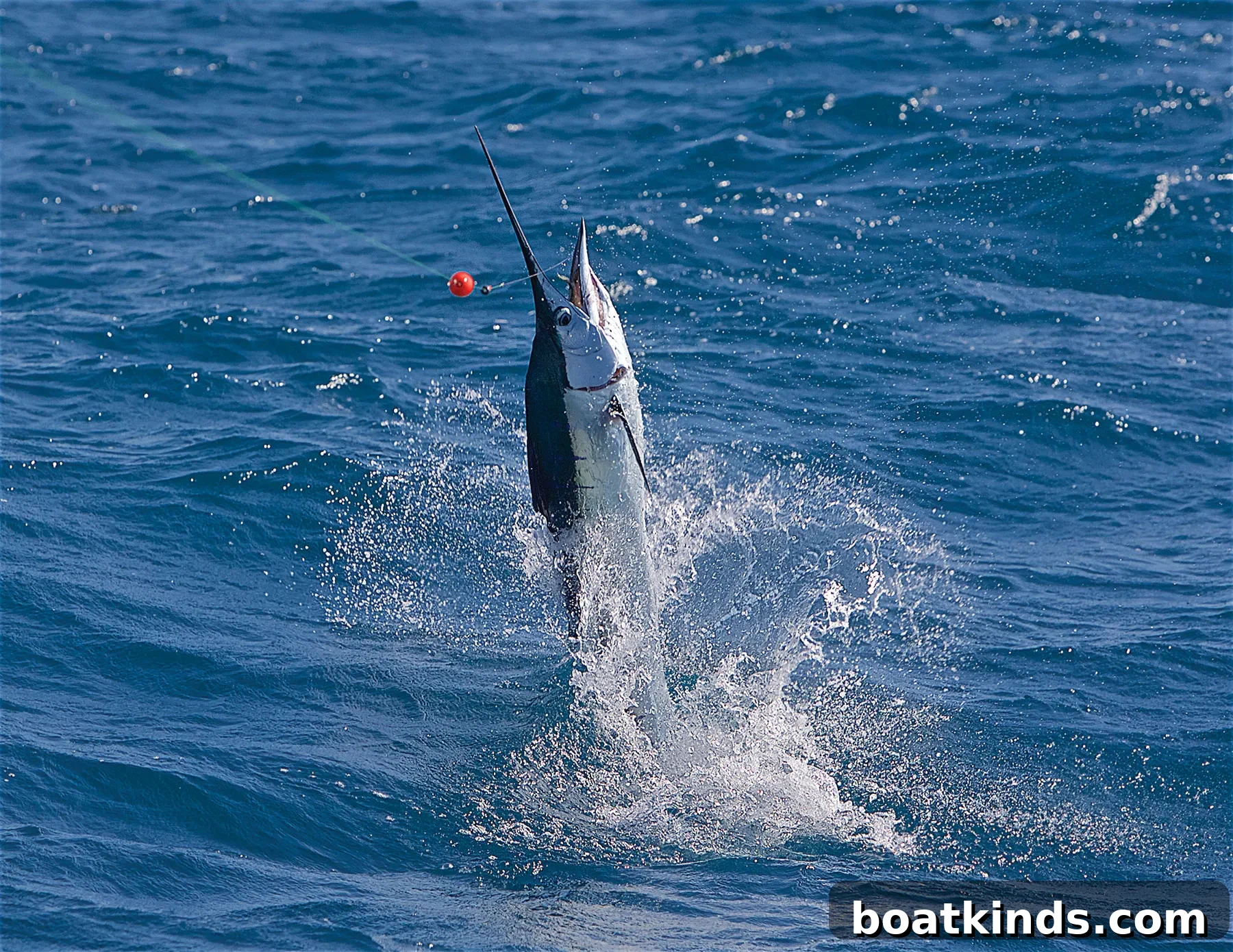
A cold front often brings stiff northeast winds that push against the western edge of the Gulf Stream, producing a rolling countercurrent and choppy seas. Small-craft advisories are common, and locals who are used to warm-weather comfort pull out heavier jackets and foul-weather gear.
This is also the season when generations of anglers converge on South Florida for the winter sailfish run. For three months—roughly from late fall into winter—boat owners, tournament teams and weekend anglers from Fort Pierce to Key West brave brisk air and challenging bluewater conditions to participate in one of the most iconic traditions in recreational billfishing.
South Florida is where recreational billfishing grew into a sport, and sailfish remain the region’s star attraction. The Atlantic sailfish favors subtropical and tropical waters and concentrates near continental shelves; south-central Florida’s narrow shelf, close blue water and productive bait migrations create near-perfect habitat. Combined with the influence of the Gulf Stream and an abundance of baitfish, this coastline becomes sailfish central when temperatures drop.
Nick Smith, one of the most accomplished billfish anglers alive, is a living connection to that legacy. Now 80, Smith remembers his first sailfish at age 15 as a defining moment. “My father hired Capt. Bob Hayes, skipper of the charter boat Adventurous out of West Palm Beach,” he recalls. “The captain’s son showed me how to sit in the chair, hold the rod with my thumb on the spool, feel for the tap, and feather the line so the bait could be taken. My first bite went off like clockwork—the fish began jumping and pulling drag. It was the most spectacular thing I’d ever seen. The fish was beautiful and took my breath away.”
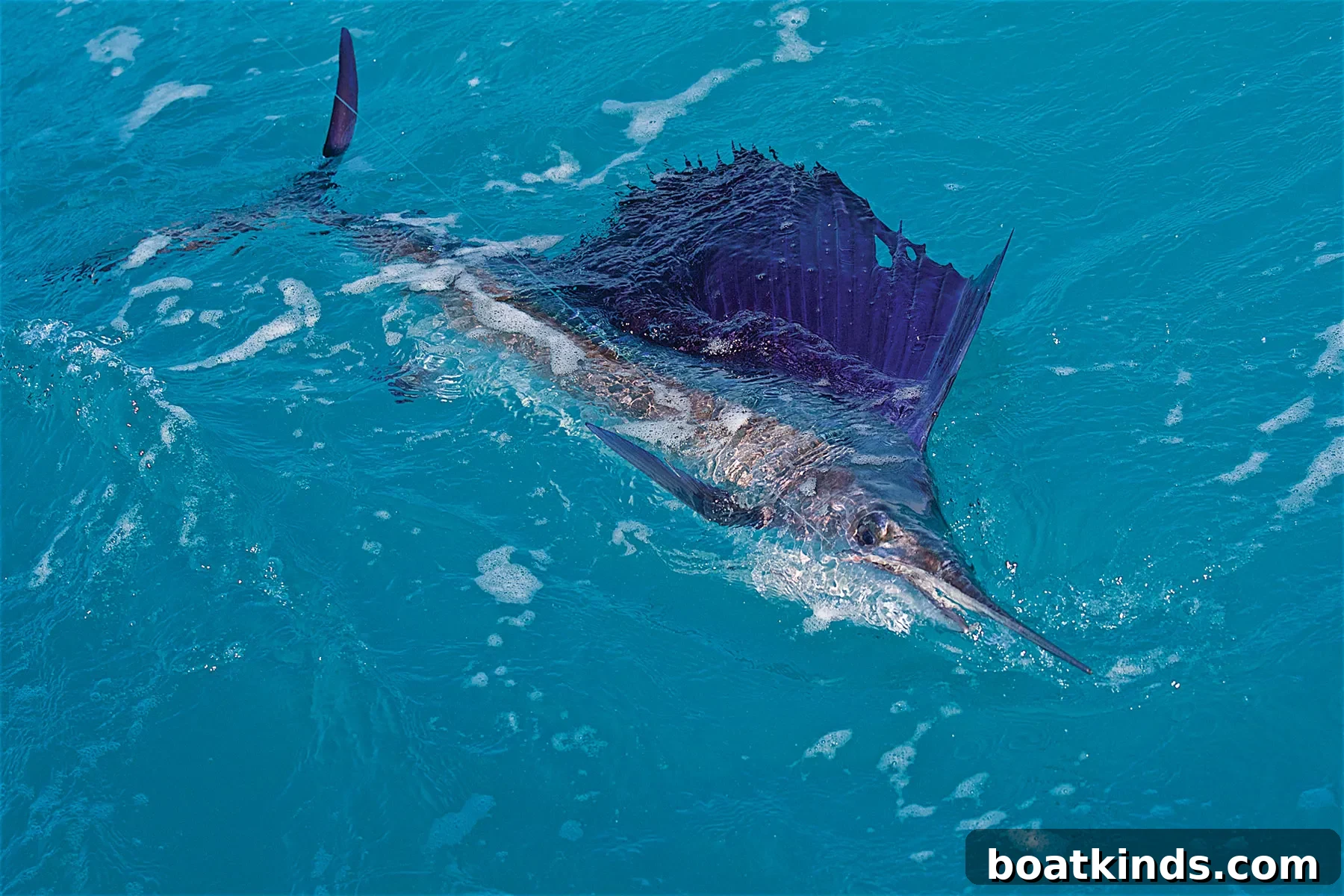
Those early memories are common among anglers—some still feel like yesterday—and help explain why enthusiasm for chasing sailfish remains so strong here. Vast schools of mullet, ballyhoo, goggle-eye and greenies move through these waters, providing a rich buffet. When conditions align, sailfish show their dramatic pack-hunting behavior: groups use their tall dorsal fins to herd bait into tight balls, then individual sailfish charge through and pick off prey—an approach not unlike wolves isolating the weakest animals in a herd.
Cold-front bait pushes can be massive. Under the right circumstances, thousands of sailfish can hunt the reef edges and produce an epic bite, where boats tally double-digit release counts in a few hours. Anglers scramble to find enough release flags to fill their outriggers as fisheries managers and tournament organizers increasingly promote release-based competition for conservation.
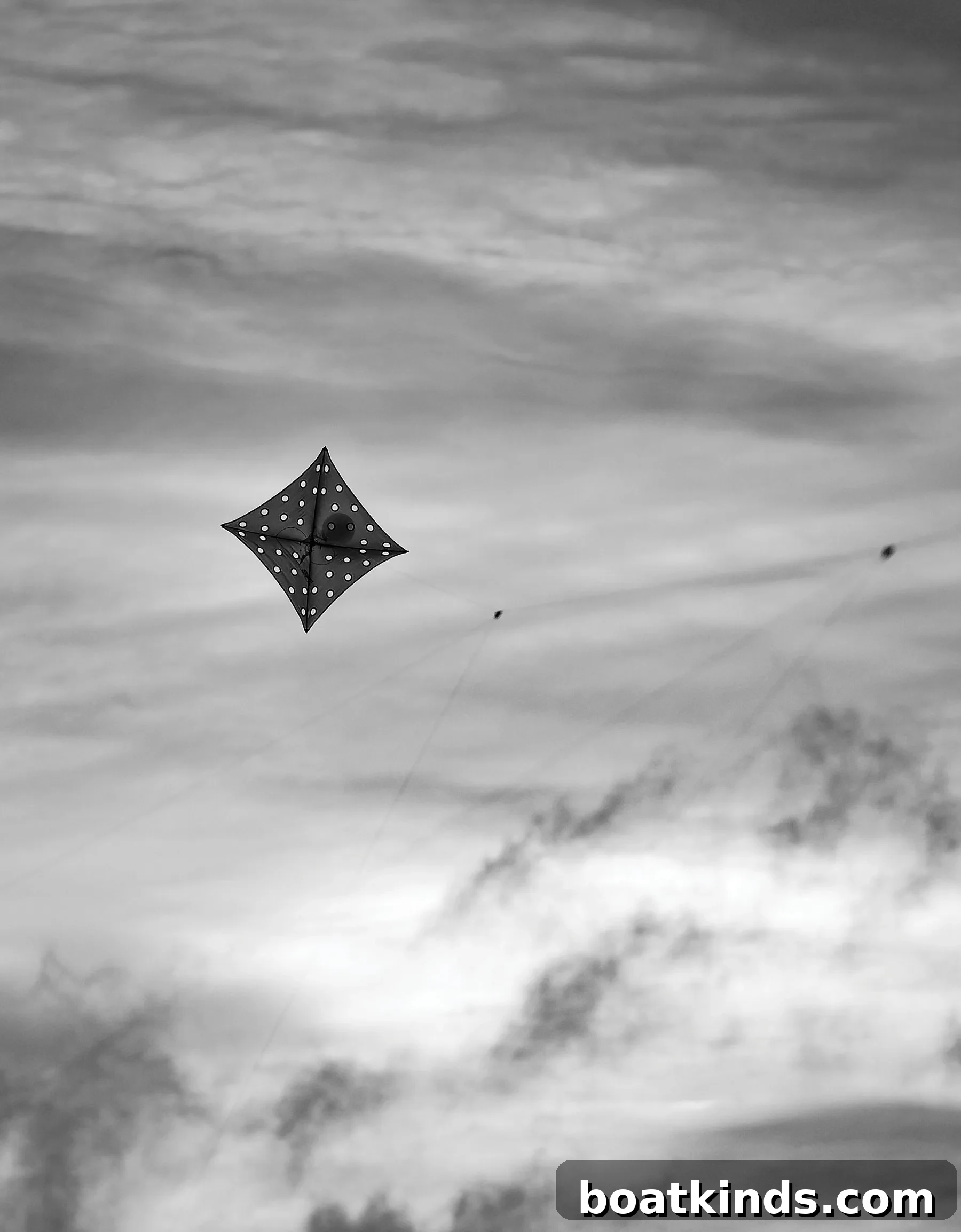
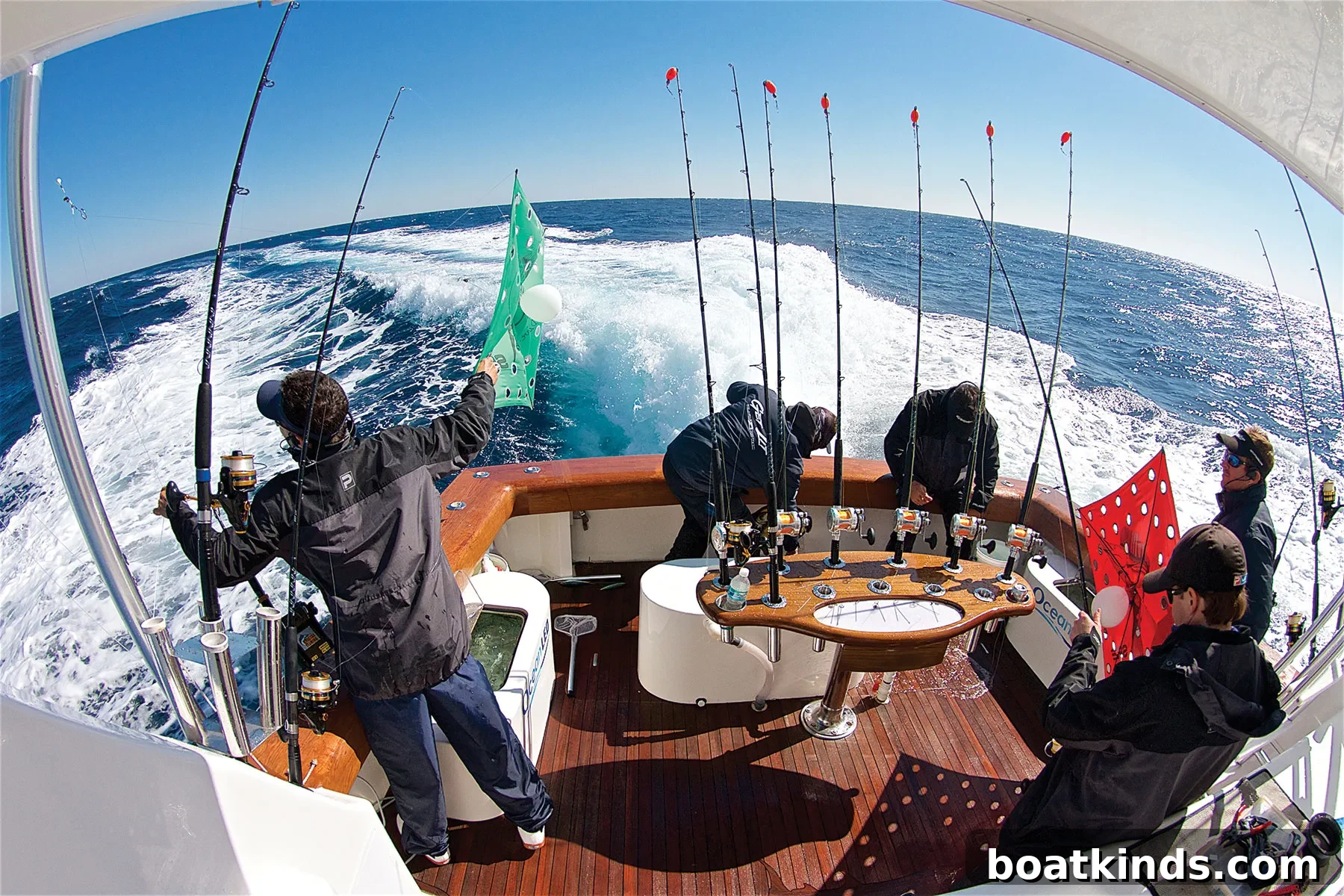
Imagine fishing a stone’s throw from the beach with live baits suspended beneath kites that dance on the surface. Sailfish explode onto the scene from all directions to strike. Boats jockey for position and work double and triple hookups as sailfish streak and leap, screaming drag on light tackle. Captains trim engines, throw the bow to port and starboard, and back down at speed to keep lines clear and anglers in the fight. Few experiences match the frenetic, breathless pace that keeps anglers chasing sailfish here year after year.
The sailfish run has influenced Florida’s tourism and coastal culture since before the 20th century. Palm Beach was an early epicenter of sportfishing, thanks in large part to industrialist Henry Flagler, who developed rail and resort infrastructure that turned Florida into a winter destination. The seasonal influx of wealthy visitors coincided with the sailfish migration, and fishing for the billfish became one of the region’s marquee pursuits.
In 1914 a group of affluent anglers established the Sailfish Club of Florida on Palm Beach, a club that still exists today. The sport, however, quickly broadened beyond elite circles. In 1934 the West Palm Beach Fishing Club was founded to promote sportfishing among a wider community and to stimulate the local economy. “The early members built their clubhouse across from the municipal dock where the charter fleet worked, with the goal of encouraging winter tourism through sportfishing,” says club president Tom Twyford.
One year later, in 1935, the club launched the Silver Sailfish Derby, a monthlong tournament that drew national attention. Boatbuilder John Rybovich Jr.—a pivotal figure in sportfishing yacht design—brought innovations such as a broken-sheer hull for a lower cockpit, outriggers, and early fighting-chair concepts that helped shape modern sportfishing boats.
Recognizing the sailfish’s value to anglers, tourism and the local economy, the West Palm Beach Fishing Club instituted the first release trophy in 1938 and popularized the use of small red pennants flown from outriggers to display released fish. In the 1960s the Silver Sailfish Derby transitioned to an all-release format, reflecting the club’s growing commitment to sailfish conservation.
Historical trophies remain part of the tradition: the Mrs. Henry R. Rae Trophy still graces the club, bearing the names of winners through the years, and Ernest Hemingway—an avid billfisher—became a club benefactor in the 1950s, donating the Old Man and the Sea Trophy, which included silver bookends and an autographed copy of his Pulitzer Prize-winning novel.
The winter sailfish run gave rise to tournaments up and down Florida’s coast, many of which are now 50 to 80 years old. “Every year I can’t wait for winter and the start of the sailfish run,” says Capt. Ray Rosher, a veteran Miami skipper running the Miss Britt fleet. “To call it a tradition is an understatement.”
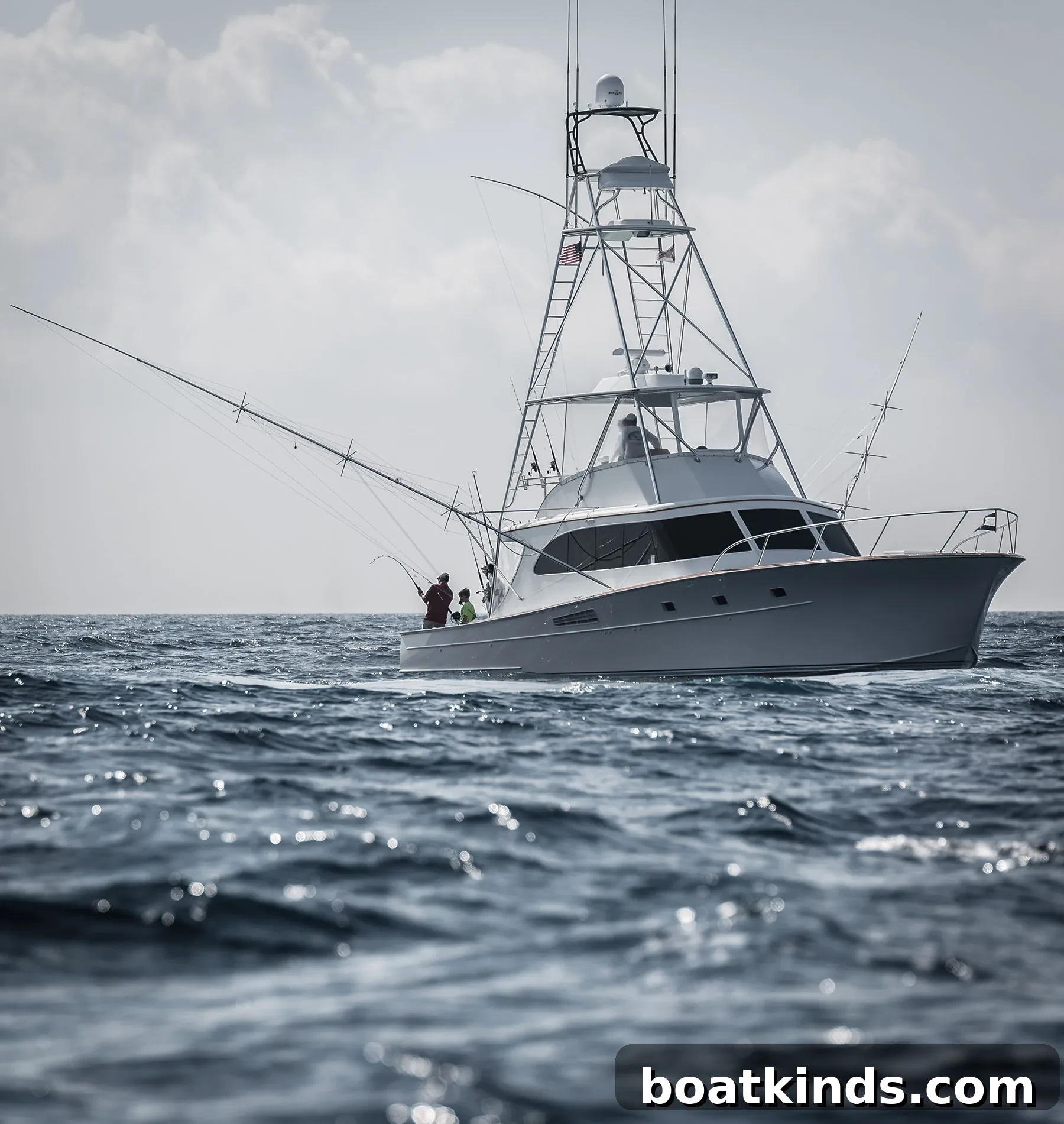
By mid-November, boats stream into South Florida from as far north as New Jersey, Maryland and North Carolina. Convertible sportfishing yachts and high-performance center consoles add urgency to the marinas. “We start planning our tournament schedule in mid-August,” says Eric Hall, owner of the Bahama 41 center console Good Call. “I love fishing, but sailfish are a whole different dimension. It’s a team sport, and we practice constantly so our crew works smoothly together.”
Hall prefers kite fishing with live bait because it’s visual and produces explosive surface bites. “Watching a sail light up and chase a kite-bait right next to the boat is thrilling,” he says. “On a center console, the angler can move forward to fight a single fish while the captain follows the run. When multiple hookups happen, our crew knows how to move around the boat and maximize our chances of releasing every fish.”
Prize money at sailfish tournaments can be substantial, but many teams are driven as much by heritage as cash. “We’d rather see more tournaments reward tradition over big payouts,” Hall says. “Our biggest goal is to have our names on the Silver Sailfish Derby’s Mrs. Henry R. Rae Trophy. That would mean becoming part of a legacy that spans generations.”
This article originally appeared in the Winter 2019 issue of Anglers Journal.