
Experienced Sea Kayaker Missing After Winter Crossing from Odiorne Point to Isles of Shoals
Hamilton Wood, a dedicated sea kayaker with more than a decade of coastal paddling experience, disappeared after a routine winter crossing from Odiorne Point in Rye, New Hampshire, to the Isles of Shoals. His wife, Lisa Eberhart of Contoocook, N.H., received his last phone call at 3 p.m. on Feb. 27. Wood told her he was heading home in his yellow 12-foot Perception kayak after visiting the islands. That call would be the last time his voice was heard.
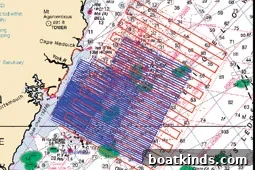
Wood, 59, had a long history of paddling and whitewater canoeing and had taken up sea kayaking about 10 years earlier. He was serious and well prepared in many respects: he wore a wetsuit and life jacket and carried navigation and signaling gear including a GPS, flares, a mirror, a strobe, and a foam flotation device. He did not, however, have a VHF radio attached to the boat.
Eberhart says that winter crossings were part of his routine and that he took safety seriously. “He had been whitewater canoeing most of his adult life,” she said, and he practiced paddling and swimming in both ocean and fresh water year-round. The family was upset by online commentary suggesting he was careless; Eberhart emphasized that he prepared for these trips and respected the risks.
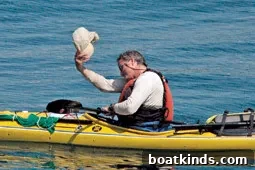
On Feb. 27 at about 1 p.m., Station Portsmouth Harbor was alerted by a good Samaritan who reported seeing a kayaker roughly a half-mile from Star Island, an area the family frequents. Conditions were challenging: winds measured 23 to 34 mph, seas were 4 to 6 feet, and water temperature was approximately 37 degrees, according to Petty Officer Connie Terrell.
The Coast Guard launched a 47-foot rescue boat and located Wood at Star Island. He declined an offered ride to shore, saying he planned to have lunch on Smuttynose Island and would return to Odiorne Point later that afternoon. He coordinated a communications plan with the Coast Guard and called again around 3 p.m., stating he expected to be back on the mainland by 5:15 p.m. When he failed to arrive, his wife reported him missing.
Search efforts began that evening. At 5:30 p.m., Station Portsmouth Harbor found Wood’s car at Odiorne Point and launched a rescue crew. The search continued through the night and into the next day, involving an HH-60 Jayhawk helicopter and an HU-25 Falcon jet from Coast Guard Air Station Cape Cod, the Coast Guard cutter Reliance from Kittery, Maine, and multiple state and local agencies. In total, as many as 200 personnel searched more than 400 square nautical miles.
Early the following morning, a helicopter crew located Wood’s yellow kayak near Boon Island, Maine. The crew observed the kayak and recovered it. Petty Officer Terrell noted that visibility on that morning was excellent—about 10 nautical miles—with clear skies, winds near 20 mph, and 3-foot seas—conditions favorable for spotting a person or vessel.
The search was officially suspended at 9:45 a.m. on March 1 after exhaustive efforts. Eberhart and the family were left to piece together what might have happened. When the kayak was retrieved, the family noted that a hard foam flotation device—commonly called a paddle float—was secured to the paddle, indicating Wood had attempted a self-rescue.
Sea kayaking instructor and writer Adam Bolonsky explained how the paddle float is used: it slips onto the paddle blade and the paddle is then braced across the kayak’s deck cords to create a floating support for re-entry. This self-rescue technique is commonly practiced, but it is far easier with a second paddler present to stabilize the kayak. “It’s ridiculously hard to get in when there’s no one to help,” Bolonsky said.
Cold-water expert Dr. Charles Sutherland, who teaches cold-water safety workshops for the American Canoe Association, stressed the importance of paddling partners and appropriate gear. He recommended tying essential equipment to yourself with short tethers and attaching yourself to the kayak so items and the vessel are not easily separated in a capsize. He also advised using a VHF radio secured to the boat, since mobile phones are easily lost in the water, and recommended dry suits for any water temperature below 40°F—provided the paddler is trained in their use.
Experts consistently emphasize the buddy system for sea kayaking, especially in cold water. A companion can provide immediate assistance during a capsize, increasing the chance of a successful re-entry and rescue. Solo paddling is common, but the level of caution must be proportional to the environment—wind, waves, temperature, and distance from shore all increase risk.
Hamilton Wood’s disappearance is a reminder of the hazards that even experienced paddlers face on coastal waters in winter. His family remembers him as a careful and committed kayaker who loved the sea. The search involved many agencies and volunteers, and it demonstrated the complexity and urgency of cold-water search-and-rescue operations.
This article originally appeared in the May 2009 issue.