
Horizon Yachts Infuses a Single 140-Foot Hull Using SCRIMP Technology
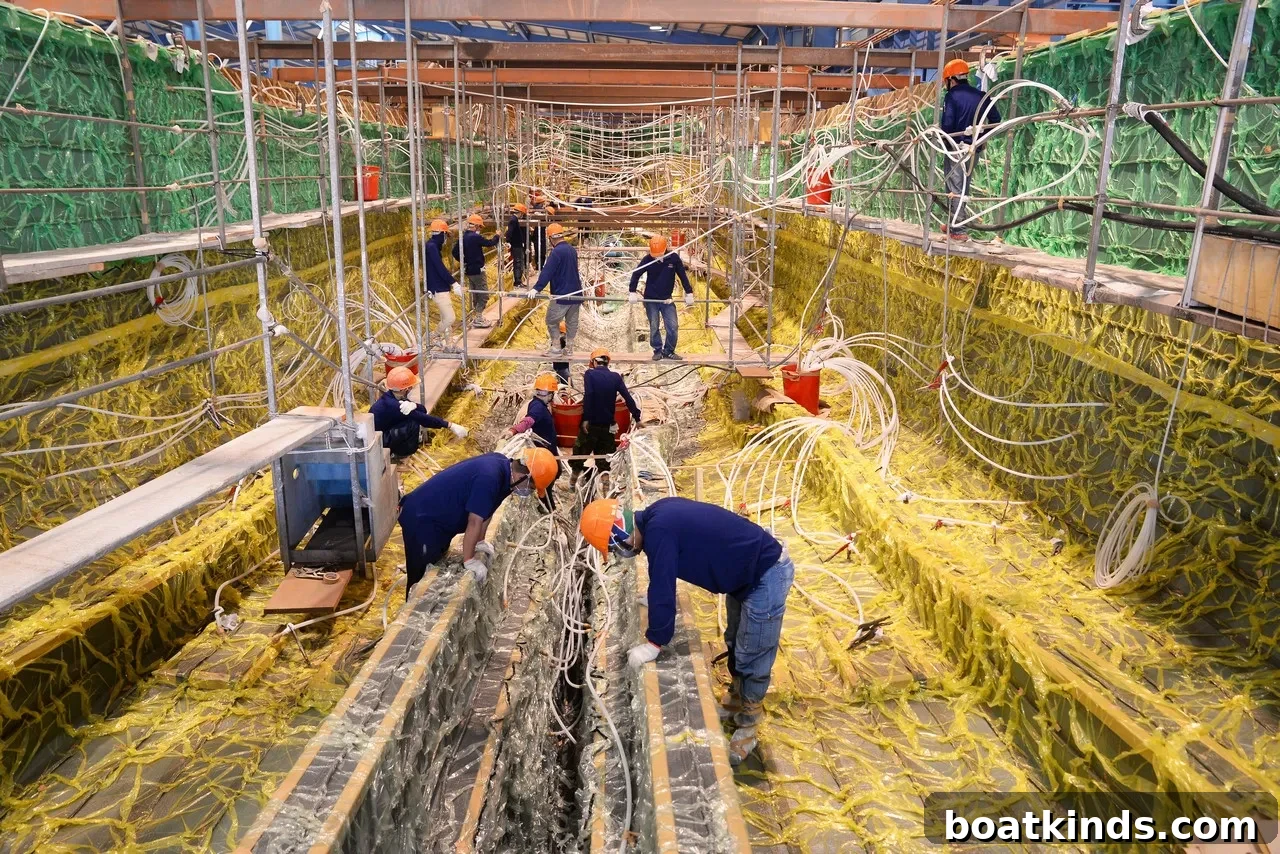
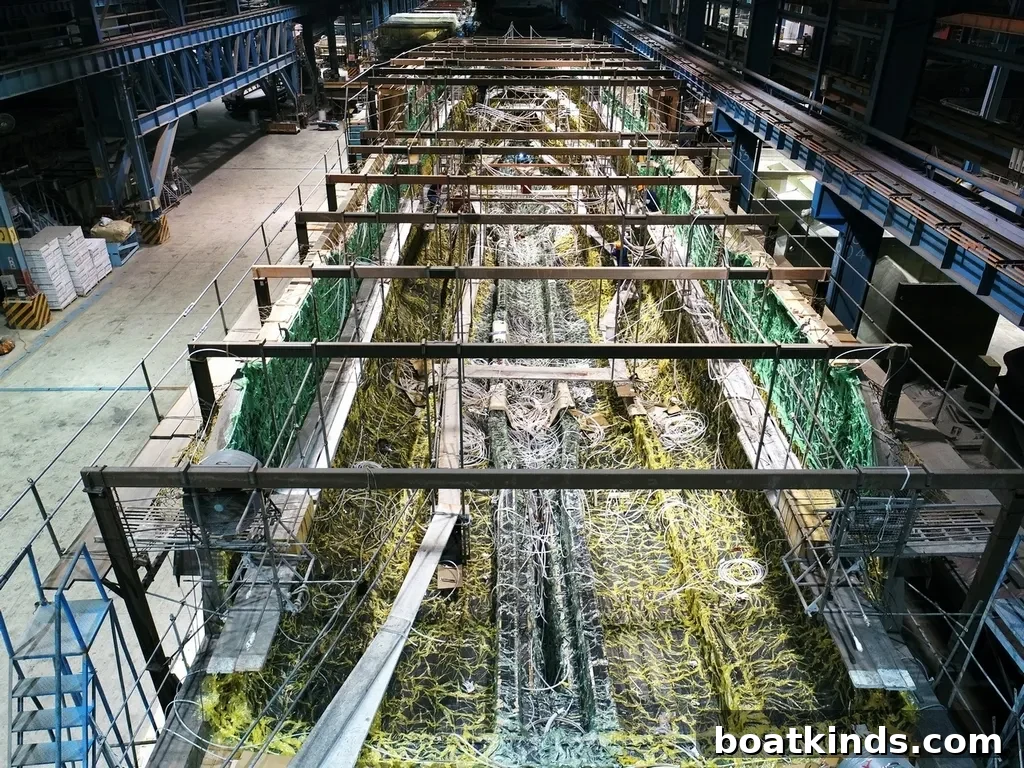
Horizon Yachts in Taiwan recently demonstrated the capabilities of SCRIMP (Seemann Composites Resin Infusion Molding Process) by completing a single-shot infusion of a full 140-foot hull. While single-shot infusions at this scale are uncommon, the result highlights how modern composite infusion techniques can be applied to large-yacht construction to improve consistency, reduce weight, and enhance structural integrity.
SCRIMP resin infusion is a closed-mold vacuum-assisted process that draws resin through a pre-placed dry fiber layup using vacuum pressure. Unlike open-mold hand layup or multiple-stage infusion approaches, a single-shot infusion aims to saturate the entire laminate in one continuous operation. That approach demands careful planning of resin flow, vacuum distribution, venting, and temperature control to ensure even wet-out and to avoid dry spots or unplanned resin pooling.
Why a Single-Shot Infusion Matters for Large Hulls
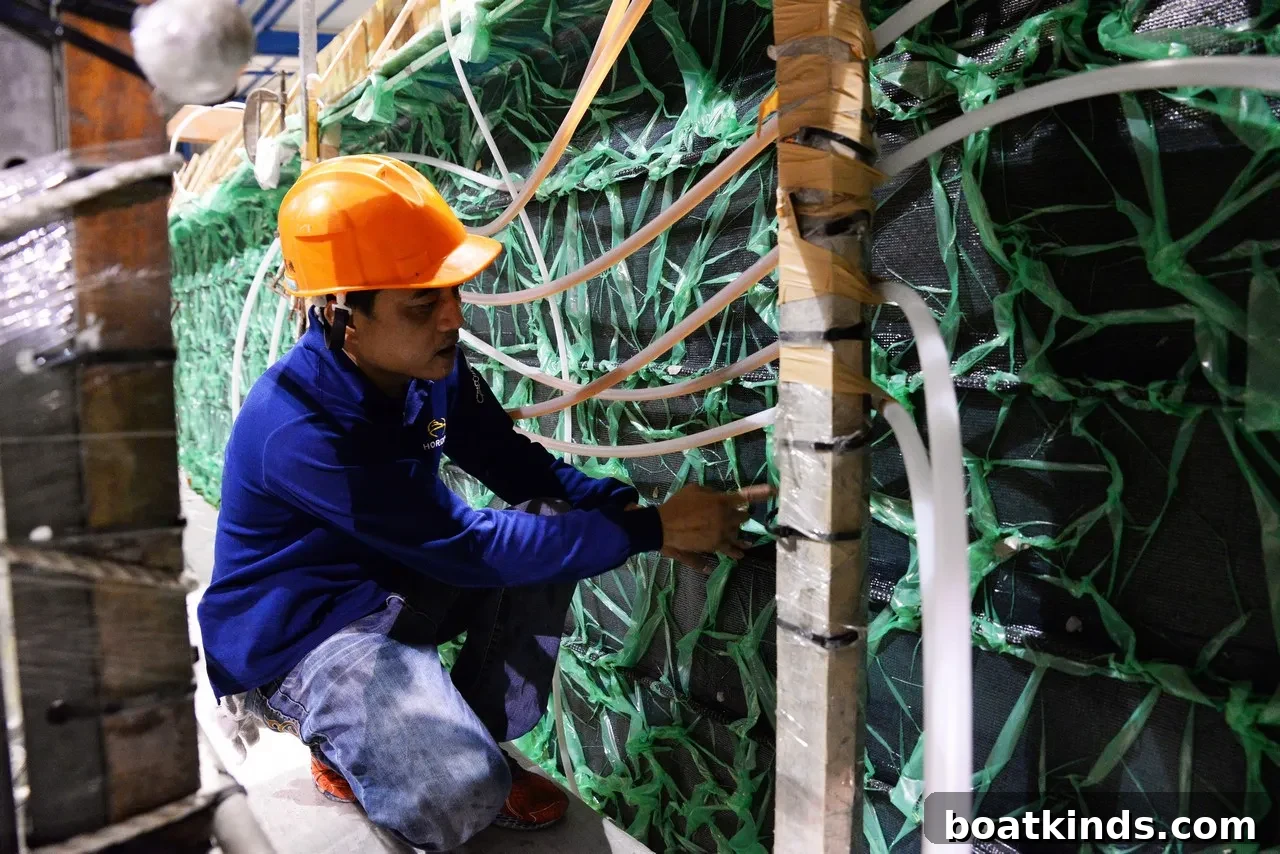
Performing a one-time infusion on a hull of this size is technically demanding. Engineers must model resin infusion paths, select appropriate peel plies and flow media, and design an efficient network of inlet and return lines. For builders, the advantages can include higher-quality laminates with fewer voids, better fiber-to-resin ratios for optimized strength-to-weight, and a more repeatable process compared to segmented or manual lamination techniques.
On a practical level, single-shot infusion can reduce the number of joints or seams that are potential structural weak points. It can also streamline production timelines by reducing the number of infusion stages and post-cure operations. However, it requires a workshop with adequate tooling, vacuum infrastructure, and experienced composite technicians to manage the variables inherent to large-scale resin flow.
Quality Control and Process Challenges
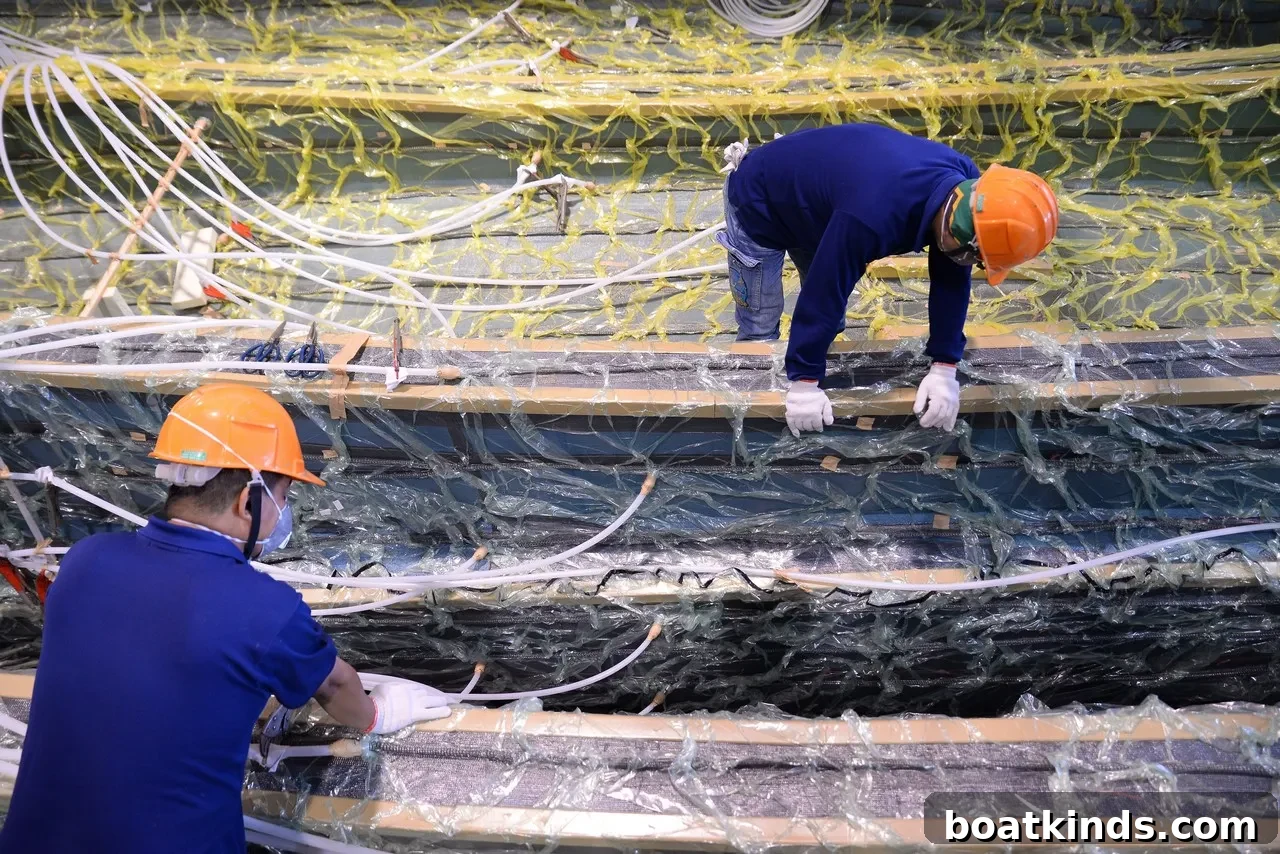
Some of the key challenges when scaling SCRIMP to a 140-foot hull include maintaining consistent vacuum across long distances, preventing resin skinning in supply lines, controlling exotherm during cure, and ensuring even temperature distribution for a uniform cure. Builders mitigate these risks through precise layup sequencing, use of flow modeling software, staged infusion strategies where appropriate, and real-time monitoring of vacuum and temperature.
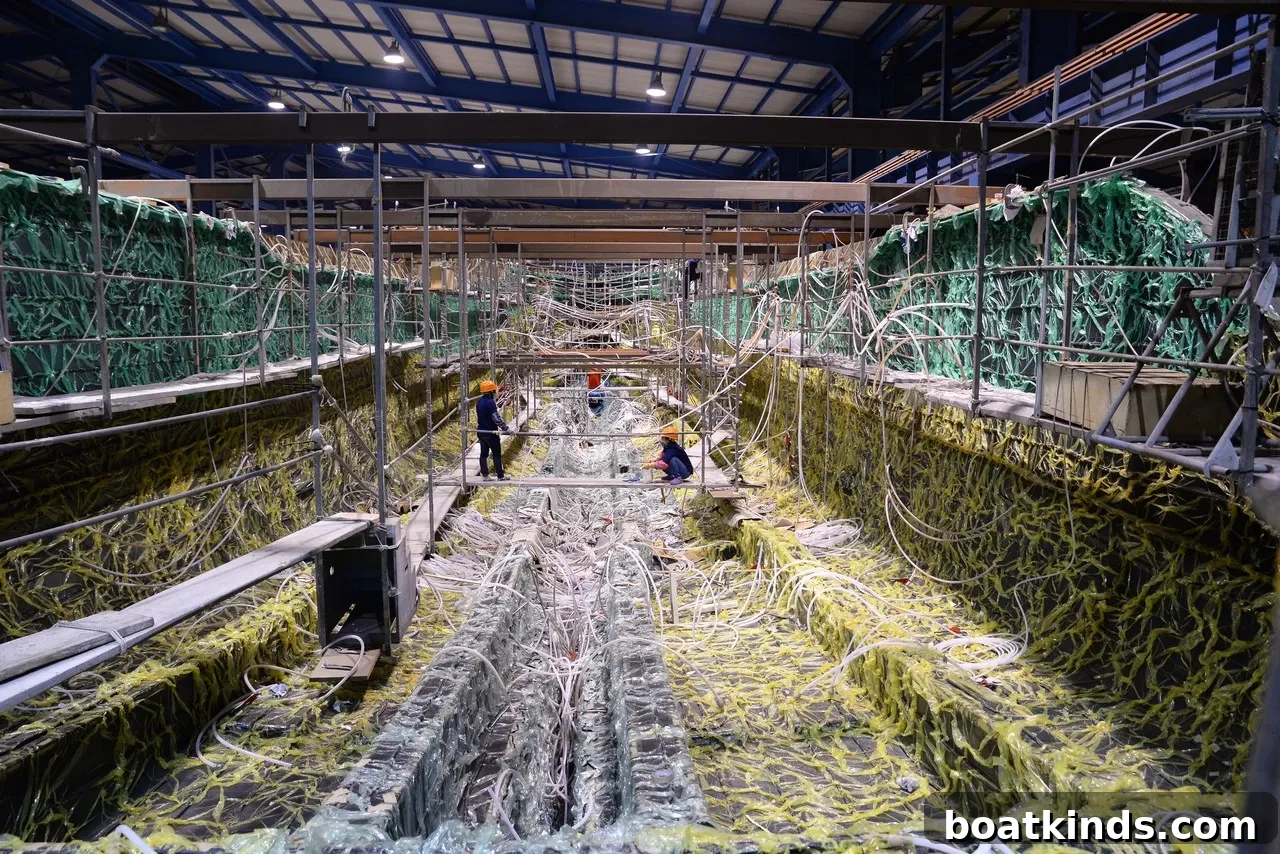
Horizon Yachts’ photo release indicates thorough preparation and execution. The imagery shows extensive flow media placement and orderly routing of distribution lines—visual cues that the team prioritized controlled resin progression through the laminate. These preparatory steps are critical for a successful single-shot outcome on such a large scale.
Benefits for Owners and Builders
For owners, a hull produced by an expertly executed SCRIMP infusion can offer improved strength, reduced structural weight, and potentially better fuel efficiency due to optimized hull weight and stiffness. For builders, mastering larger single-shot infusions can provide competitive advantages: faster production cycles, reduced manual labor for secondary laminations, and more predictable material performance.
Additionally, vacuum-assisted closed molding processes can offer environmental and workplace benefits, such as lower emissions of styrene and fewer airborne particulates compared with open-mold hand layup methods. These improvements support safer working conditions and better compliance with modern workplace standards.
Context and Outlook
While single-shot infusions at this hull length remain relatively rare, the successful demonstration by Horizon Yachts highlights how SCRIMP and similar infusion molding methods are evolving. As modeling tools, vacuum technologies, and process control continue to improve, builders can undertake larger and more complex infusion projects with greater confidence. The industry trend toward closed-mold, vacuum-assisted processes reflects ongoing efforts to enhance quality, repeatability, and sustainability in composite boatbuilding.
The photos released by the yard underscore the scale and precision of the operation, offering a clear glimpse into the planning and execution required for a project of this size. Whether or not this specific job is recorded as a formal record, it serves as an impressive example of advanced composite manufacturing applied to modern yacht construction.