
Anglers and Charter Captains Face an Uncertain Future After the Deepwater Horizon Explosion
As BP worked to capture oil leaking from the Deepwater Horizon well, Capt. Tom Becker of Biloxi, Mississippi, worried that the damage might already be irreversible for fishermen and the Gulf’s coastal communities.
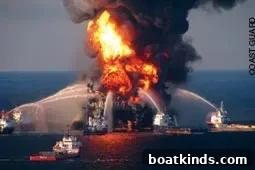
“I am very concerned,” Becker said as more than 5 million gallons of oil spread across a roughly 500-mile swath of the Gulf of Mexico off Louisiana, Mississippi and Alabama. After 25 years on the water, he had never seen a threat with such potentially catastrophic consequences for his livelihood.
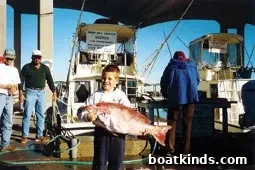
Becker, captain of The Skipper, a 40-foot charter fishing boat, will turn 69 in July. “How many years can I sit around unemployed?” he asked. If he doesn’t fish, he doesn’t work.
At the time, authorities had closed all fishing off Louisiana from Point Au Fer Island east to Pensacola, Florida. The closure covered most of Louisiana’s inshore waters but not Mississippi, Alabama or Florida. By mid-May, NOAA’s offshore closures had encompassed about 19 percent of the Gulf of Mexico’s federal waters.
Though there was still accessible water for fishing, charter captains like Becker were getting few bookings. “Either we’re not getting calls, or the calls we get are about possibly canceling,” he said. Becker had just lost a two-day, 10-person charter worth $9,600 — a significant hit for hotels, crew and the captain. He wasn’t alone in feeling the economic pinch.
Beyond lost trips and immediate income, fishermen worried about the spill’s effects on spawning fish and other marine life. Speckled trout, Spanish mackerel, king mackerel and cobia were in their spawning seasons as oil spread through the Gulf. The spill could deplete a year class, drive away breeding stock, or kill shrimp, oysters and crabs — impacts that would ripple through commercial and recreational fisheries.
At Grand Isle, Louisiana, the uncertainty kept would‑be visitors away even after mid-May reopenings of inshore waters. “We have no boats in the marina,” said Dodie Vegas, whose family has run the 70-slip Bridge Side Marina since 1972. “The phones are non-stop. People have questions I can’t answer because everything can change in hours.”
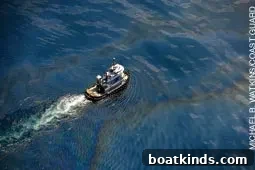
Twenty-six days after the April 20 explosion that killed 11 rig workers and ruptured the BP well, BP reported it had inserted a mile-long tube into the leaking pipe. That measure was capturing about 20 percent of the estimated 5,000 barrels per day that had been escaping, diverting recovered oil to the Discoverer Enterprise drill ship. BP said it planned to increase the captured volume and hoped to plug the remaining leak by the third week of May. As a last resort, the company was drilling a relief well, a process that could take about 90 days to complete.
Scientists and coastal managers were, however, concerned about the ocean currents. Oceanographers warned the Gulf Loop Current might pull some of the oil south toward the Florida Keys and then into the Gulf Stream, potentially transporting oil as far as Cape Hatteras, North Carolina, and beyond. Robert Weisberg, an oceanographer at the University of South Florida, noted the loop current was moving north and getting close to the oil. Some forecast models even showed oil being drawn into that current.
How much oil the loop current would entrain, and whether it would make landfall elsewhere in the Southeast or settle over reef systems in the Keys, remained uncertain. The Florida Department of Environmental Protection cautioned that tar balls, oil sheens or tar mats were possible, even if no immediate threat was evident.
At the municipal marina in Panama City, Florida, dockmaster Bill Lloyd said he had been inundated with calls about contingency plans if the spill drifted east toward the Panhandle. At that point winds had pushed much of the slick westward, offering a reprieve to northwest Florida, Alabama and Mississippi. Lloyd advised boat owners to “hold tight” but to move or haul vessels if the threat intensified. Many marina operators prepared to deploy containment boom at harbor entrances and require thorough washdowns of any boats passing through affected water before allowing them back into marinas.
Scientists aboard research vessels reported finding subsurface plumes of oil — mixtures of water and smaller oil droplets — at depths of 2,000 to 4,000 feet. One plume was reported as being as long as 10 miles, 3 miles wide and 300 feet thick. Researchers were worried that bacteria consuming the oil might be depleting oxygen at those depths, which is difficult to replenish and essential for deep-water life. NOAA cautioned it was too early to definitively link all deep-water anomalies to the Deepwater Horizon well.
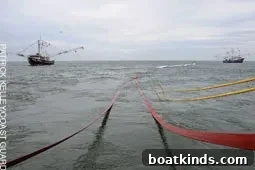
BP was reportedly spending tens of millions of dollars daily to plug the leak and respond with skimmers, detergents, controlled burns and other mitigation efforts. Response coordinators mobilized thousands of personnel and hundreds of vessels, deployed long stretches of containment and absorbent boom, and recovered millions of gallons of oil‑mixed water.
For anglers, the stakes were both personal and economic. NOAA estimates roughly 6 million anglers take about 45 million fishing trips a year in the Gulf to target redfish, spotted sea trout, snapper, and other species. “I’m 60 years old,” said New Orleans angler A.J. Collura. “I don’t think I’ll ever see Gulf fishing the same again. It’s sad.” He worries about loss of seagrass beds and breeding stocks — habitats and populations crucial to the future of Gulf fisheries.
Todd Knaak, president of Cypress Cove Boating Center and Marina, pointed out that oil and gas platforms have long acted as fish attractors — and that the oil industry itself supports significant economic activity in southern Louisiana. Still, he acknowledged the broader fear among boaters, business owners and anglers: without healthy fish populations, demand for boats, charters and coastal recreation will decline. “This has the potential to be catastrophic,” Knaak said. “I think everyone’s scared and just crossing their fingers.”
This article originally appeared in the July 2010 issue.