
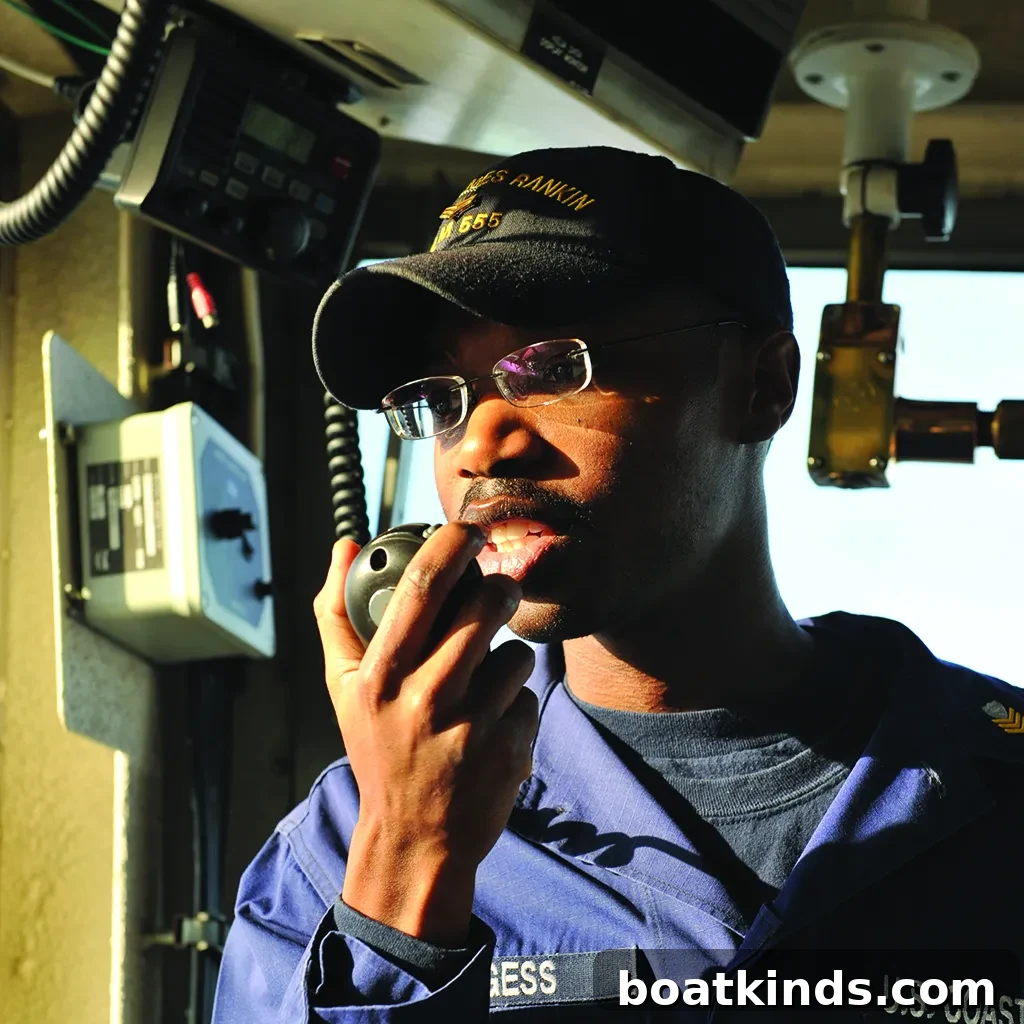
Using VHF Radios Effectively When Boating in Heavy Traffic
Boating feels simple on open water or when you’re mostly alone offshore: quick whistle calls and light traffic make navigation easy. But in a crowded port with many vessels of different sizes and speeds, everything changes. Close-quarters situations demand clear communication, careful listening and the confidence to speak up when necessary. Proper VHF use helps small-boat operators stay safe and predictable around larger commercial vessels.
I’m not a longtime captain, so I asked seasoned professional mariners for practical advice on working a VHF radio in busy channels. Their guidance focuses on situational awareness, correlating radio traffic with visual cues, making concise calls when required, and managing radio watch effectively.
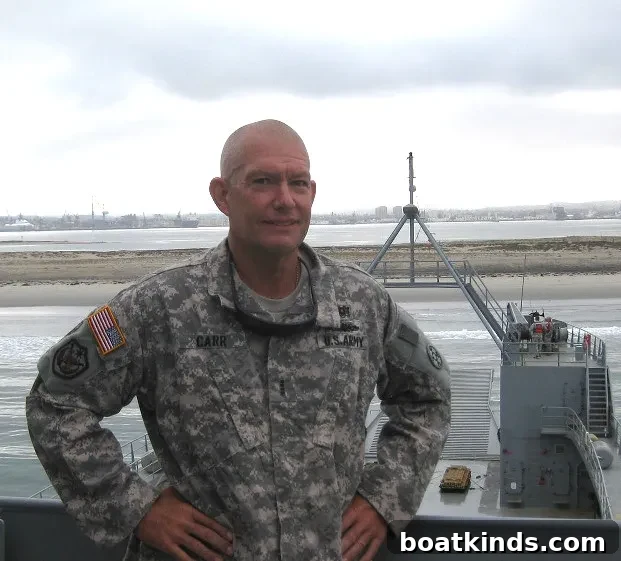
Captain Michael Carr, with more than 40 years running commercial and government vessels and years of professional instruction, offered five essential points for recreational boaters dealing with heavy VHF traffic.
First, always know your location. Listening to radio traffic won’t help if you don’t have a firm grip on where you are. In high-traffic areas you should constantly be aware of your position relative to buoys, channel names and nearby points of land. Maintain a mental fix so you can act quickly if a commercial vessel’s call involves your location.
Second, use that position to anticipate the movement of larger vessels. When you hear a call such as, “Outbound making 23 knots approaching Chesapeake Bay Bridge-Tunnel North Island,” translate that into spatial terms: how fast the ship is closing, which direction it’s taking, and where it will be in minutes. For example, 23 knots suggests roughly 2.3 miles every six minutes, which can mean very limited room to maneuver in a channel.
Third, always correlate radio calls with what you can see. Look around and try to locate the vessel making the transmission. Do the visual clues match the verbal report—running lights, size, heading and aspect? If something doesn’t line up, start talking to nearby boaters and verify positions. If you’re uncertain which vessel made a call, confirm before assuming it applies to you.
Fourth, if a commercial call affects your position, think through your obligations under COLREGS (the International Regulations for Preventing Collisions at Sea) and make a concise, factual call. Keep it useful and to the point. An example phrasing used by Carr is: “M/V Vittone, this is the yellow-hulled S/V Carr, 2.5 miles off your port bow in the vicinity of green buoy 7. I am heading southwest under sail, but will slow, stay outside the channel and allow you to pass prior to crossing Thimble Shoal Channel. S/V Carr standing by on Channel 13. Out.” That sort of clear, location-based information helps commercial captains quickly understand your intentions and limits.
Fifth, apply a continuous decision loop—observe, orient, decide, act (the OODA loop)—to your on-water situational awareness. Listen, visualize, orient, decide and act, then repeat. Be ready to switch channels when necessary, consult local publications such as the Coast Pilot when entering a busy harbor, monitor Channel 13 and any pilot-board channels, and use multiple VHF radios or scan functions to keep critical frequencies under watch.
Captain John Konrad, a Master Unlimited Oceans skipper and founder of gCaptain.com, echoes Carr’s advice and adds practical habits that professionals use. Know pilot-boarding areas and Vessel Traffic Service (VTS) call-in zones and their frequencies—these are typically shown on nautical charts. Professionals monitor the VHF 24/7 while underway; recreational boaters should do the same. Many small-boat operators only turn their radios on when they feel it’s needed, which causes them to miss critical “pan-pan” or “sécurité” calls and frustrates commercial captains who expect small craft to be listening.
Konrad recommends running a dual-watch setup: one radio on Channel 16 and the other on the local working frequency. If you need more channels, use a handheld VHF in addition to your fixed mount. This approach keeps distress and working channels active simultaneously and increases awareness in congested waters.
One simple but important technical tip both captains emphasized: learn and use the low-power or 1-watt transmit setting. For very short-range calls—such as contacting a launch 100 yards away—use low power or a handheld. Transmitting at full power for a nearby call can reach vessels many miles away and create unnecessary chatter that confuses other operators.
In practical terms, when you’re approaching busy channels or working near commercial traffic: keep your VHF on, monitor Channel 16 and the local working frequency, visually identify the vessels making calls, verify that what you see matches what you hear, and make short, factual transmissions only when your position or intentions are relevant. Use low-power for local calls and consider a handheld for close communication. Above all, maintain a continuous mental loop—observe, orient, decide, act—so you remain predictable, safe and helpful to others sharing the water.
Next time you find yourself in heavy vessel traffic, tune in on the VHF. If possible, keep two radios active and follow the practical guidance from experienced mariners: know your position, correlate radio calls with what you see, make concise and relevant transmissions, monitor the appropriate channels, and use low power for nearby calls. Done correctly, VHF radios make shared waterways much safer.