
See the 1848 Grand Panorama of a Whaling Voyage ‘Round the World in New Bedford
The remarkable 1848 Grand Panorama of a Whaling Voyage ‘Round the World is a rare and monumental work of 19th-century popular art — so extensive that it stretches longer than the Empire State Building is tall. This summer, visitors have a unique opportunity to view the Panorama in its full length at the Kilburn Mill in New Bedford and to experience it as an immersive moving-picture presentation at the New Bedford Whaling Museum.
Why the Panorama Matters
The Grand Panorama is not simply a painting; it is a sweeping visual narrative created for audiences of the mid-19th century. Panoramas were an early form of mass entertainment that invited viewers to travel visually through distant oceans, ports, and shipboard life. The Whaling Panorama offers an extended, continuous view of a whaling voyage, capturing the scale, drama, and everyday realities of maritime life in the whaling era.
Its significance extends beyond its impressive size. The Panorama provides a rare, painterly record of maritime practices, ship design, and the global routes that defined the whaling industry. For historians, artists, and general audiences alike, the work opens a window onto a world shaped by long voyages, manual labor, and the economic and cultural forces of the 19th century.
What to Expect When You Visit
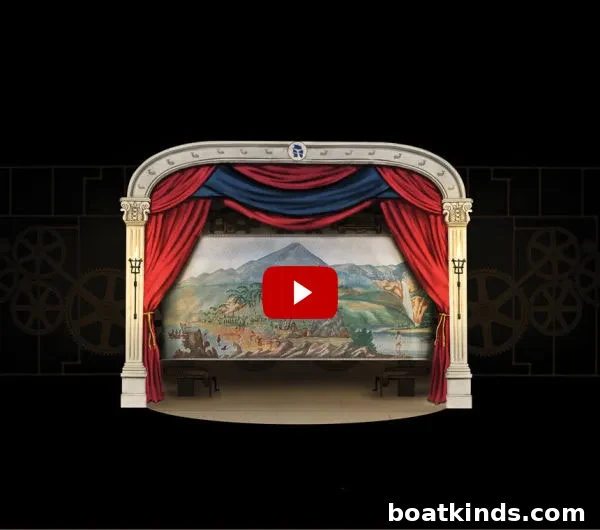
Seeing the Panorama is meant to be immersive. Presented as a moving-picture show, the long, continuous image is revealed in sequence, allowing viewers to follow scenes that unfold much like a film or theatrical panorama. Expect a curated, paced presentation that highlights narrative moments and artistic detail, guiding audiences along the journey the original creators intended.
Because the Panorama is unusually large, viewing it is different from a typical museum painting. Seating or standing areas are arranged so groups can watch sections of the panorama as they are revealed. The presentation emphasizes visual storytelling, with an opportunity to appreciate brushwork, composition, and the ways 19th-century artists represented distant places and seafaring life.
Tips for Planning Your Visit
- Allow extra time: The Panorama’s presentation may take longer than a standard gallery visit. Arrive with enough time to experience the full sequence at a relaxed pace.
- Check accessibility and schedules: Exhibition formats and show times can vary seasonally. Confirm details with the museum before traveling to ensure you catch a full presentation.
- Bring curiosity: The Panorama rewards close looking. Take time to study recurring motifs, ship details, and scenes that record the rituals and routines of whaling voyages.
- Combine with nearby attractions: New Bedford’s maritime heritage makes it an ideal place to explore other historical and cultural sites; consider pairing your Panorama visit with additional time in the city.
Conservation and Rarity
Large-scale painted panoramas are inherently fragile and require careful conservation and specialized display conditions. The opportunity to see the 1848 Grand Panorama in its entirety is uncommon; many panoramic works have been cut, lost, or remain in storage. Exhibitions that present such pieces in full are significant both for public appreciation and for ongoing preservation efforts.
Experience a Piece of Living History
The 1848 Grand Panorama of a Whaling Voyage ‘Round the World offers more than historical curiosity: it is an evocative, large-scale artwork that connects contemporary viewers to a global maritime past. Whether you are interested in maritime history, large-format painting, or the evolution of popular entertainment, this presentation at Kilburn Mill and the New Bedford Whaling Museum provides a rare chance to see a major 19th-century panorama as its creators once intended.
Plan your visit this summer to witness the Panorama in full and to experience a moving-picture presentation that brings the sights and rhythms of a whaling voyage vividly to life.