
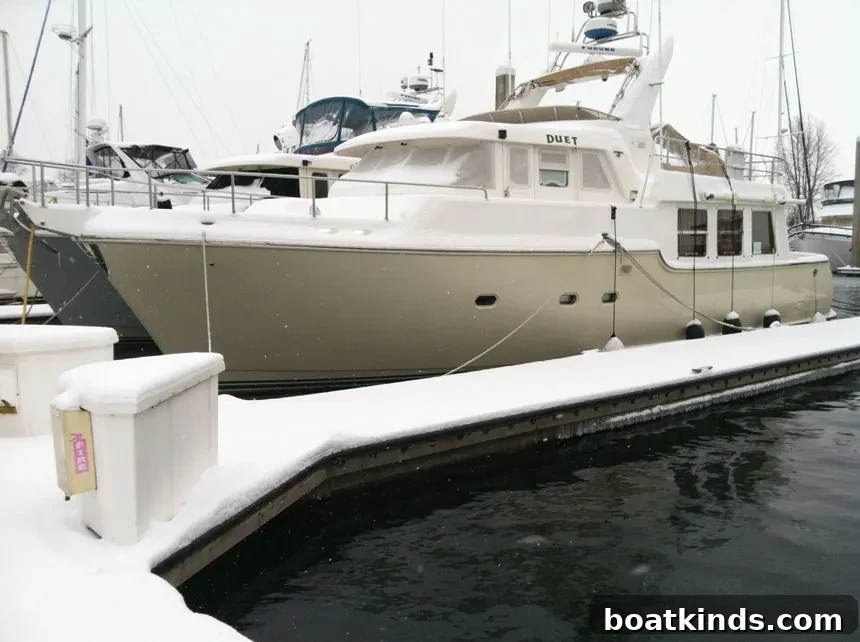
LOA: 51 feet, 2 inches • BEAM: 16 feet • POWER: single 300-hp Lugger L-6108A diesel • SPEED: 8 knots cruise • RANGE: 2,800 nautical miles at 8 knots • TANKAGE: 1,320 gallons fuel, 260 gallons water • CONTACT: Pacific Asian Enterprises, Dana Point, California, (949) 496-4848.
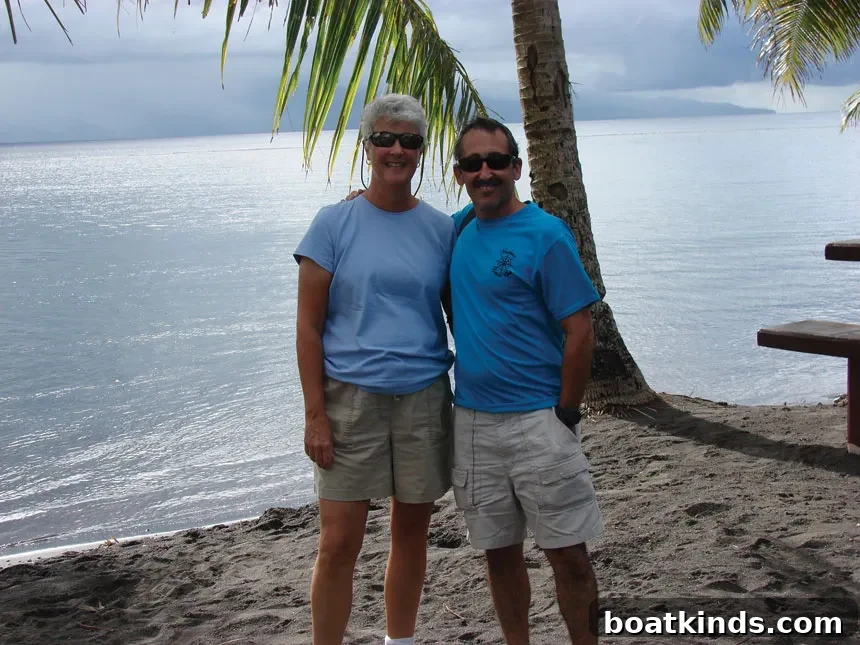
What was your introduction to boating, and what is your boating history? Our boating life began with sailboats in 1993. Early on we spent time chartering in classic cruising destinations — the British Virgin Islands, Grenada and Guadeloupe — learning the basics of life at sea and the pleasures of island cruising. In 1996 we became enamored with the idea of owning a Nordhavn 46, but a seasoned salesman advised us to gain more experience on a smaller, simpler trawler first. He was right: we bought a Monk 36 and cruised locally on Chesapeake Bay to build skills and confidence.
In 2000 we upgraded to a 1996 Nordhavn 46, which we named Duet. After a year of local cruising on the Chesapeake, we sold our house and moved aboard full time. We organized our cruising life seasonally — winters in the Bahamas and summers back in the Chesapeake — and over the next six years covered roughly 10,000 miles. In 2007 we sold that boat and moved to Lake Tahoe, Nevada, for a change of pace. After five years on shore we realized we missed extended cruising, so in 2012 we bought our current Nordhavn 50, also named Duet. Since then we’ve logged about 13,000 miles, traveling from Seattle up through British Columbia to Alaska, then back down the U.S. West Coast to Mexico, and ultimately across the Pacific to French Polynesia, where Duet is now based.
Someone once told us to push our personal envelope just a little bit every time we take the boat out. Our personal envelope is much bigger than it used to be.
— Ron and Nancy Goldberg
How did you get into long-distance passagemaking? What was the inspiration behind your decision? Long-distance passagemaking developed gradually. On the Nordhavn 46 we entertained the idea of crossing the Atlantic someday, but there wasn’t a single dramatic inspiration — it grew from meeting other cruisers and hearing their stories. Life and circumstances intervened, and the Atlantic never happened. When we bought our Nordhavn 50, though, we were determined to cross an ocean. We were aware that opportunities diminish with time, so we chose the Pacific, since those destinations appealed more to us and aligned with our cruising goals. It was a deliberate, considered choice rather than a spontaneous leap.
What was the first voyage where you pushed the limits, distancewise? We had done many shorter coastal passages of 24 to 72 hours, but our first true long haul came in early 2016: a run from La Paz to Ensenada, Mexico. That voyage lasted just over 100 hours — about four days — and covered roughly 600 miles. We treated it as a trial run and a proof of concept for a much longer planned leg: a 2,700-mile crossing from Mexico to French Polynesia. The La Paz–Ensenada trip taught us a great deal about extended time at sea, gear reliability and personal endurance.
What are some challenges of long-distance passagemaking? Long passages can be uncomfortable and monotonous, and both of us are prone to seasickness. They can also be genuinely frightening at times, but repeated exposure reduces fear; you learn to manage and adapt because there’s no alternative. Practical challenges include limited, sometimes outdated cruising information — for example, French Polynesia is relatively little visited by recreational cruisers, and guidebooks are often over a decade old. Anchorages can be exposed to swell or littered with coral, so anchoring decisions require extra care. Despite those challenges, the rewards are significant: remote anchorages, genuine local hospitality and breathtaking scenery make the effort worthwhile for us.
How have your seamanship skills improved? Seamanship is a broad skill set that combines traditional navigation, boat handling and judgment with modern technical abilities. Over time we’ve improved in fundamental areas such as reading charts and selecting safe anchorages, but we’ve also learned technical proficiencies specific to long offshore work. Practical experience matters more than book learning: being out on the water teaches you how conditions feel and how systems behave. On our boat, for example, effective use of radar and AIS together is essential for interpreting the movements of fishing vessels at night or in poor weather. Experience has made us more comfortable with situations that would have been intimidating years ago.
What advice would you give to anyone who’s considering doing what you’ve done? Don’t tackle more than you can handle at once. Two or three difficult experiences early on can shake a couple’s confidence and curtail a promising cruising life. We recommend changing only one major variable at a time — either the boat or the cruising area, not both simultaneously. When we upgraded from our simple Monk 36 to the more complicated Nordhavn 46, we spent a full year cruising familiar Chesapeake waters to learn the new systems and routines before heading into unfamiliar regions. That approach gives you time to gain competence and reduces avoidable risk.
Where have you traveled under power? Chesapeake Bay, the U.S. East Coast, the west coast of Florida, the Bahamas, the Pacific Northwest, British Columbia, Alaska, the California coast, Baja California in Mexico, the Marquesas and French Polynesia.
This article originally appeared in the April 2018 issue.