
MJM Yachts: From Family Legacy to the New 3z Dual-Console
The origin of MJM Yachts is a familiar story among boating enthusiasts. As Bob Johnstone transitioned from building sailboats to seeking a comfortable powerboat he and his wife Mary could cruise, he found nothing on the market that matched his expectations. Partnering with naval architect Doug Zurn, he built exactly what he and Mary wanted. That boat—Mary Johnstone’s Motorboat—launched a new brand: MJM Yachts.
Under Bob Johnstone’s guidance, MJM carved a distinct niche in the competitive Downeast market. Hundreds of MJMs were crafted at Boston Boatworks, where Bob maintained a hands-on approach to construction quality, ride efficiency and design integrity. I’ve had the chance to sea-trial several MJM models alongside Bob over the years, and each time I came away impressed by the build quality and the thoughtfulness behind the boats.
For the Johnstone family, the business often blended with daily life. When Peter Johnstone was 12 he gave up his bedroom so it could serve as an office for J/Boats, the company Bob founded with his brother Rod in 1977. Peter remembers the move fondly: “My dad told me, ‘We need your bedroom, and you can go sleep up in the attic.’ I didn’t mind; it felt like part of the adventure.”
Boat talk was a constant in the household long before MJM. “Boats first started coming into our lives when my dad went to work at Sunfish in the mid-1970s,” Peter says. “That’s when the business side of boating truly arrived at our dinner table.”
Those early experiences fostered a spirit of adventure and practical sacrifice in the family—qualities that shaped Peter’s career. An imaginative youth, he sketched sailboat designs in the margins of his schoolbooks and later built a substantial resume across several notable marine brands. One notable chapter was GunBoat, a high-performance sailing company he founded in 2000. Despite building boats that excited the sailing world for 15 years, GunBoat ultimately filed Chapter 11 due to problems with its overseas builder. Peter calls that a painful yet profoundly educational experience.
“I learned more from that failure than from anything else,” he reflects. “You can add up all the successes I’ve had—and there have been many—but that loss taught me how fragile things can be when you rely on outside partners.”
That lesson informed Peter’s approach when he became involved with MJM in a leadership role. He was determined not to let external subcontractors control the company’s fate the way they had at GunBoat. “Building boats with subcontractors is very challenging, and it’s rare that it works long-term,” he says. “When I became involved at MJM, the business heavily relied on a subcontractor. I knew we had to establish our own manufacturing capacity—even if that subcontractor continued to work with us.”
Peter pressed his father as early as 2016 to develop MJM’s own production facility rather than depending solely on Boston Boatworks. After several years of discussions and property searches, MJM opened a small incubator shop in Washington, North Carolina, to begin building organizational processes and hiring staff. Two years ago that effort expanded into a larger, 200,000-square-foot facility aimed at scaling production.
Peter—who bought the company from his father last year—is now focused on growing MJM’s workforce and realizing the brand’s broader potential. Boston Boatworks continues its long-standing role in building MJMs at the Boston facility, a relationship Peter hopes will endure since that yard built the original MJM. Simultaneously, he’s investing in a new manufacturing base in North Carolina to support higher-volume production.
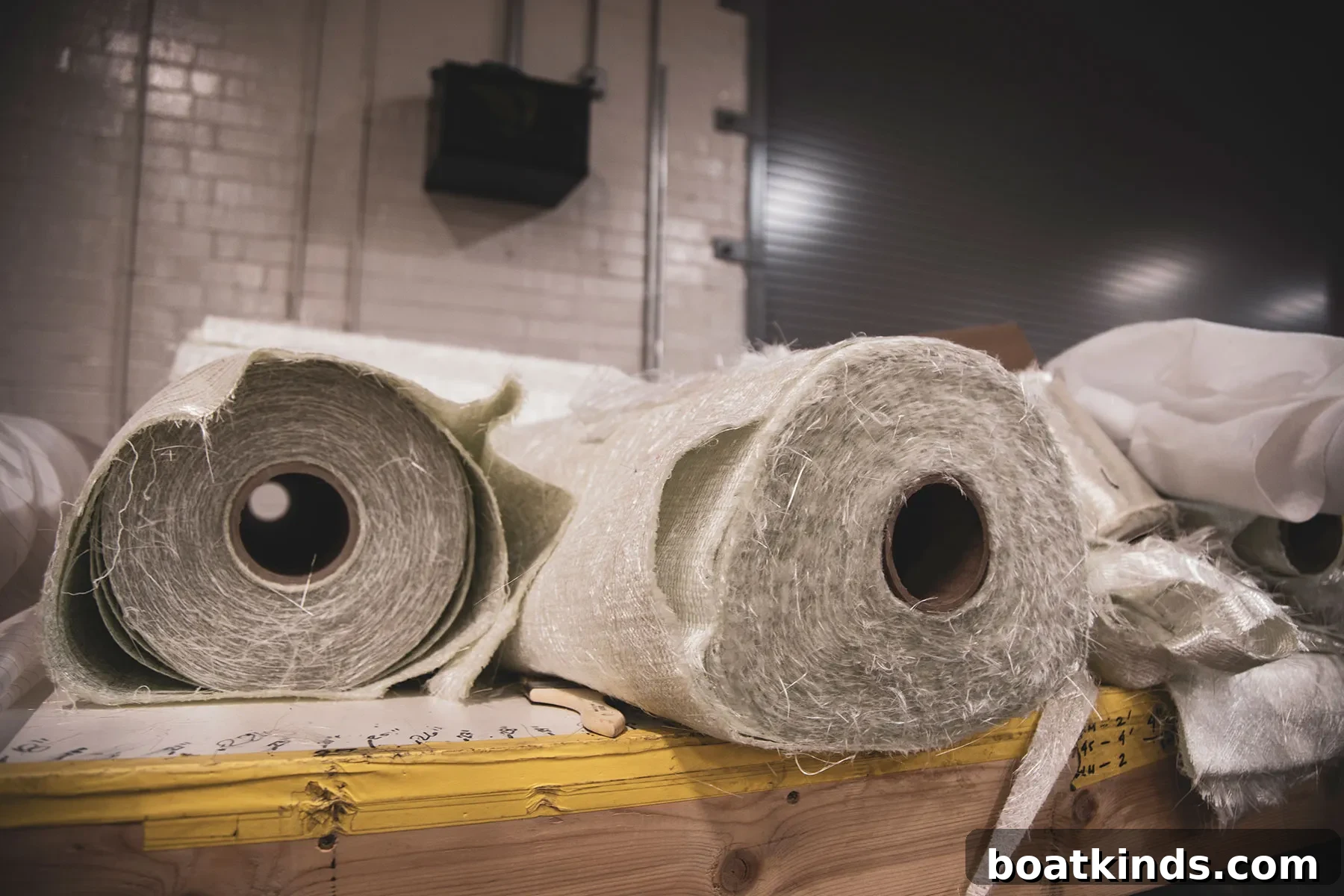
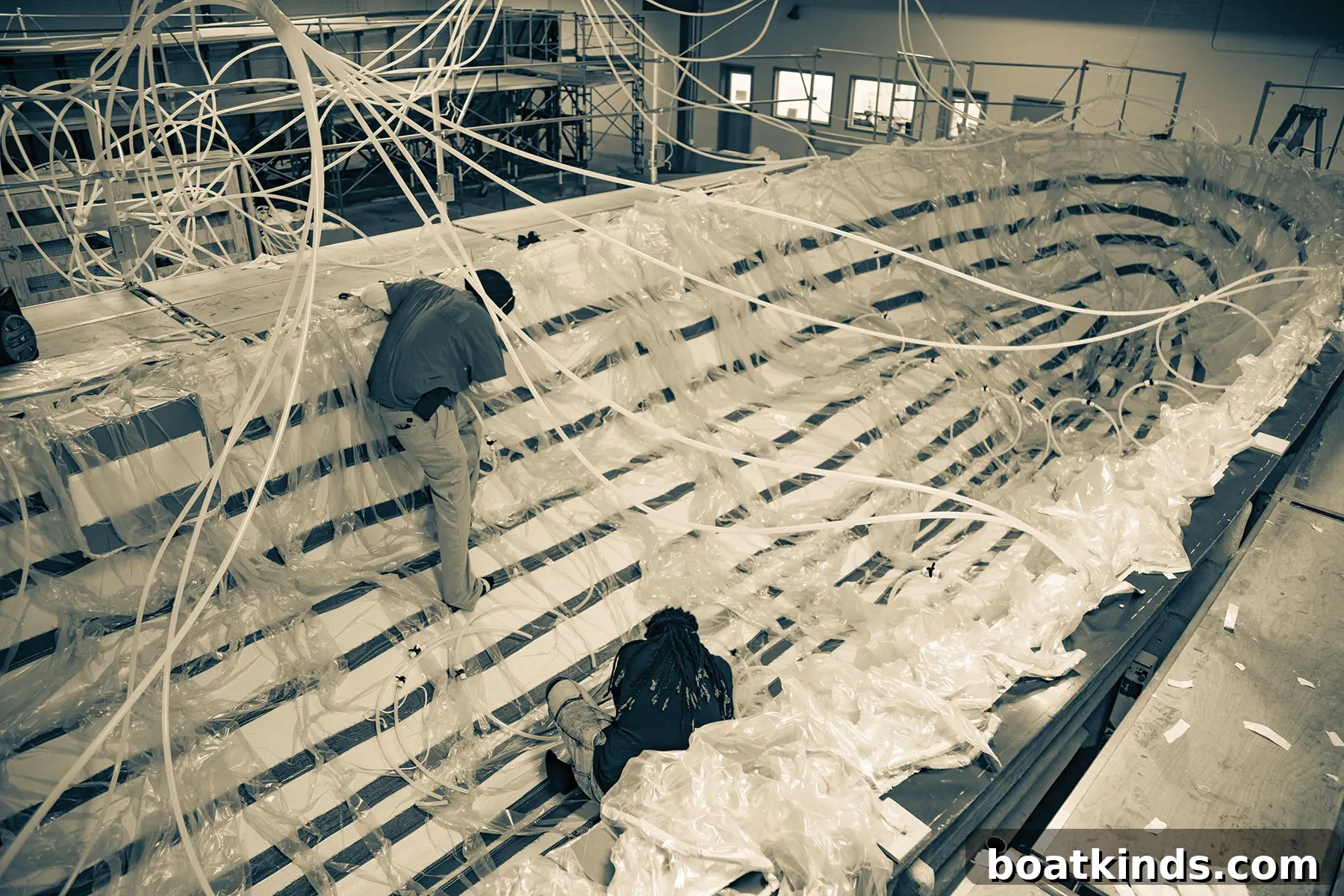
The new facility is already producing fresh designs, including the 3z—the brand’s first dual-console model. On the factory floor, employees prepare to infuse the hull of a 3z while operations manager Reggie Fountain III, another boatbuilding scion, helps organize workflow. Fountain’s enthusiasm for building the facility from the ground up is evident; Peter jokes that Reggie is always lobbying for the latest high-horsepower engines.
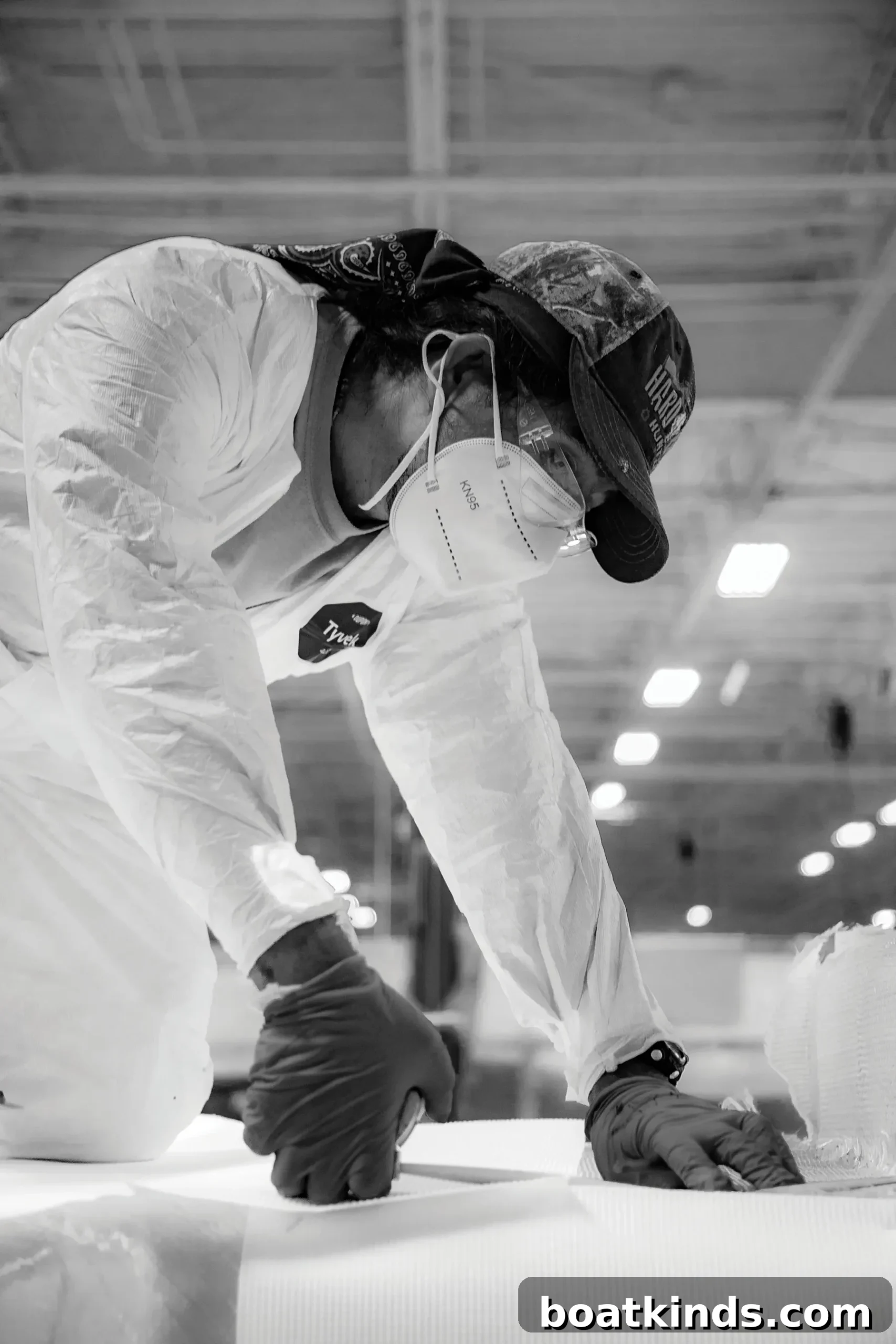
Training and growing a skilled workforce is at the core of Peter’s plans. Walking the arena-sized plant, he shares his targets: build 20 boats in this facility this year and 60 the year after, with still larger increases planned thereafter. The dealer network is expanding—24 dealers and counting at the time of my visit—and demand is solid. Peter says production is sold out into 2023.
Why Washington, North Carolina? “It’s more economical to build here, and there are people with excellent work ethics,” he explains. “There’s governmental support for business, central access to supply chains and better proximity to Florida, which represents roughly 25 percent of our market.”
As we leave the factory and walk toward the dock where the 3z sits, Peter frames his strategy in simple terms: his father created a strong platform and reputation; the job now is to turn that platform into a full-scale business that reaches a larger audience. “We’re not changing the brand’s spirit,” he says. “We’re just enabling it to fulfill the promise my dad established.”
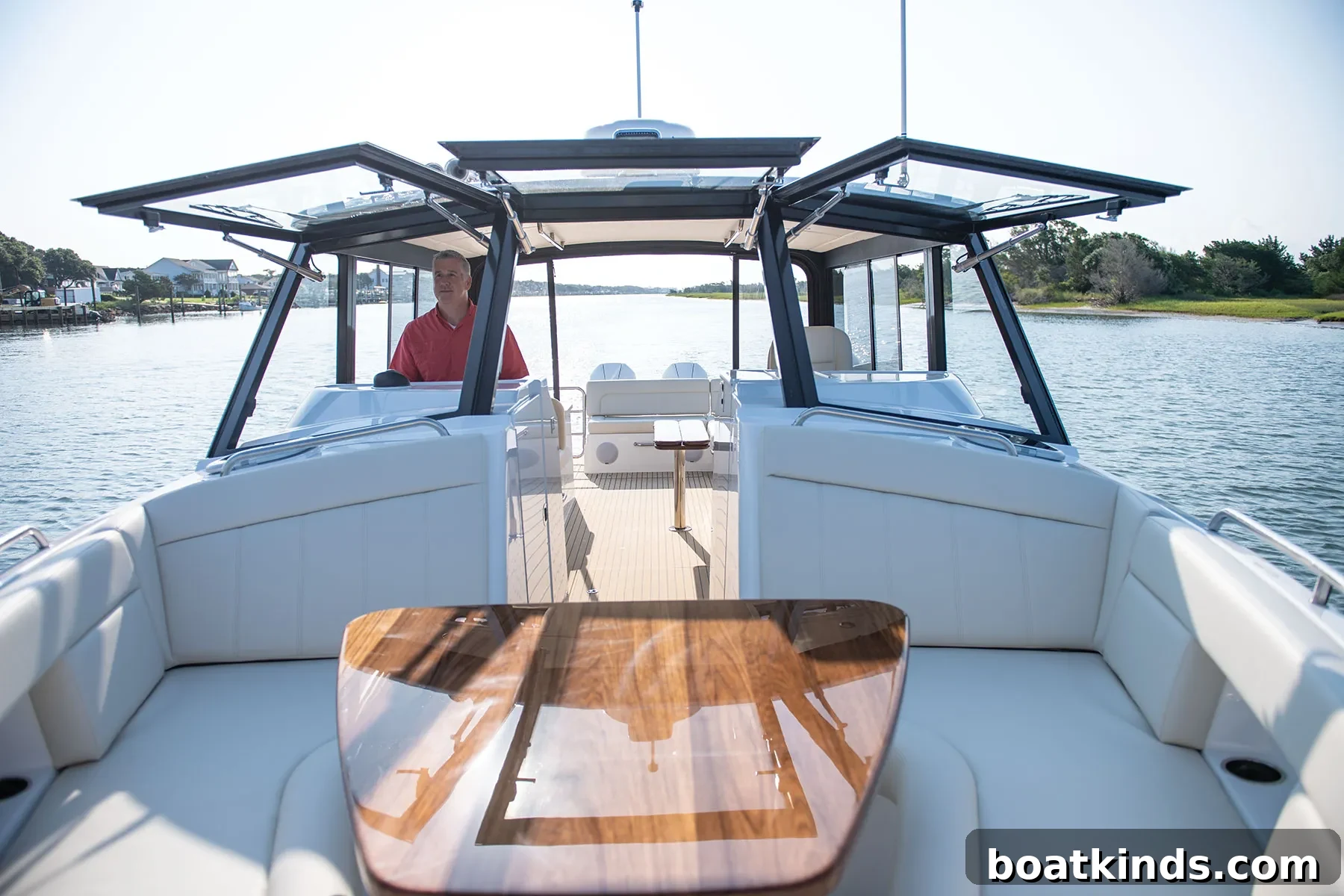
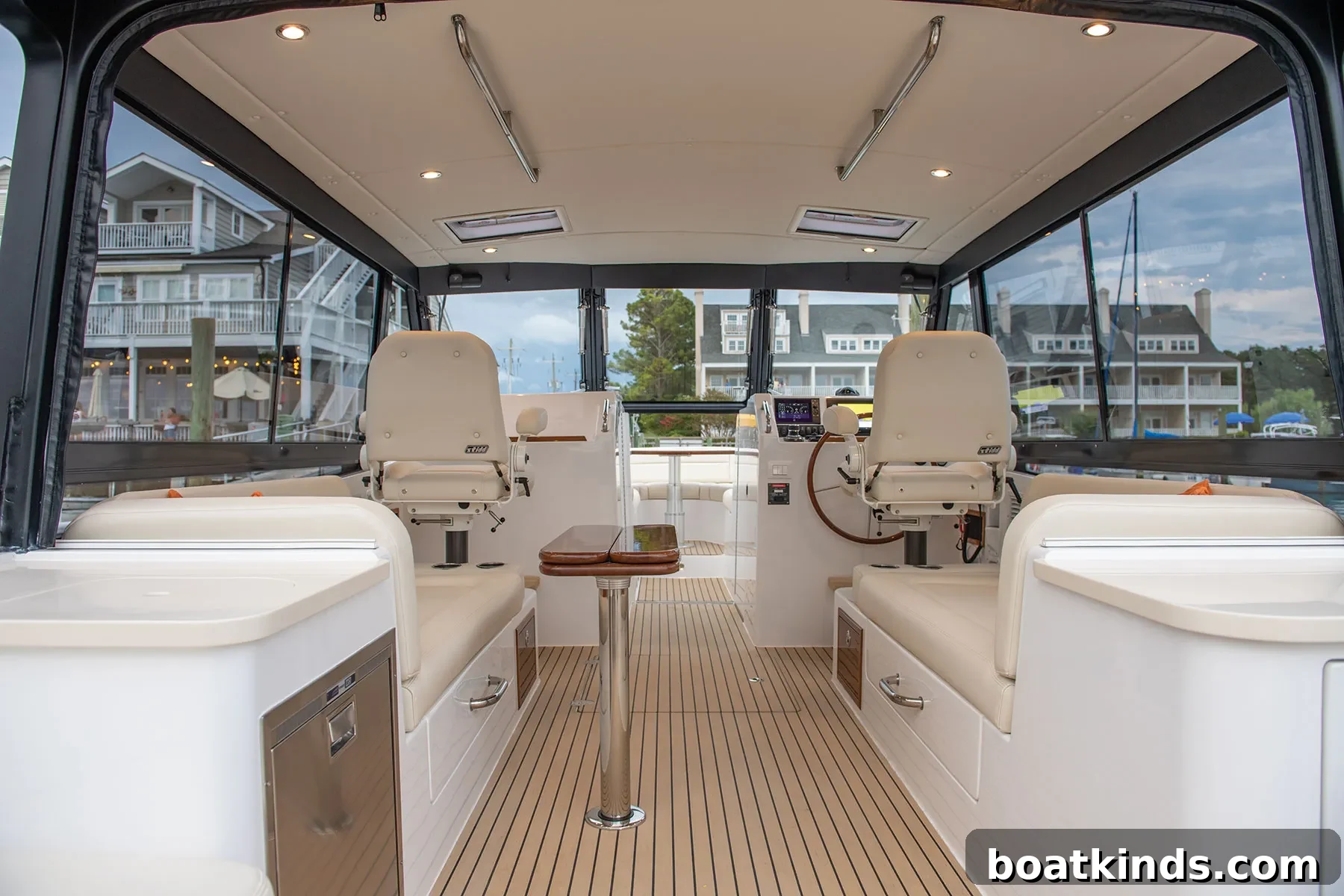
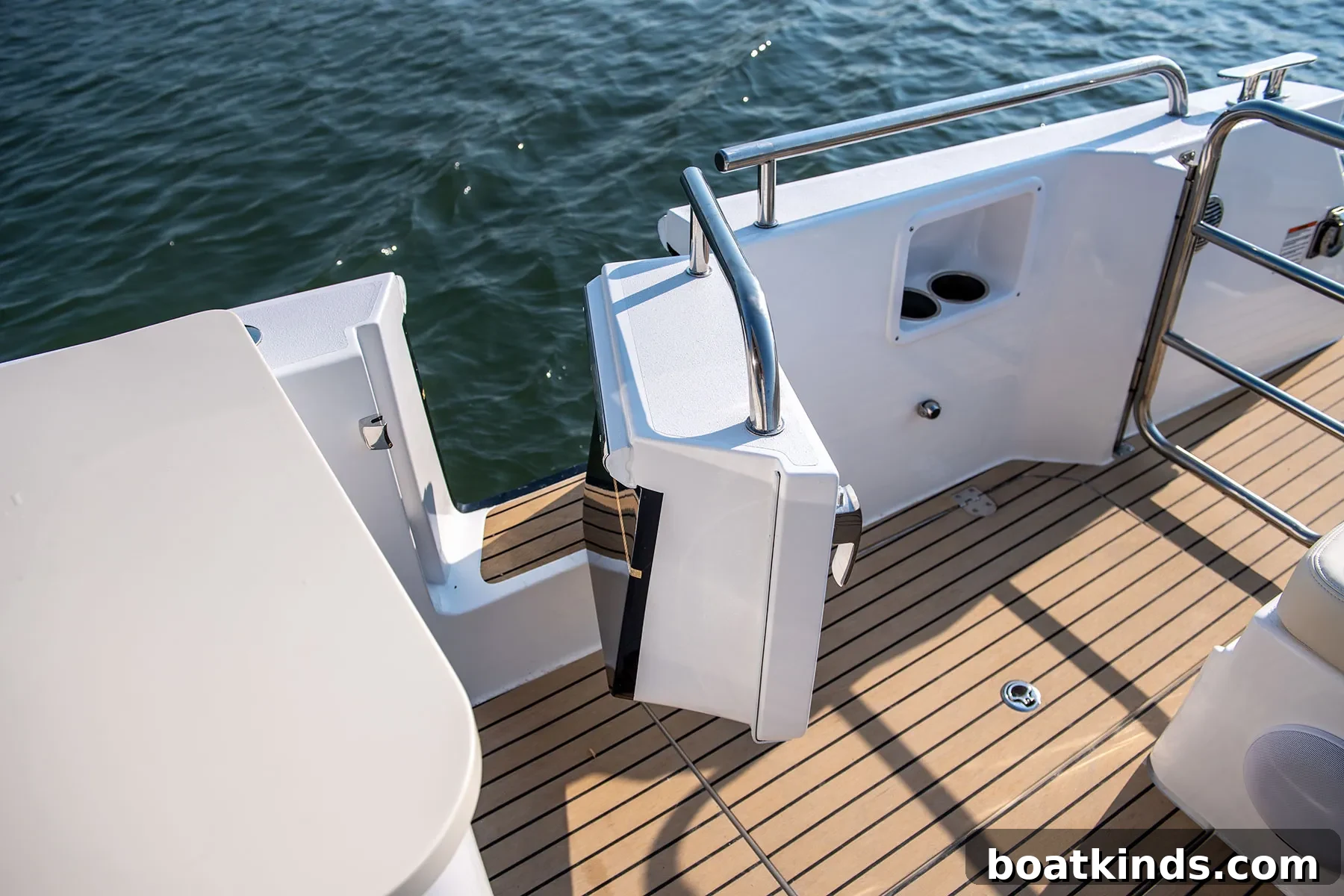
It’s drizzling the day I board the 3z—an unexpected advantage. The design’s dual-console enclosure turns a dreary day into a comfortable, climate-controlled environment. Large opening windows and an optional canvas enclosure deliver an open, center-console-like connection to the water on sunny days, while the enclosed layout, port-side head with shower and starboard changing room offer protection and privacy when the weather worsens.
Out on Pamlico Sound I test the 3z’s performance. With a nod to Reggie Fountain, I push the boat to about 41 knots. The 3z tracks smoothly, lands gently over its own wake and delivers a composed, comfortable ride—proof that this dual-console lives up to the performance standards set by MJM’s earlier models.
On the ride back to the dock I ask Peter whether scaling up is worth sacrificing MJM’s boutique pedigree. He answers with conviction: “You’re given one shot at this life. My belief is you should try to make as many people’s lives better as possible. For us, that means building better boats that improve family experiences on the water.”
This article was originally published in the December 2021 issue.