
Advances in Marine Diesel and Gas Inboard/Sterndrive Engines
Technology for diesel and gasoline inboard and sterndrive propulsion experienced a major leap in 2012, with manufacturers introducing lighter, more efficient, quieter and cleaner powerplants. Leading engine builders and drive makers — including Cummins, Mercury, Volvo Penta and Yanmar — rolled out new models and refreshed platforms that improve performance, lower emissions and enhance overall drivability for recreational and light commercial boats.
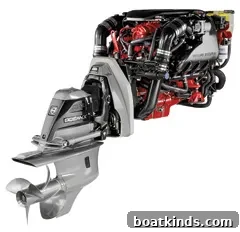
Volvo Penta: A new generation of gasoline sterndrives
Volvo Penta introduced a next generation of gasoline sterndrives designed to offer better acceleration, improved fuel economy and reduced weight compared with previous high-horsepower units. The new V8-380 sterndrive, for example, uses an engine derived from a heavy-duty truck application and, thanks to modern engineering and control systems, delivers comparable horsepower to the old 8.1-liter V8 while offering the advantages of a more compact 6.0-liter displacement.
According to Mel Cahoon, Volvo Penta’s manager of engine engineering, the company purposefully moved beyond incremental updates: “We did not stick with the same old, same old. We didn’t just update what we already had. We chose to go forward. This is a new generation of our highest-horsepower sterndrive.” That emphasis on a clean-sheet approach is intended to yield gains in durability, packaging and overall performance.
Volvo Penta also expanded its gasoline lineup with the V8-225 EVC, a 5.7-liter sterndrive that combines strong torque delivery with lower emissions through computer-controlled fuel management and catalytic exhaust treatment. Alongside these hardware improvements, Volvo Penta announced a Joystick Driving option for its V8-380 platform, enabling the skipper to use joystick control even at higher speeds — a feature being introduced to the U.S. market to improve low-speed maneuvering and high-speed control integration.
Cummins: QSB6.7 targets cleaner, more powerful diesel performance
Cummins launched the QSB6.7, a 6.7-liter diesel designed to replace the long-serving 5.9-liter QSB. The new QSB6.7 meets Tier 3 emissions standards and offers increased displacement and refinement while remaining similar in overall size; it even weighs slightly less than the unit it replaces. The engine is available in multiple ratings to suit a wide range of installations and is offered for both conventional inboard layouts and Zeus pod systems, giving boatbuilders and owners flexibility in matching propulsion to hull and mission.
The QSB6.7 will be produced in several horsepower ratings, with versions intended to serve recreational and light commercial sectors. Cummins has signaled plans to expand the performance range so the platform can power performance-oriented boats as well as conventional cruisers, while maintaining quieter operation and cleaner exhaust characteristics compared with older generations.
Mercury and Volkswagen collaboration: compact diesel options
Mercury added a 4.2-liter, 350-horsepower turbodiesel under the TDI label, originally offered under the Cummins MerCruiser partnership and now marketed directly by Mercury Marine. The V-8 is marinized and manufactured by Volkswagen, reflecting a collaboration that gives Volkswagen access to more U.S. marine market penetration while allowing Mercury to offer a compact, high-power diesel solution for runabouts, express cruisers and sportfishing boats up to about 40 feet.
In addition to the 4.2-liter V-8, Volkswagen marinizes a family of diesel engines for Mercury at its German facility, including inline-4, inline-5 and V6 options in 1.9-, 2.5- and 3.0-liter displacements. These smaller-displacement units cover a wide horsepower range, making them suitable for a variety of smaller and mid-size boats that benefit from diesel efficiency, longevity and torque characteristics.
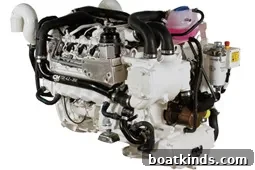
Yanmar: proven acceleration from a compact package
Yanmar America showcased its 8LV diesel, a compact V8 that produces about 370 horsepower and impressed during sea trials with strong acceleration and usable power delivery. The 8LV’s combination of relatively small displacement, modern combustion and turbocharging enables lively performance while retaining the fuel-efficiency and longevity that diesel owners expect.
What this means for boaters
Across the board, the major trends are clear: engine manufacturers are focusing on reducing weight, tightening emissions and extracting more power and efficiency from smaller packages. Integration of electronic fuel management, catalytic and aftertreatment technologies, and improved engine architectures has allowed OEMs to meet regulatory goals while improving the boating experience through quieter, smoother operation and better fuel economy.
These advances broaden choices for boat buyers and builders. Whether the priority is the torque and economy of diesel inboards or the light weight and responsiveness of modern gasoline sterndrives, the 2012–2013 crop of engines delivered meaningful improvements that continue to influence propulsion choices today.
March 2013 issue