
Gold Coast Yachting
At the turn of the 20th century, the north shore of New York’s Long Island emerged as one of the region’s most desirable residential areas. Wealthy industrialists, financiers and prominent families moved their summer homes and grand estates there, building a coastal landscape known today as the Gold Coast. This concentration of wealth and leisure shaped a distinct maritime culture in which yachting played a central role.
Renowned families such as the Astors, Morgans, Roosevelts and Vanderbilts maintained impressive waterfront properties, and the pleasure craft that frequented the north shore were as much a part of their public identity as the houses themselves. The yachts that cruised those waters were celebrated for their craftsmanship, elegant lines and attention to detail, reflecting the tastes and resources of their owners. These vessels were not merely transportation; they were social stages, symbols of status and platforms for recreation, racing and entertaining.
Photographs and archival images capture the variety and splendour of those boats—the graceful profiles, polished decks and the bustling scenes at marinas and clubhouses. Many of the region’s yacht clubs rose to prominence during this period, supported by members who invested in racing programs, regattas and seasonal gatherings that cemented the area’s reputation for nautical sophistication. The combination of elite patronage and skilled boatbuilding fostered a vibrant community of sailors, designers and craftsmen along Long Island’s north shore.
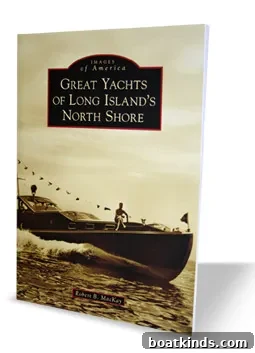
Robert B. MacKay’s Great Yachts of Long Island’s North Shore (Arcadia Publishing, $17.78 paperback) collects many of these historic images and places them in context. The book offers readers a visual survey of an era when private yachts and coastal estates were powerfully linked. Through photographs and descriptive captions, the volume preserves scenes of leisure and maritime activity that might otherwise be forgotten by modern readers.
For those interested in maritime history, social history or landscape change, this material provides an accessible window into the ways wealth influenced coastal development and recreational practice. The images highlight both small, intimate vessels and larger, more elaborate yachts, illustrating the range of styles that were in vogue. They also hint at the skilled labor and technological advances of the period—work by shipwrights, designers and builders who translated their clients’ ambitions into seaworthy craft.
Beyond the boats themselves, the archived photographs capture elements of daily life around the harbors: crews preparing for outings, families posing on deck, and the gradual evolution of club facilities and waterfront architecture. These scenes help explain why Long Island’s north shore earned its reputation: it was where architecture, landscape and maritime culture combined to create a distinctive coastal identity.
Books like MacKay’s play an important role in preserving local maritime heritage. They collect fragmented records, often drawn from private collections, historical societies and public archives, and present them in a format that is both informative and visually engaging. For historians, yacht enthusiasts and casual readers alike, such compilations provide a valuable record of social customs, nautical design and waterfront life in an earlier American era.
While the Gold Coast has changed over the decades, many of the images in this and similar collections remind us that the region’s maritime legacy endures in the form of restored vessels, preserved club traditions and the continuing allure of coastal recreation. The photographs invite readers to imagine the sound of engines, the slap of water against hulls and the convivial gatherings that once defined a distinctive chapter in Long Island’s history.
October 2014 issue