
Dirk Boehmer is the president of Vicem Yachts’ U.S. operations. The Turkish builder produces yachts up to 151 feet, and its Vintage fleet consists of classic, graceful Down East–style boats with impeccable interior woodwork. The 52-foot model is the smallest in the Vintage line, and the company has also planned smaller models for its new Vanguard line, including 33- and 45-foot designs.
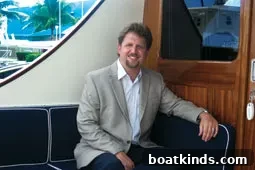
Although Boehmer, 40, leads a company known for large, high-end yachts, on weekends he prefers a simple life on the water aboard his 13-foot 1971 Boston Whaler, often fishing with his 5-year-old daughter, Ella. His love of boating began in childhood on a 14-foot runabout on Lake Wallenpaupack in the Poconos. After high school he joined the U.S. Coast Guard and served two years, then entered the marine industry as Sea Ray’s international sales manager. He later held positions at Walker Bay Boats and Bertram Yacht before joining Vicem in 2009.
In addition to his business responsibilities, Boehmer earned a Coast Guard captain’s license and spent several months as a charter captain on a 52-foot Irwin in Miami. He lives in Englewood, Florida, with his wife, Bobbi, and their daughter. Below, Boehmer discusses Vicem’s cold-molded construction, the market for smaller boats, memorable on-water moments and the boats that capture his attention.
Q: Why does a Turkish builder make Down East–style boats?
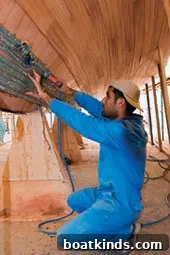
A: The Down East style pairs naturally with the cold-molded construction method we use. Unlike modern foam-core fiberglass boats, our construction uses multiple layers of mahogany encased in epoxy with fiberglass around the exterior. Rather than a foam core, mahogany serves as the core. It’s a labor-intensive approach, but it produces a durable, quiet boat and gives us greater flexibility for customer customization.
Q: What kind of boater buys a Vicem?
A: Our buyers are typically experienced boaters — often not on their first or even tenth yacht. Many are sailors who, as they age, prefer a powered boat with a sailboat’s comfort and sea-kindliness rather than hoisting sails and heeling. They value timeless design over the latest trend, and Down East styling is enduring. Our clientele tends to be traditional yachtsmen who are knowledgeable about boats and how to use them.
Q: Vicem yachts are admired for looks and seaworthiness. What makes them good offshore boats?
A: It goes back to cold-molded construction. The mahogany layers absorb wave impacts and dampen noise, producing a quieter, more comfortable ride compared with many fiberglass boats. That construction also helps the hull handle rough seas. We often show videos at boat shows that demonstrate performance in big water; a well-built Vicem can handle challenging offshore conditions with confidence.
Q: What other advantages does cold-molding offer?
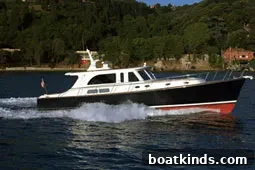
A: One key advantage is design flexibility. Because we don’t rely on fixed molds, we can create a broad range of sizes and styles starting from a blank sheet. If a customer wants a custom 32-foot Vintage, we can make it. That flexibility has limits, though: cold-molded boats take more time and higher-cost materials to build, so competing on price with mass-produced fiberglass boats is challenging. Still, we’ve built a number of yachts under 52 feet in the past, including 34- and 44-foot models.
Q: Where does Vicem particularly excel?
A: Our craftsmanship and finishing, especially our woodwork, are standout qualities. The woodworking team in Turkey has an exceptional ability to make multiple pieces of wood appear seamless. That level of interior joinery and finish is a signature strength for us.
Q: What projects is Vicem working on now?
A: We are launching the Vulcan line, which includes a 46-meter (151-foot) yacht built with Core-Cell, epoxy resin and vacuum infusion. This larger series is a separate division of Vicem and targets higher speeds, with a top speed goal near 25 knots.
Q: Any other new series coming?
A: Yes — the Vanguard series. These boats will be sleeker and more contemporary than our Vintage models, filling a market niche between established brands. Vanguard models will include user-friendly features such as pod drives and joystick helm control, which make boat handling easier and help attract new boaters. The first Vanguard will be a 45, followed by a mid-30s model.
Q: What is your view on pod drives and joystick control?
A: Pod drives and joystick steering are compelling for new buyers because they simplify docking and low-speed maneuvering. Traditionalists will always prefer straight-shaft inboards and manual techniques, but pods open boating to people who want ease and confidence handling their boat.
Q: Has Vicem built pod-driven models?
A: Yes. In the Vintage line’s Bahama Bay series we built a 54 and a 56, both equipped with Volvo Penta IPS pod drives. Those models have already been built and sold.
Q: How did you get into boating?
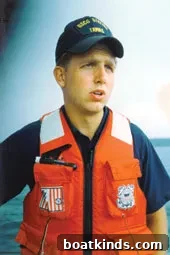
A: I grew up near Lake Wallenpaupack in the Poconos, where I spent my early years on a 14-foot boat. After high school I joined the Coast Guard, served on active duty for two years and was stationed in East Tawas, Michigan. The experience taught me a lot about heavy-weather seamanship and responsibility. After active duty I attended Indiana University of Pennsylvania and remained in the Coast Guard reserves through college.
Q: What did your Coast Guard service teach you?
A: Serving at a search-and-rescue station gave me hands-on experience in demanding conditions. The Great Lakes can be as rough as the ocean, and learning to operate safely in heavy weather was invaluable. The Coast Guard’s peacetime missions — search-and-rescue, aids to navigation and public safety — offered meaningful, practical work that helped me mature as a mariner.
Q: From the companies you worked for, which boats stand out?
A: From Sea Ray, the 340 Sundancer stands out as an excellent value for its size and features. Walker Bay’s 310 Genesis Deluxe was a notable model for its category. At Bertram, the 57 impressed me for its offshore capability; on a rough sea trial one day, the boat pushed through waves with such authority that it prompted an immediate sale.
Q: What lessons did you take from Sea Ray?
A: Sea Ray taught me the importance of process control and sound business practices in boat manufacturing. Those systems were instrumental to my development, and while I was with Sea Ray I also completed an M.B.A. from the University of Tennessee, which complemented the practical lessons I learned there.
Q: What attracted you to Vicem?
A: I was drawn to Vicem’s combination of design and craftsmanship. As I learned more about the company and its long-term plans, I became increasingly impressed by both the current product line and the future direction.
Q: Outside your employers, what boats do you admire?

A: Newer designs like the Scout 262 Abaco have caught my eye for their thoughtful design and quality. Brands that focus on clean design and solid build standards stand out to me.
Q: What are buyers seeking today — simplicity, efficiency, quality?
A: All of the above. Customers want efficiency, quality and value that meet their needs. A clear trend is downsizing: owners who previously bought 70-foot yachts are moving to 50-foot boats, and those in the 50-foot market are increasingly choosing 40-foot models. They still expect the same build quality, but in boats that fit into smaller slips and lower operating budgets.
Q: Where can the marine industry improve?
A: There’s room for improvement across the industry, especially in customer service. Knowing your customer, communicating proactively and responding promptly to inquiries are essential. If a customer leaves a message, they should get the next call back. Attention to customer relationships keeps buyers satisfied and builds long-term loyalty. Many Vicem customers are successful people with ideas that help us refine practices from other industries and apply them in boating.
This article originally appeared in the December 2011 issue.