
Maine’s January Coastal Storms: Unprecedented Damage from Southeast Gales
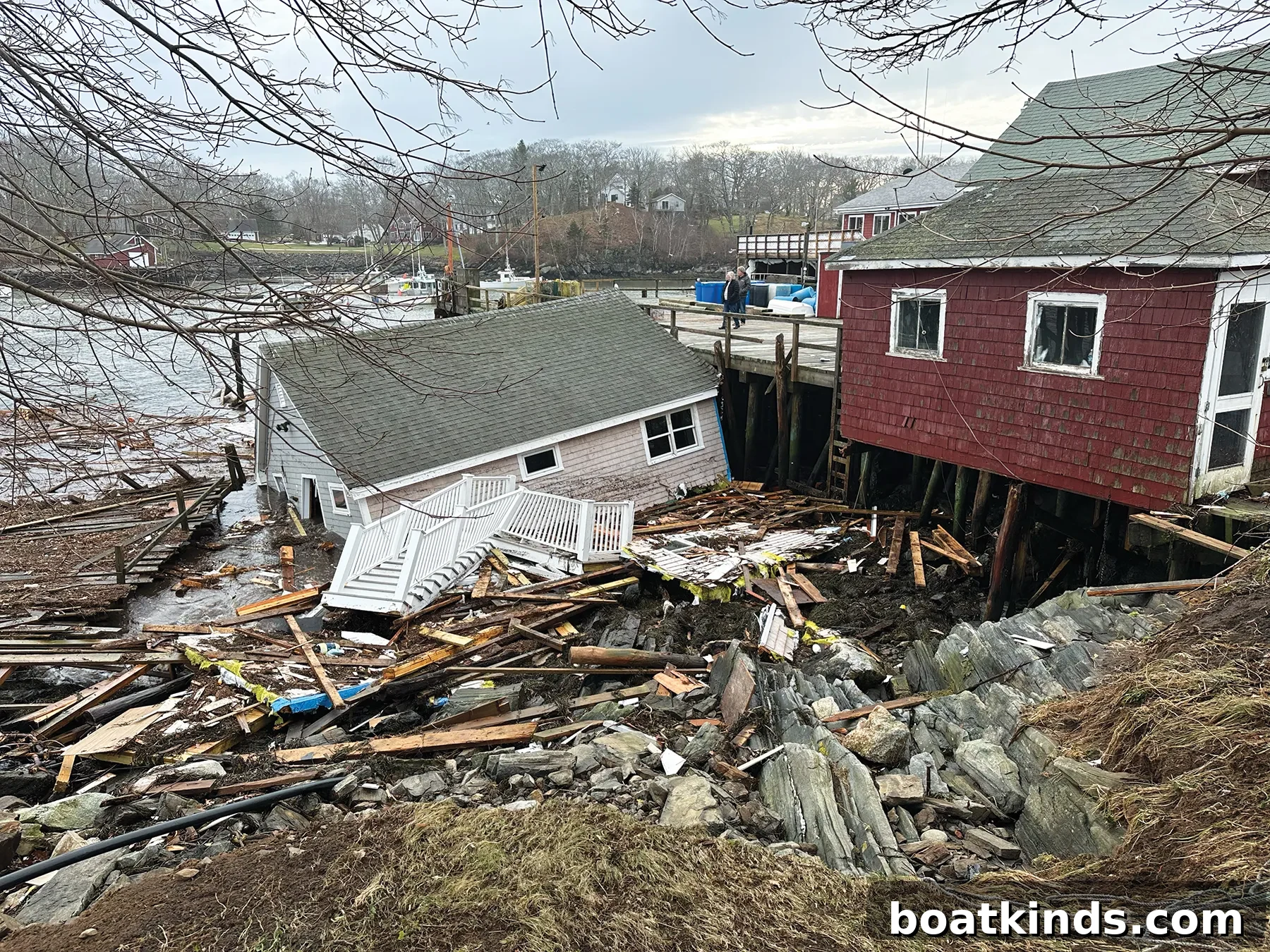
Mainers are familiar with fierce winter weather, recalling storms such as the Blizzard of 1978 and the Patriot’s Day storm of 2007. Still, the back-to-back storms that struck on January 10 and 13 produced destruction on a scale many had never seen. These wind-driven events swept along the coast, demolishing docks, tearing historic fish houses from their pilings, damaging roads, destroying oceanfront homes and even harming long-standing lighthouses that had withstood previous winters.
What made these storms especially damaging was the direction and timing. Both storm systems moved in from the southeast—an uncommon angle for winter storms in Maine—and did so nearly perpendicular to the shoreline. That alignment, combined with a King tide, pushed ocean water far upriver and into harbors that traditionally served as safe havens. Gale-force gusts, including a 95-mph gust recorded at Isle au Haut, propelled water inland. Tide gauges reflected record or near-record water levels; Portland’s tide gauge reached 14.57 feet, a level residents had not seen before.
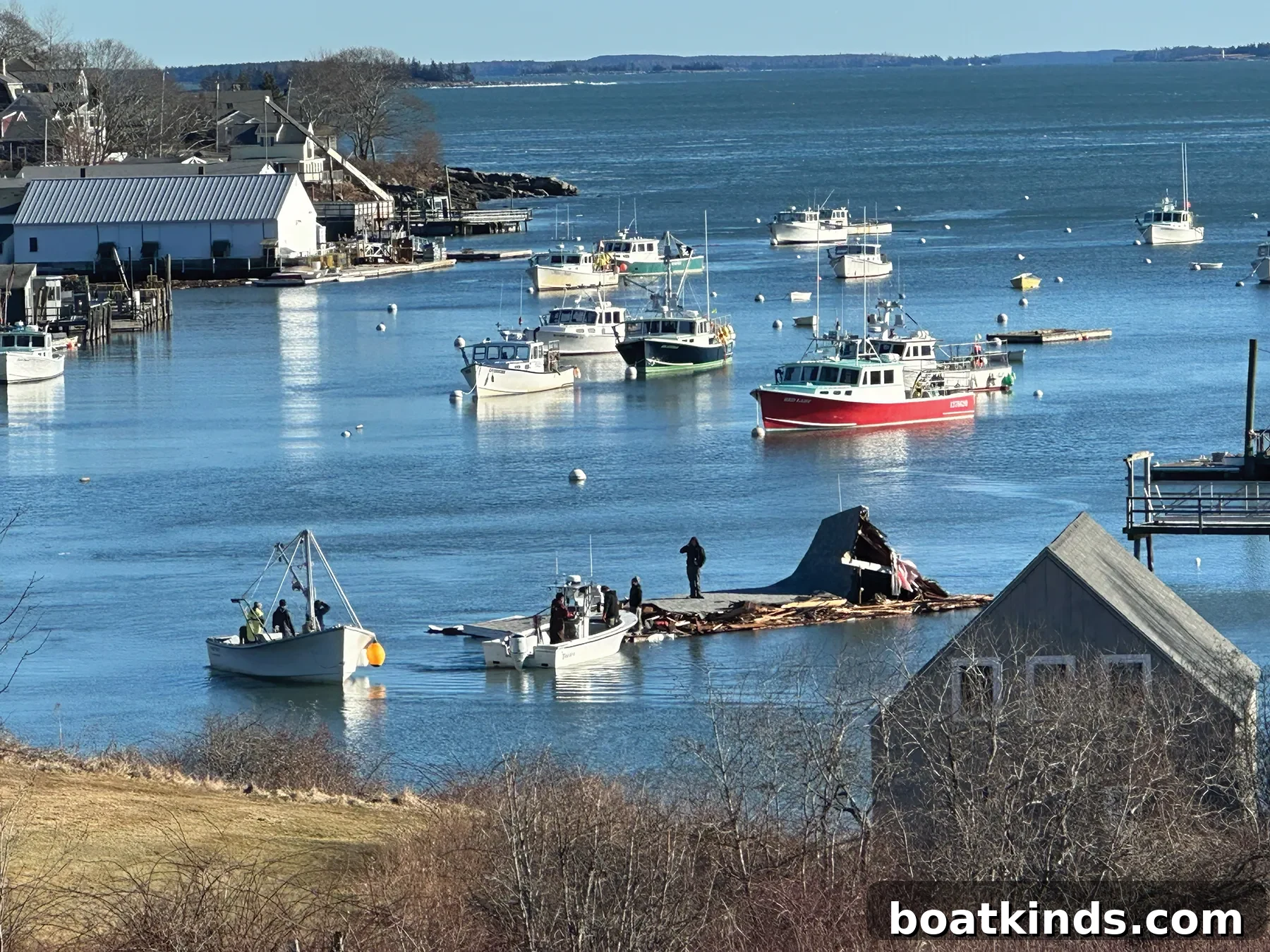
The result was widespread coastal impact from New Hampshire to the Canadian border. Harbors and waterfront communities took pounding that in many cases exceeded any recent memory. In New Harbor, a small village with roughly 700 residents and an active winter lobster fleet, the first storm tore more than half a dozen fish houses off their pilings and set them adrift in the harbor, where waves and swells smashed them to pieces. Most docks there were damaged or destroyed.
Local officials and marine operators moved quickly. In the two days between storms, authorities enlisted every available marine operator to clear large structures, pilings and beams from the water to protect remaining docks and fishing vessels from further damage during the second storm. The rapid removal work was critical to reduce additional impacts as the seas rose again.
At Rockport Marine Inc. in Rockport, president Sam Temple reported that seawater entered the yard’s boatbuilding shed for the first time in living memory, forcing the crew to raise equipment off the floor to protect it from saltwater. Ahead of the second storm, Temple and his team fortified shed doors with membranes and sandbags to limit further intrusion. When the second storm arrived three days later, Rockport Harbor and Rockport Marine fared somewhat better, in part because the wind had shifted slightly more eastward. That change reduced the southerly swell that had built during the first storm.
Temple described the January storms as the worst he has seen in Rockport and noted that Rockport Marine Vice President Taylor Allen, a long-time local resident, considered them the worst since moving to the area in 1962. Up and down the coast, other boatyards reported damage: Brooklin Boatyard on Eggemoggin Reach, Lyman-Morse in Thomaston, Newman & Gray Boatyard in Great Cranberry and Brown’s Boatyard in North Haven all experienced impacts ranging from damaged docks to water in sheds.
Locals were unsettled by the storms’ southerly track during winter. Temple observed that yards like his are typically well prepared for northerly winter events, but a southerly storm is less predictable and can produce unfamiliar and severe effects on harbors and coastal infrastructure.
Scientists and community leaders say the pattern aligns with the broader changes already reshaping Maine’s coast. Susie Arnold, director of the Center for Climate and Community at the Island Institute in Rockland, warned that Mainers should expect more frequent episodes of surging seas and inland flooding. At a special meeting of the Maine Climate Council convened by Governor Janet Mills after the storms, Arnold noted that these extremes are becoming more commonplace. Maine Emergency Management Agency Director Pete Rogers echoed that concern, pointing out that the state had experienced several unprecedented storms and near-misses in a short period, indicating a change in the region’s exposure to coastal hazards.
Arnold also cited projections that sea level along Maine’s coast is expected to rise in coming decades, increasing the likelihood that high-water events will recur. She estimated a 20 percent chance that such an event could occur in a given year and referenced projections for sea level rise by 2050. Those projections underscore the urgency for coastal communities to plan for infrastructure resilience and to strengthen response and recovery capabilities.
The January storms left a heavy mark on Maine’s working waterfronts, recreational harbors and historic shorelines. Cleanup, repair and planning efforts will continue as communities assess long-term recovery needs and consider how to adapt to rising seas and more frequent extreme events.
This article was originally published in the April 2024 issue.