
Many sailors know the legend of Rowdy, a 65-foot New York 40 launched in 1916. Crafted with pine planking over white oak frames, she was the product of famed designer Nathanael Herreshoff, built for speed and competition. Rowdy earned a reputation on the racecourse, and her story has continued to capture the imagination of maritime enthusiasts and restorers alike.
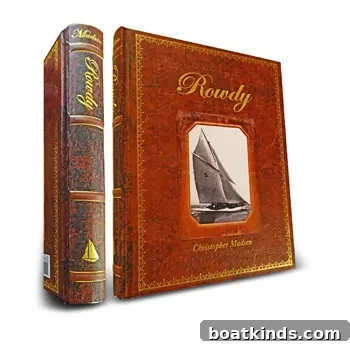
In 1998 Christopher Madsen acquired the neglected yacht with plans for an ambitious restoration, and his book Rowdy (CPM Publishing, $55, rowdystory.com) chronicles that journey. Madsen’s narrative combines hands-on restoration detail with exhaustive historical research. Over 16 years he interviewed scores of people connected to the boat’s past, examined personal and legal records, and reconstructed the lives that intersected with Rowdy’s long career. Central to the book is the figure of Holland Duell—soldier, patent attorney, state senator, Hollywood filmmaker and accomplished sailor—whose ownership and exploits figure prominently in Rowdy’s history. Madsen’s text reads like an epic history: part restoration diary, part biographical portrait, and part celebration of classic yacht design. For anyone drawn to wooden boats, classic design, or the painstaking work of bringing a historic vessel back to life, Rowdy offers both technical insight and storytelling that honors maritime heritage.
Interpreting the weather around you

For sailors, understanding weather is as essential as knowing how to handle sails and rigging. The third edition of The Weather Handbook (Bloomsbury, $18) updates Alan Watts’s practical guide to include modern digital sources, while preserving the book’s core aim: to teach readers how to read the sky and combine that observation with professional forecasts. Watts emphasizes that the atmosphere functions like a heat engine governed by basic physical laws; the more a mariner understands those processes, the better they can anticipate changing conditions. The book blends clear explanation with color photographs and diagrams, making complex meteorological concepts accessible. It trains readers to notice cloud formation, wind shifts, pressure trends and other visual cues, and to synthesize those signs with satellite briefings or forecasts. For coastal cruisers and offshore sailors alike, this approach—balancing on-the-water observation with reliable meteorological data—improves safety, planning and seamanship.
True stories behind great works of fiction
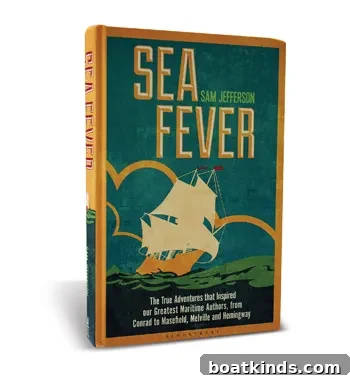
Sam Jefferson’s Sea Fever (Bloomsbury, $27) explores the real-life adventures that inspired some of literature’s most enduring sea tales. Jefferson, a journalist and maritime historian, traces the biographical and historical incidents behind works by Joseph Conrad, Herman Melville, Ernest Hemingway and others. Working backward from novels such as The Old Man and the Sea, The Beach of Falesa and The Ebb Tide, he sketches the authors’ lives and the experiences that fed their fiction. Jefferson’s writing is direct and punchy, cutting straight to the human stories—voyages, shipboard conflicts, legal disputes and the hazards of life at sea—that became the raw material for masterpieces. By linking the facts of maritime history with literary creation, Sea Fever enriches readers’ appreciation of those novels and the often dangerous, vivid world that inspired them.
Taken together, these three books—Madsen’s intimate restoration chronicle, Watts’s practical meteorology primer, and Jefferson’s literary-historical investigations—offer a rounded view of the sea’s appeal. They cover craftsmanship and conservation, the everyday science that underpins good seamanship, and the human dramas that have long made maritime stories compelling. Whether you are restoring a vintage yacht, sharpening your weather sense before a coastal cruise, or seeking deeper context for your favorite nautical novels, these titles provide thoughtful, well-researched perspectives that celebrate the craft, knowledge and storytelling of the maritime world.
This article originally appeared in the September 2015 issue.