
Remembering the 1938 Hurricane: Context for Understanding Superstorm Sandy
About 24 hours before Superstorm Sandy struck southern New Jersey, my brother and I stood in a steady drizzle at the family home in southwestern Rhode Island and found an old mark on the front walk showing how high water rose during the Great New England Hurricane of 1938. I paced it off: six solid strides — roughly 18 feet — from that mark to the front steps.

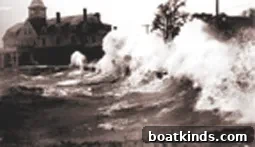
Even acknowledging Sandy’s immense size and power, we believed the house would be safe. When you compare a modern storm like Sandy to historic storms in the Northeast, you must look back to the catastrophic 1938 hurricane, often called the Long Island Express. That storm killed hundreds of people and damaged or destroyed tens of thousands of homes from the Bahamas to Canada.
The 1938 storm made landfall on Sept. 21 in Suffolk County, Long Island, N.Y., coinciding with a full-moon high tide, and then made a second landfall near Milford, Conn., close to New Haven. Observations at the Blue Hill Observatory south of Boston recorded sustained winds of 121 mph and peak gusts of 186 mph, according to the National Weather Service. Southern New England experienced storm surges up to 20 feet, and much of the shoreline endured sustained winds exceeding 100 mph.
The hurricane originated Sept. 10 near the Cape Verde Islands and slowly intensified. By Sept. 19 it was east of the Bahamas and had reached an estimated Category 5 intensity, threatening Florida. A deep trough over the Appalachians turned the storm north. Most forecasters expected it to then curve northeast and head out to sea, but a high-pressure system north of Bermuda blocked that eastward turn, forcing the storm to accelerate up the coast. In the 12 hours before landfall it moved at times as fast as 70 mph, likely aided by interaction with the jet stream — possibly the fastest forward motion recorded for a tropical cyclone. That speed helped the hurricane retain strength as it moved over cooler northern waters.
Forecasters in the region were largely unprepared. Accounts show the Northeast was caught off guard, with only a junior forecaster at the U.S. Weather Bureau predicting a New England strike, a forecast that was later overridden.
Sandy’s designation on the Saffir-Simpson scale — Category 1, with sustained winds between 74 and 95 mph — tells only part of the story. Another important metric is integrated kinetic energy (IKE), which measures the total wind energy in a storm by accounting for how far tropical-storm-force winds extend from the center. Because it reflects the storm’s physical size as well as wind strength, IKE better captures the potential for surge and widespread coastal impact.
By that measure, Sandy ranked among the most energetic storms at landfall in the modern record, placing ahead of many stronger but more compact hurricanes. Its gale-force winds extended roughly 900 miles across, producing far more total energy than smaller, more intense systems like Hurricane Andrew. That large wind field is a major reason Sandy produced such extensive storm surge and coastal flooding: storm surge is strongly driven by the fetch — the area over which strong winds blow — not just by peak wind speed.
Like the 1938 hurricane, Sandy made landfall with unusually low central pressure for a storm so far north, and that low pressure contributed to the powerful winds observed at the surface.
I read an interview with historian Cherie Burns, author of The Great Hurricane: 1938, in which she reflected on resilience after the storm. She noted that New Englanders of that era had little formal disaster support or therapy; they simply rebuilt and moved on. National attention quickly shifted elsewhere — Burns points out that international events dominated headlines soon after the storm — so recovery relied heavily on local resolve and resourcefulness.
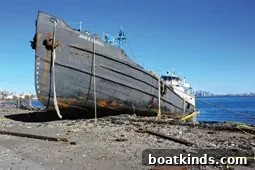
Her account could describe my grandparents. They rode out the 1938 hurricane on their stomachs beneath a mattress in a second-floor room above their stores in Watch Hill, R.I., where roughly 40 homes were washed from Napatree Point. Windows blew out, and surging water ransacked the shops below. It was not their first hardship: my grandmother had lost her first husband and a young son in the 1920s, and my grandfather, a Norwegian-born former ship captain, had endured heavy fighting during World War I and later many personal losses before settling into civilian life.
In February 1938, a fire destroyed my grandparents’ Watch Hill property. They rebuilt, and when the hurricane came a few months later they hunkered down again and weathered the storm. When it passed, they gathered the pieces and began to rebuild once more.
We choose, time and again, to live at the edge of land and sea. That decision brings risk: large, slow-moving, or expansive storms can wreak outsize damage, and history — from 1938 to Sandy — shows how vulnerability, storm size, timing, and local preparedness together determine impact. Reflecting on those storms reminds us to value both scientific measures beyond simple categories and the everyday resilience of coastal communities.
January 2013 issue