Gloucester’s Waterfront Adapts: Brothers Stage Popup Seafood Sales to Support Local Fishing
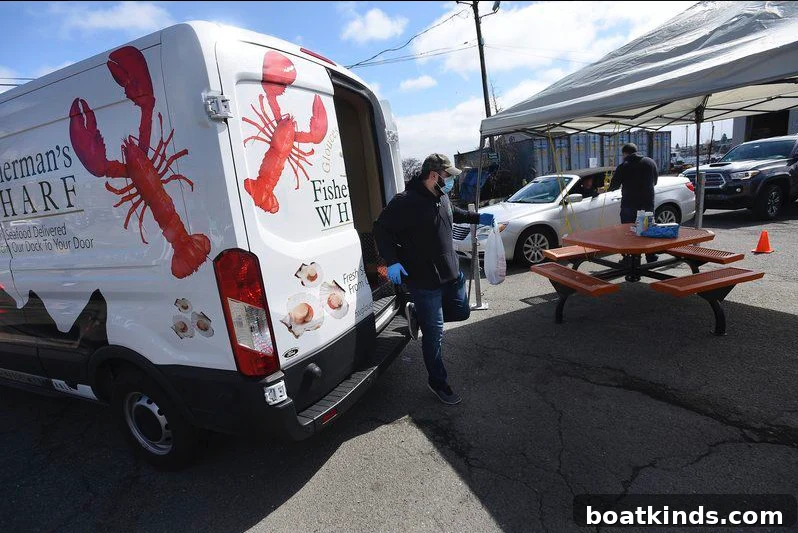
Gloucester, Massachusetts, long celebrated as America’s oldest commercial fishing harbor, has felt the sharp economic impact of the coronavirus pandemic. With restaurants closed to on-site dining and many markets operating under restricted conditions, the usual bustle along the waterfront has slowed dramatically and many fishing vessels remain tied up at the dock.
To help bridge the gap between the docks and consumers, the Giacalone brothers, operators of Fisherman’s Wharf Gloucester—a wholesale seafood dealer—organized impromptu outdoor fish sales. Because they do not have a retail storefront, the brothers adapted quickly, setting up a popup in a parking lot so customers could drive in, remain in their vehicles, and observe safe distancing protocols while purchasing fresh, locally caught seafood.
The first popup was announced on social media and carried a simple notice: cash only, exact change preferred. Despite the modest setup and brief notice, the response was immediate. On the first day they sold 400 pounds of haddock and scallops in just 25 minutes. A repeat event on Tuesday drew such strong demand that traffic backed up onto surrounding streets, demonstrating the community’s appetite for fresh, local seafood even amid public-health restrictions.
The Giacalone brothers plan to continue holding Saturday sales until normal restaurant and market operations resume. By offering direct-to-consumer sales, they are not only providing a route for crews to sell their catch, but also supplying Gloucester residents and nearby communities with affordable, high-quality seafood at a time when grocery shelves and restaurant menus are constrained.
These popup sales highlight several important trends affecting Gloucester and other coastal towns during the pandemic. First, they underscore how supply chains have been disrupted—restaurants, which are major buyers of local fish, are operating at reduced capacity or closed, leaving wholesalers and fishermen to find alternative outlets. Second, they reveal community resilience: local buyers are willing to seek out fresh seafood directly from the source, supporting workers and businesses on the waterfront. Finally, the events illustrate how small businesses can pivot quickly, using outdoor spaces and straightforward safety measures to keep commerce moving while protecting public health.
For the Giacalone brothers, the popup approach is practical and minimal: a parking lot, a selection of freshly processed haddock and scallops, and clear safety protocols. Customers are encouraged to remain in their vehicles for the transaction, which streamlines distribution while minimizing contact. The cash-only request—exact change preferred—reflects the temporary nature of the setup and the need to keep transactions simple and efficient.
The success of these informal sales can also be seen as part of a broader shift toward local sourcing and community-supported food systems. When traditional buyers are disrupted, consumers who prioritize fresh, traceable seafood have stepped in, helping sustain livelihoods and preserve a connection between the harbor and those who depend on its catch. As long as restrictions on dining and wholesale distribution continue, popups and similar direct-sales models may remain an important lifeline.
While this strategy is not a permanent substitute for a stable market or a bustling waterfront full of active boats, it has provided immediate relief to workers and businesses in Gloucester. The brothers’ willingness to experiment with a low-overhead solution has shown how nimble, community-oriented responses can fill gaps in times of crisis.
Local reporting has noted the speed with which the sales sold out and the level of community support they received. Organizers say they will continue to host these popups on Saturdays for the foreseeable future, adjusting volume and logistics as needed to match demand and maintain safety. For residents who miss the familiar rhythm of Gloucester’s seafood economy, these popup sales offer a reminder that the harbor’s people and practices can adapt and persevere.
As the public-health situation evolves and restaurants gradually reopen, the hope among fishermen, dealers, and buyers is that normal market channels will recover. Until then, ad hoc efforts like the Giacalone brothers’ popup provide a practical, community-focused solution—bringing fresh haddock, scallops, and other local catches from dock to doorstep while supporting Gloucester’s storied fishing industry.