
American Magic and IYRS: Reviving Rhode Island’s America’s Cup Boatbuilding Tradition
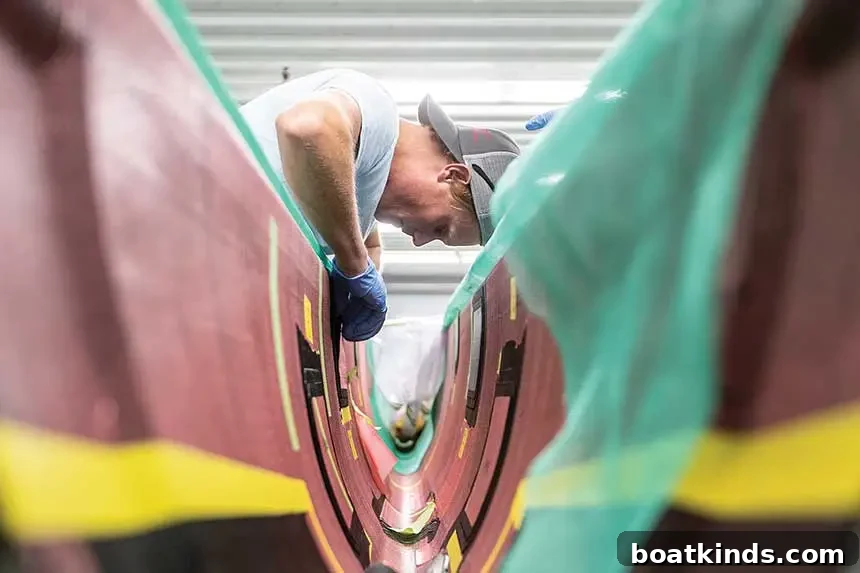
Rhode Island’s role in building America’s Cup yachts stretches back well over a century, beginning with Vigilant, constructed in 1893 by the Herreshoff Manufacturing Company in Bristol. That same deep boatbuilding culture is part of the thread that connects today’s campaigns to their storied past. The New York Yacht Club’s American Magic entry, which challenged for the 2021 America’s Cup, has deliberately tapped into that local tradition while pursuing modern, high-performance design and construction techniques.
Choosing an Independent Build
When the American Magic program began assembling its team and infrastructure, its leadership made a conscious choice: they would not rely on an established commercial boatbuilder. “We decided not to use a commercial boatbuilding operation,” Rob Ouellette, chief operations officer at American Magic, explained. The team wanted direct oversight of the build process, from materials and tooling to final assembly and testing. In April 2018 they leased a facility in Bristol, Rhode Island, to serve as their production base.
That decision came with a challenge. Finding experienced composite boatbuilders who were available and not already employed by other builders proved difficult. At the outset, American Magic had only seven or eight people on the build team. The program needed additional skilled workers quickly to design and construct a prototype for testing, and to scale up for the AC75 campaign.
Finding Talent at IYRS
Ouellette visited the IYRS School of Technology & Trades in Newport while looking for talent and capabilities. He was impressed by what he saw: modern digital fabrication tools, exposure to composite construction, and students gaining hands-on experience. “I saw they had the 3-D printers and the CNC lathes,” he recalled. “And that the students had been exposed to composite building.”
American Magic started by taking on a single IYRS intern. The collaboration expanded quickly: more interns were brought in, and then the team began hiring those interns directly onto the build crew. Over time the program grew from that small core to a larger workforce. The build team eventually swelled to around 40 people, with several former IYRS students making the transition from classroom to Cup-yard.
The Mule and the AC75 Program
The team’s first significant output from that in-house operation was a 38-foot foiling prototype known as The Mule, launched in October. The Mule served as a test platform for foil systems, control logic, and other high-performance components that inform AC75 development. According to Ouellette, nine IYRS graduates worked on The Mule and then continued with the program as it progressed to full AC75 construction.
That continuity—from training and internship to full-time roles on a Cup team—illustrates how targeted partnerships between education and industry can supply specialized talent. For the students, the path from school to elite-level yacht building provided a rare opportunity to work at the cutting edge of sailing technology.
From Newport to the Cup Yard: Personal Stories
Trevor Davidson, one of the IYRS alumni who joined American Magic, grew up in Newport in a family that sailed. He graduated from IYRS in 2018 and now handles material procurement for the team. “I knew I wanted to work in boats, and I knew I wanted to go to IYRS,” Davidson said. “The organization set me up really well. To get on a Cup team is just a dream come true.” His experience highlights the practical benefits of a curriculum that blends traditional craft skills with modern fabrication technologies.
During a March address at the New York Yacht Club for the IYRS Winter Ball, Ouellette displayed side-by-side images of The Mule next to a historical photograph of one of Nathanael Herreshoff’s America’s Cup defenders under construction in Bristol. “Both of them were built right near each other in Rhode Island,” Ouellette told the audience. “The Mule might be four to five times faster, but they were built on the same piece of dirt.” That comparison underscores how advances in materials, design and technology have transformed performance, while the local boatbuilding heritage endures.
Keeping the Legacy Alive
The partnership between American Magic and IYRS is an example of how modern yacht programs can draw on regional maritime traditions while investing in next-generation talent and tooling. By choosing to build in-house and recruit directly from a technical school focused on marine trades and digital fabrication, the campaign reinforced a practical pipeline from education to elite-level boatbuilding.
For Rhode Island, the connection between historic yards like Herreshoff and contemporary high-performance projects keeps the state’s boatbuilding identity active and evolving. Students gain rare exposure to advanced composites and digital fabrication; programs benefit from motivated, well-trained workers; and the long arc of American Cup history gains another chapter rooted in the same coastal communities that produced champions a century ago.
This article originally appeared in the June 2019 issue.