
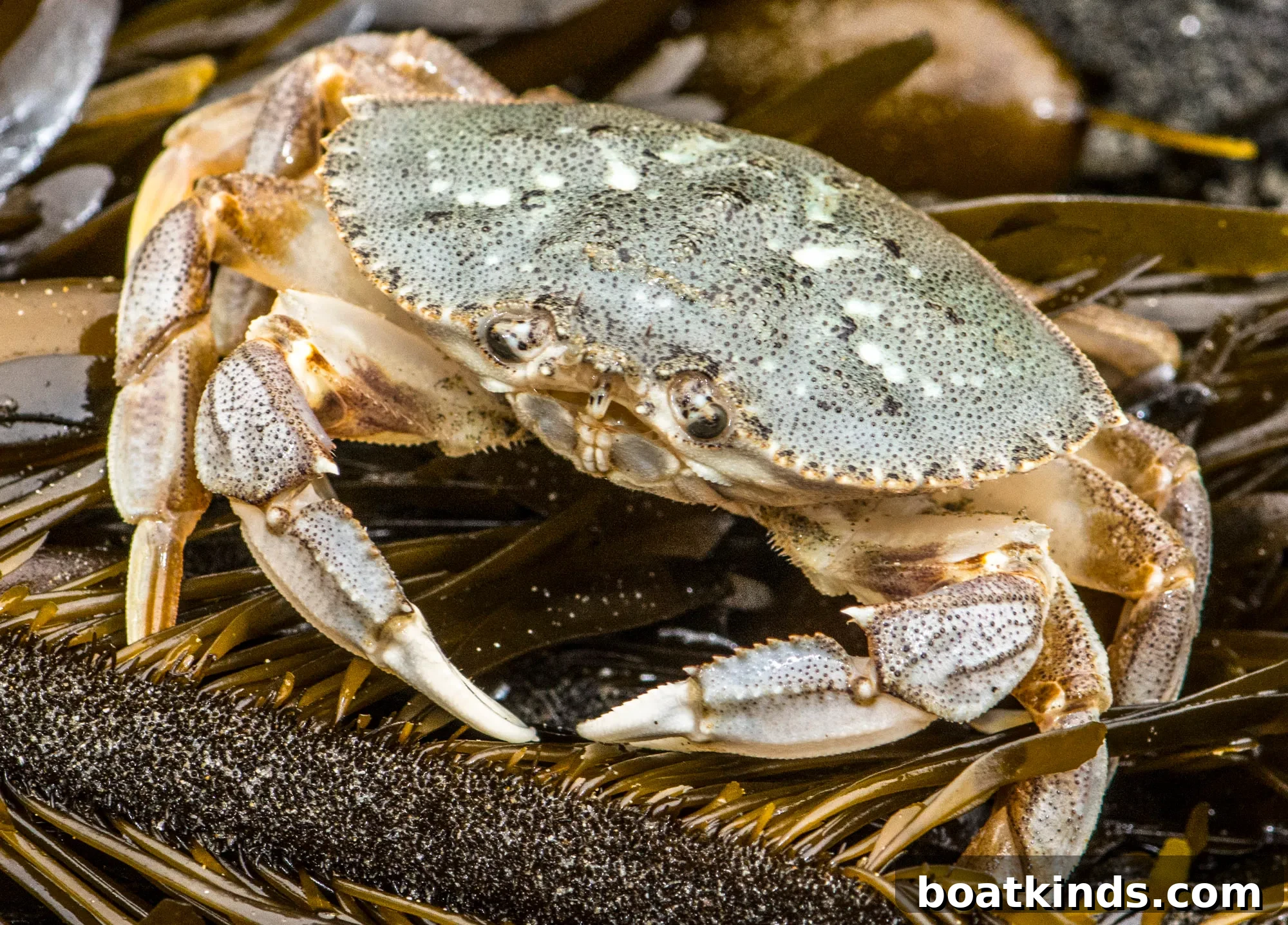
Ocean Acidification Is Dissolving Dungeness Crab Larvae and Threatening Pacific Northwest Fisheries
New research from NOAA Fisheries’ Northwest Fisheries Science Center shows that rising ocean acidity is already dissolving the shells of Dungeness crab larvae, sharply reducing their chances of survival. The study’s lead author, Jason Miller, reports that young crabs exposed to the lower pH levels now recorded in Puget Sound are roughly three times more likely to die than larvae in less acidic conditions. These findings indicate that ocean acidification is having a direct and immediate impact on a cornerstone species of the region’s coastal economy.
Ocean acidification occurs when the ocean absorbs carbon dioxide (CO2) from the atmosphere and chemistry shifts reduce the concentration of carbonate ions that many marine organisms need to build shells and skeletons. NOAA estimates that roughly a quarter to a third of CO2 produced by burning fossil fuels is taken up by the ocean, which drives down seawater pH. In more acidic water, crustaceans and shell-building animals cannot access the carbonate minerals necessary for healthy shell formation. For Dungeness crab larvae, that means weaker, thinner shells that can begin to dissolve under current conditions.
The physiological consequences for crab larvae are severe. Dissolving shells make them far more vulnerable to predators and limit their ability to control buoyancy during early life stages. The research also found damage to hair-like sensory structures used for navigation and feeding, which could impair larvae’s ability to orient and find food. In addition, exposure to lower pH appears to slow or disrupt normal development, compounding mortality risks across the larval period.
Dungeness crabs are not only ecologically important but also economically vital. They represent the highest-grossing fishery in Washington and Oregon and the second-highest in California, supporting commercial and recreational fishing, processing jobs, and coastal communities. Because Dungeness are among the first species to show clear, measurable harm from acidification, the new results raise serious concerns about the future productivity and stability of West Coast shellfisheries.
While Dungeness larvae are currently among the most visibly impacted, other marine species that depend on carbonate ions—such as oysters, clams and many planktonic organisms—face similar chemical stresses. Reduced ability to form shells or skeletons could alter food webs, affect aquaculture operations, and change the composition of coastal ecosystems over time. The study underscores that acidification is not a distant threat but an active process already reshaping early life stages of commercially important species.
Scientists had expected notable impacts of ocean acidification later in this century, but these findings show that harmful effects are occurring now in places like Puget Sound. Because the primary driver is atmospheric CO2, the only effective long-term remedy is to lower greenhouse gas emissions and reduce CO2 concentrations in the atmosphere so less of it is absorbed by the ocean. In the meantime, fisheries managers, aquaculture operators and coastal communities will need to consider adaptation strategies—such as enhanced monitoring, selective timing of harvests and hatchery practices—to manage near-term risks.
The implications for the Pacific Northwest’s commercial fishing industry are significant. NOAA Fisheries warns that these results should prompt regional planners and policymakers to evaluate how acidification will affect fishery yields, economic returns, and community livelihoods. Continued research and monitoring are essential to track changes in water chemistry, larval survival rates and ecosystem responses so that management decisions can be informed by current science.
In summary, NOAA’s new study reveals that ocean acidification is already dissolving the shells of Dungeness crab larvae in Puget Sound, causing substantially higher mortality and generating ripple effects for fisheries, aquaculture and coastal ecosystems. Addressing the root cause—elevated atmospheric carbon dioxide—remains critical, but the findings also make clear that local and regional planning will be necessary to protect the fisheries and communities that depend on Dungeness crabs today.