
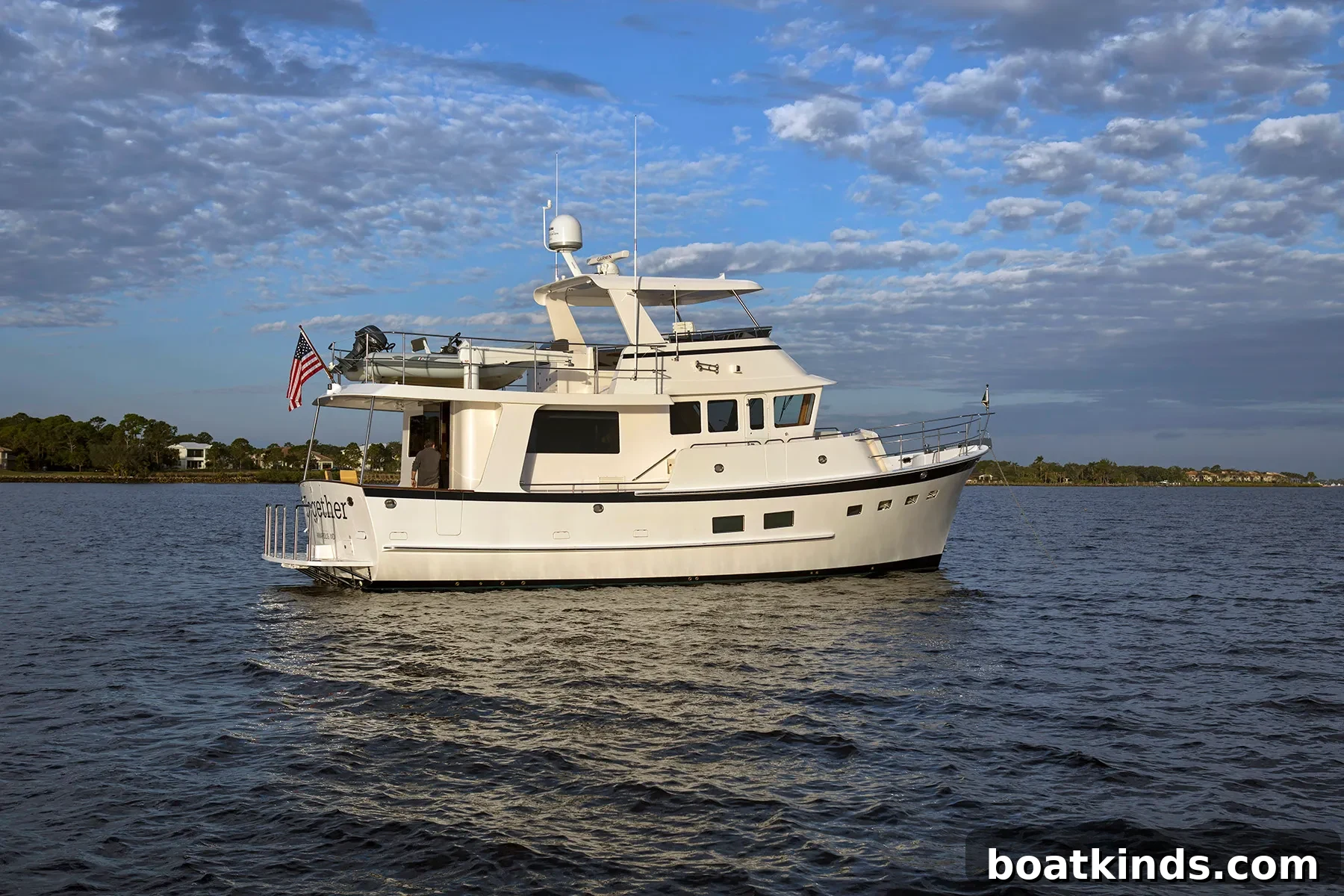
Over the years I’ve delivered dozens of boats from New Jersey to Florida, using both offshore routes and the Intracoastal Waterway. On favorable runs a fast boat and good weather can put 1,000-plus miles behind you in four long days. Other trips take much longer: my longest delivery stretched over three weeks even though the engines only ran for about a week. The difference is schedule—deliveries are driven by deadlines—whereas a vacation cruise lets you savor each day, provided the crew and vessel are prepared, comfortable and safe.
I travel by boat for the same reasons many do: the reward of time on the water and a kind of freedom you don’t get on land. Not everyone is cut out for extended cruising, but with the right crew and a boat set up for distance, those journeys create memories that cling like salt on the rail.
Proper planning makes the trip possible and enjoyable. Long passages demand more physical stamina and concentration than a typical day on the water. Start with a reality check: is your boat truly ready, and are your skills up to the task? A short outing is not the same as a 10-hour watch at the helm, negotiating sloppy seas and trying to make an unfamiliar port.
A cautionary story from a friend illustrates the point. He chartered a sailboat in the Caribbean with his wife and another couple and declined the option to hire a local skipper, confident his experience would be enough. When the weather turned ugly—strong winds, rough seas and widespread seasickness—the trip quickly became an exhausting, expensive ordeal. He realized his mistake wasn’t overestimating his abilities so much as lacking local knowledge. He now always hires a licensed skipper for bareboat charters in unfamiliar waters. Had he been on his own boat, with systems and local routines he knew well, the return trip would likely have been less stressful.
Cruising long distances on your own boat can be deeply satisfying, but it brings responsibility. My pre-trip routine is methodical: a bow-to-stern inspection that checks everything from the windlass to the stern light. I carry an extra anchor and rode, plus a retrieval ball in case the windlass fails. Engines and generator get fresh oil and filters; I inspect and organize spare parts. Electronics are powered up and checked, navigation charts are loaded into each unit, and paper charts are stowed as backups. Registrations, logbooks and all safety gear—especially a well-stocked first aid kit—are placed where they’re easy to find.
I prefer to begin a cruise with fresh primary and secondary fuel filters; it’s an inexpensive ritual that reminds me to carry two sets of spares and reduces the chance of fuel-related problems. Before filling the tanks I take the boat out for an hour-long sea trial to confirm gauges and engine performance. I make sure the engines reach full RPM and then re-check everything after fueling so I leave with confidence that the boat is mechanically ready.
Buy the latest cruising guides for the waters you’ll transit. Good guides provide local information and warn about specific hazards—narrows or inlets that become treacherous when wind opposes tide, bridge schedules, shoals and preferred approaches. They also include compass headings and distances, which can boost a skipper’s confidence when entering new areas or running in poor weather. For passengers—especially children—knowing there will be interesting destinations each evening helps pass long hours on passage.
Onboard satellite communications, internet and TV are popular, but many boats still rely on cell phones and VHF near shore. Call ahead to marinas when possible. When entering unfamiliar inlets I’ll call the Coast Guard on VHF channel 22 to confirm aids to navigation are on station. Never assume that “red on the right” is the extent of your navigational knowledge—know the local markers, tidal quirks and any temporary changes to the waterways before you commit.
Expect different docking arrangements while cruising: fixed and floating docks, fuel piers, tight slips and marinas with varied rules. Be mindful of wind, current, speed zones, smaller boats and paddleboarders—many appear unexpectedly in busy harbors. If you need fuel, ask the dockmaster via VHF whether fueling is available at the slip or only at a dedicated fuel dock. I prefer to top off tanks before a dark departure. Have dock lines, fenders and stern lines ready; some fuel docks provide lines, many do not.
When connecting to shore power always make sure the dock pedestal breaker is off before you plug in. Boat electronics are sensitive to power drops and surges, so I switch everything off at the boat’s breaker panel, turn on the pedestal breaker, then switch to shore power and bring boat breakers back online one at a time. Inspect power cords at both the inlet and the shore outlet—warm is expected under heavy loads like air conditioning, but a hot plug or a sizzling sound can mean a bad connection on the cord, inlet or pedestal. Transient docks see heavy use and occasional misuse, so be cautious.
If you filed a float plan, update your contacts when you arrive to confirm you’re safe and to share plans for the next day. Ask the dockmaster for local dining recommendations if you want to sample nearby food, and remember to thank and tip the dock crew for their help.
After a long day on the water there’s little better than falling asleep in a cozy bunk to the rhythm of water lapping the hull. Maybe the only thing better is knowing you can do it all again tomorrow.
This article was originally published in the December 2022 issue.