
Seven Family Members Float 20 Hours After Boat Sinks Off Charleston; Rescued by Coast Guard
A fortunate chain of events and quick thinking saved seven family members who spent nearly 20 hours in the Atlantic waters off Charleston, South Carolina, after their 38-foot powerboat sank. The Coast Guard located them when a helicopter crewman spotted a small smudge beneath a faint crescent moon and illuminated the group with a searchlight.
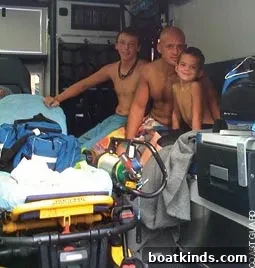
“It was pitch dark,” said Roger Gouge, 60, of Marion, N.C. “There was a slight moon out — so slight it was almost non-existent.” For much of the night the only visible points of light were that thin crescent, a red tower light about 21½ miles away in Mount Pleasant, and the electric-blue shimmer of bioluminescence whenever someone moved an arm or a leg through the 77-degree water.
On board with Gouge were his sons Rodney, 41, and Jody, 32; his grandsons Tyler, 15, Kaleb, 14, and 5-year-old Xander; and his son-in-law, Rex Willimon, 39. All seven were wearing life jackets and remained tied together with fender line clipped to life jacket bags and a large white cooler stocked with sodas and food.
They were finally spotted around 6 a.m. on Sept. 5, the Sunday of Labor Day weekend. A Coast Guard helicopter’s running lights and spotlight closed in. “I knew the Lord was going to take care of us and save us,” Gouge said. The search helicopter first passed over the group but returned after a crewman using infrared night-vision goggles noticed a smudge on the water he initially thought might be debris or birds.
The survivors had no working handheld radio — Willimon carried a supposedly waterproof VHF on his belt that failed after it went into the water — and their flares were washed away when the stern of the Fountain slipped under the waves the previous morning. Exhaustion, cold and the lack of signaling tools made detection extremely difficult.
Throughout the night the family sang hymns to steady themselves — “Amazing Grace,” “Nothing but the Blood” and others. Xander, the youngest, cried much of the day and night before finally dozing off against his grandfather’s chest. At about 3 a.m. Gouge remembers a moment of real fear when a fishing trawler passed about 40 yards away, unaware of their presence. They feared being struck or drifting apart in the dark.
Gasoline leaking from the disabled engines created an oily, irritating film on the water that stung their skin and made them nauseous. Jellyfish were present and stung bare flesh; Willimon had to remove one from Tyler’s leg. Sharks were also seen circling the stranded boat, likely attracted by spilled bait and dog food. The men alternated climbing on the bow to keep watch, flashing whatever light they could and trying to keep sharks at bay. Gouge later said he believed the gasoline discouraged the predators.
Trouble in the engine space
The outing began Saturday morning from Shem Creek Marina in Mount Pleasant. Willimon had bought the six-year-old Fountain earlier that summer. They set a heading 108 degrees from Charleston Harbor and stopped about 21½ miles out in 65 feet of water to drop bait. The boat was idling bow into the swells when the bilge alarm sounded and one engine suddenly shut down.
Willimon opened the engine compartment and found it already flooded, with water spewing from the air intake. He suspected water was coming in through a through-hull or the exhaust system of the twin MerCruiser 496 engines. He and others tried to stuff shirts into the exhaust ports, but the second engine soon quit. Within minutes the cockpit was knee-deep, a swell swept over the transom, the windshield was blown out and the flares washed away. Within 10 minutes they were in the water.
Willimon transmitted mayday calls from the helm, but the messages were repeatedly “stepped on” and cut off, providing only fragmented information. The Coast Guard initially interpreted the incomplete transmission as indicating the boat was about a half-mile offshore and launched a search concentrated close to shore. Meanwhile, the family was 21½ miles out.
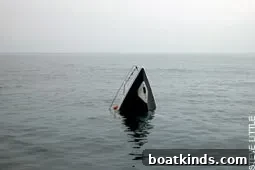
Later that evening Willimon’s wife called to report them overdue. The Coast Guard resumed a broader search with additional aircraft and surface assets, including a C-130, two rescue helicopters and an 87-foot cutter. TowBoatU.S. operator Steve Little of Maritime Services of Charleston aided the search by identifying popular wreck locations and sharing coordinates where the party might have been fishing.
‘Miracle’ rescue
The survivors credit their life jackets, teamwork and the cooler tether for keeping them together and visible. Willimon had thrown three life-jacket bags into the water, each with four bulkier Type II PFDs, and used the fender line to clip everyone PFD-to-PFD and to the bags and cooler. That decision likely prevented the group from drifting apart in the darkness and the cold.
Jody managed to fashion a cradle for little Xander against the cooler so the boy’s back stayed mostly out of the water. At first the family moved away from the boat because it appeared to be sinking, but it remained afloat, and they drifted back to it to provide a larger target for searchers. Willimon then cut the anchor rode, tied one end to the boat and the other end to a bag of life jackets so the survivors remained tethered even if the boat finally went under.
The first rescue helicopter hoisted two of them in a basket; a second helicopter recovered the remaining five. They were taken to the Medical University of South Carolina Hospital. All except Willimon were released the same day; Willimon stayed two days for treatment of deep bruises to his back and ribs, injuries he sustained while gathering lines and life jackets before entering the water.
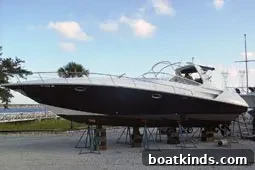
Coast Guard officials noted the family took several important actions that saved their lives: wearing PFDs, staying together and remaining near the disabled vessel. They also emphasized that carrying an emergency position-indicating radio beacon (EPIRB) and leaving a written float plan with a responsible person would have improved the chances of earlier detection and rescue.
The Fountain later sank. Willimon requested salvage while the insurer investigated. Initial assessments suggested no obvious through-hull failure but indicated that exhaust elbows may have been too low and that insufficient backflow flaps allowed water to be drawn into the engine space. When engines continue to run while backflow occurs, they can start pumping water into the compartment through blowers and air intakes, rapidly flooding the boat.
Everyone involved described the outcome as little short of miraculous. “Why didn’t somebody tell me about this?” Willimon asked afterward, expressing how avoidable the disaster might have been with different information about exhaust configuration and backflow prevention. The survivors and local responders agreed that a mix of preparation, quick thinking and, for the family, faith combined to bring them home.
This account originally appeared in the December 2010 issue.