

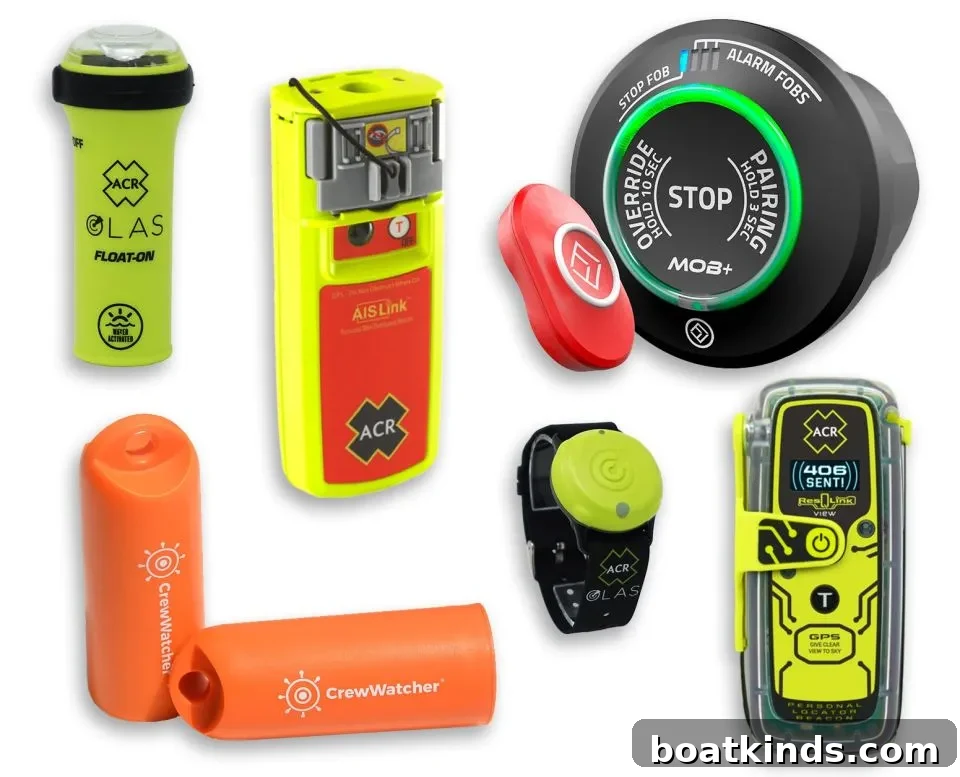
In man overboard (MOB) situations, every second counts. Rapid notification and an immediate, coordinated response dramatically increase the chances of a safe recovery. Wireless man overboard systems are designed to alert the crew the instant someone falls into the water and, in many cases, can trigger engine shutdown to prevent the boat from drifting away from the person in the water. When visual contact with the person is lost, statistics show that chances of recovery fall sharply, so early detection and alarm are critical.
Choices in MOB technology vary to fit different on-the-water activities. An angler fishing alone will likely prioritize an engine kill switch, while a cruising crew may value instant alerts to the captain and the rest of the crew. Today’s market covers everything from inexpensive Bluetooth beacons that pair with a smartphone to integrated systems that monitor dozens of crew members on larger yachts.
CrewWatcher
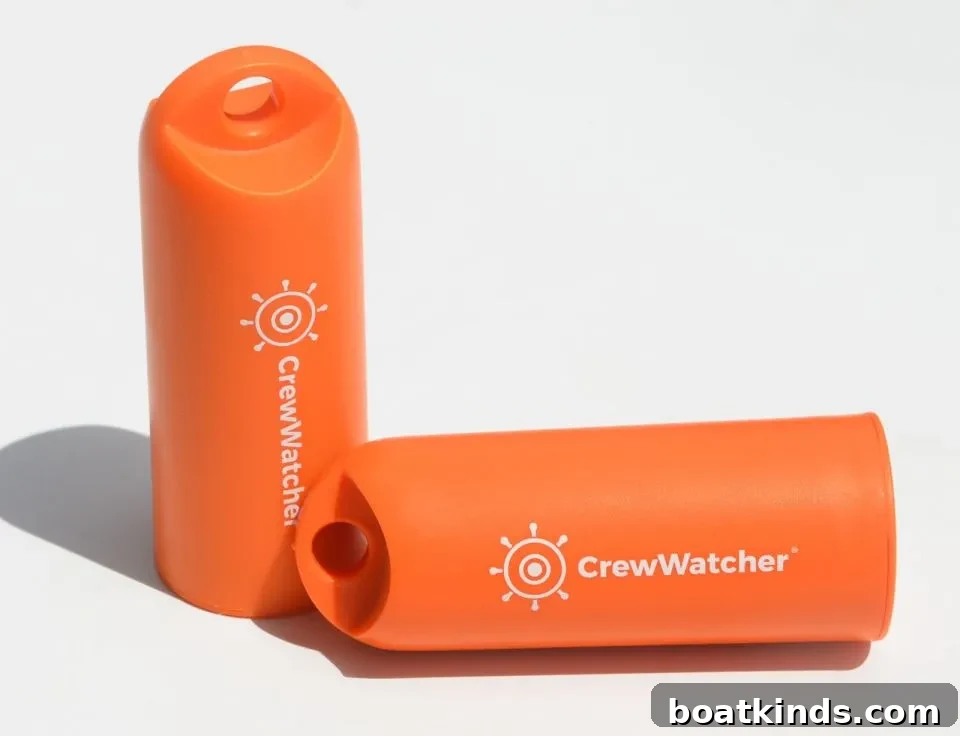
Weems & Plath’s CrewWatcher is a compact Bluetooth MOB beacon that combines simplicity with practical features. About three inches tall and 1.5 inches in diameter, the CrewWatcher beacon attaches to a PFD, clothing, or gear and includes a water sensor on its base, so it should be worn outside clothing layers to function correctly. The beacon pairs with the CrewWatcher app (iOS and Android) and a single phone can monitor up to five beacons.
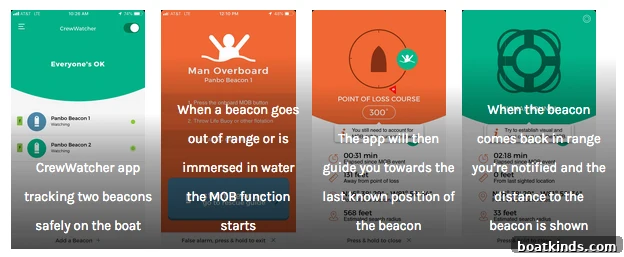
The CrewWatcher app alerts you when a tag leaves range or when its water sensor detects immersion. Because of the water sensor, the beacon can also double as a simple bilge alarm, notifying you of water where it shouldn’t be. Typical unobstructed range is around 30 meters, though obstacles and boat structure can reduce that. The beacons use a non-replaceable battery rated for three to five years, depending on frequency of use.
Buy Now At Defender.com
ACR OLAS
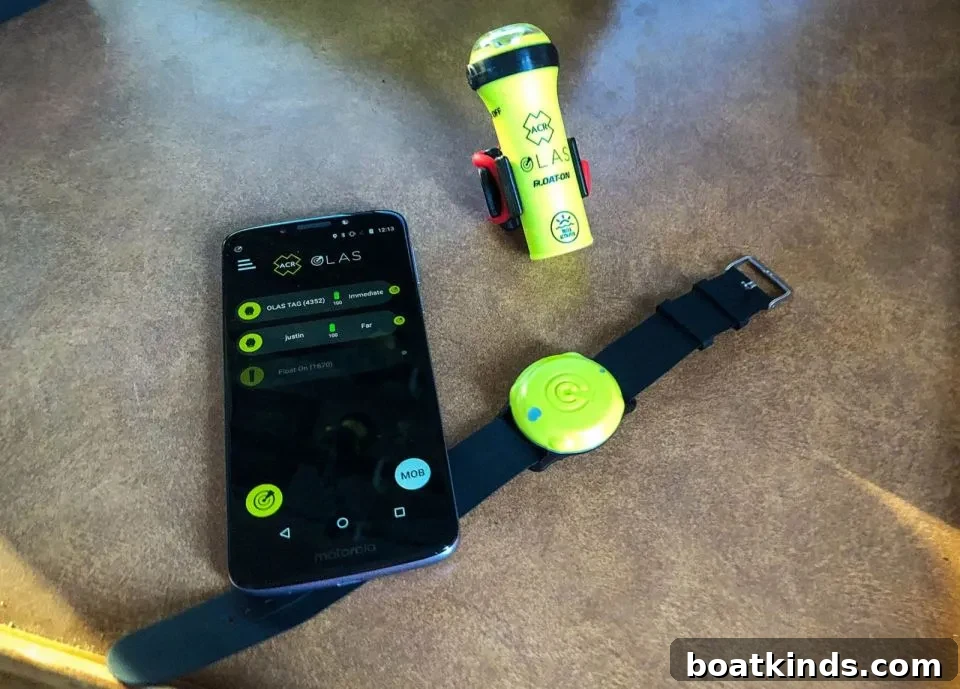
The ACR OLAS system centers on the OLAS mobile app and a choice of wearable tags, including a watch-style tag and the Float-On—an integrated floating flashlight and beacon with a water-activated strobe and USB recharge. The OLAS app closely resembles other Bluetooth-based systems but adds a useful solo mode: if a tag goes out of range and the alarm is not canceled within a short window, the app can automatically send an SMS with the location and time to a predefined emergency contact. This provides an easy way to alert someone ashore if an overboard event occurs while you’re alone.
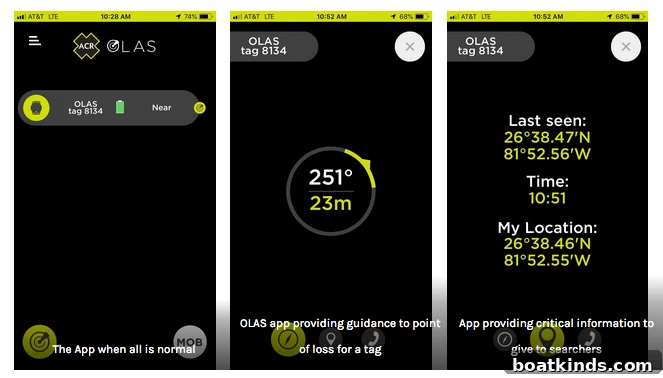
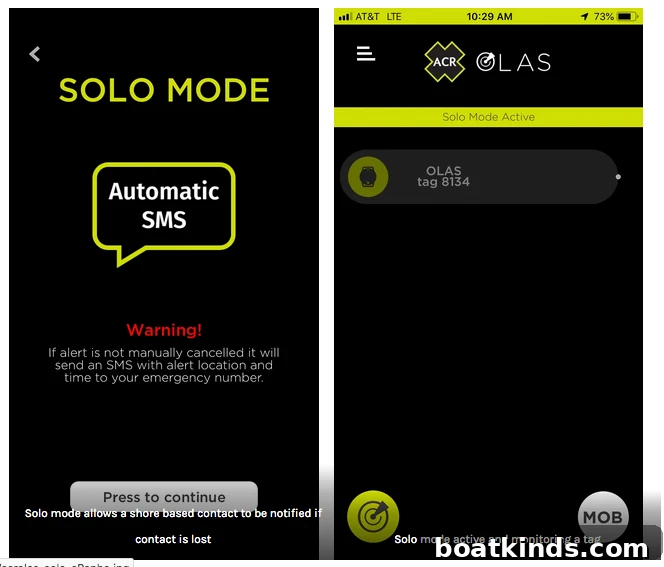
ACR expanded the OLAS lineup with modular hardware to broaden capabilities. The portable, USB-powered Core unit increases supported devices from six to 15 and includes an 85 dB siren and red visual alarm. The 12V Guardian adds the Core’s features plus an engine kill switch to shut down engines in an MOB event. An Extender module increases range to support larger boats up to about 100 feet. These modules were slated to ship by late 2019 and provide options for boaters who want a more robust system than a phone alone.
Fell MOB+
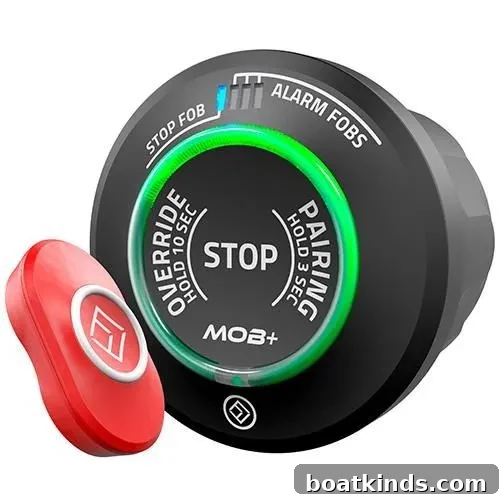
The Fell MOB+ system takes a different approach by using a dedicated dash-mounted module rather than relying on a smartphone. The module can pair with up to 20 tags and actively monitor four at a time. One tag is assigned as the operator; if that tag is activated, the system triggers an engine kill switch and sounds an alarm. Activation of any of the other monitored tags triggers the alarm without killing the engine. The kill function can be manually overridden from the dash module if needed.
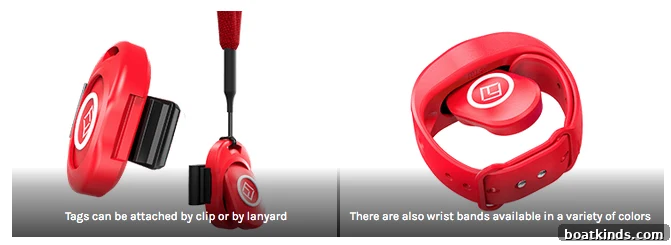
Fell tags are versatile: they fit a watch-band strap, attach to PFDs by lanyard, clip to clothing, or mount on a pet collar. Tags use user-replaceable batteries rated for roughly 300 hours of active use. Fell has also partnered with Mercury Marine to integrate with Mercury’s SmartCraft digital instrumentation. Their SmartIgnition product combines keyless ignition with MOB functionality, and other integrated features are planned to expand convenience and safety.
Buy Now At Defender.com
AIS MOB beacons and 406 MHz PLBs
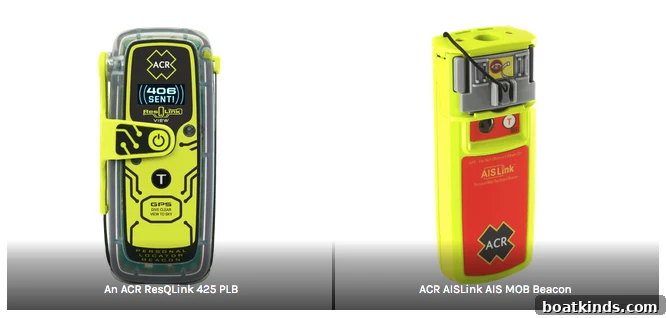
Bluetooth-based systems focus on alerting people aboard the same vessel, but they report the boat’s location at the moment of loss rather than the actual, continuously updated position of the person in the water. AIS MOB beacons address that gap: when activated, an AIS MOB sends a man overboard signal including the current GPS position of the person in the water to any AIS receivers within range. The position is updated continuously, which helps search-and-rescue teams and nearby boats home in on the person’s real location. Many AIS MOB units also transmit a private DSC call so the vessel’s VHF radio rings with the alert.
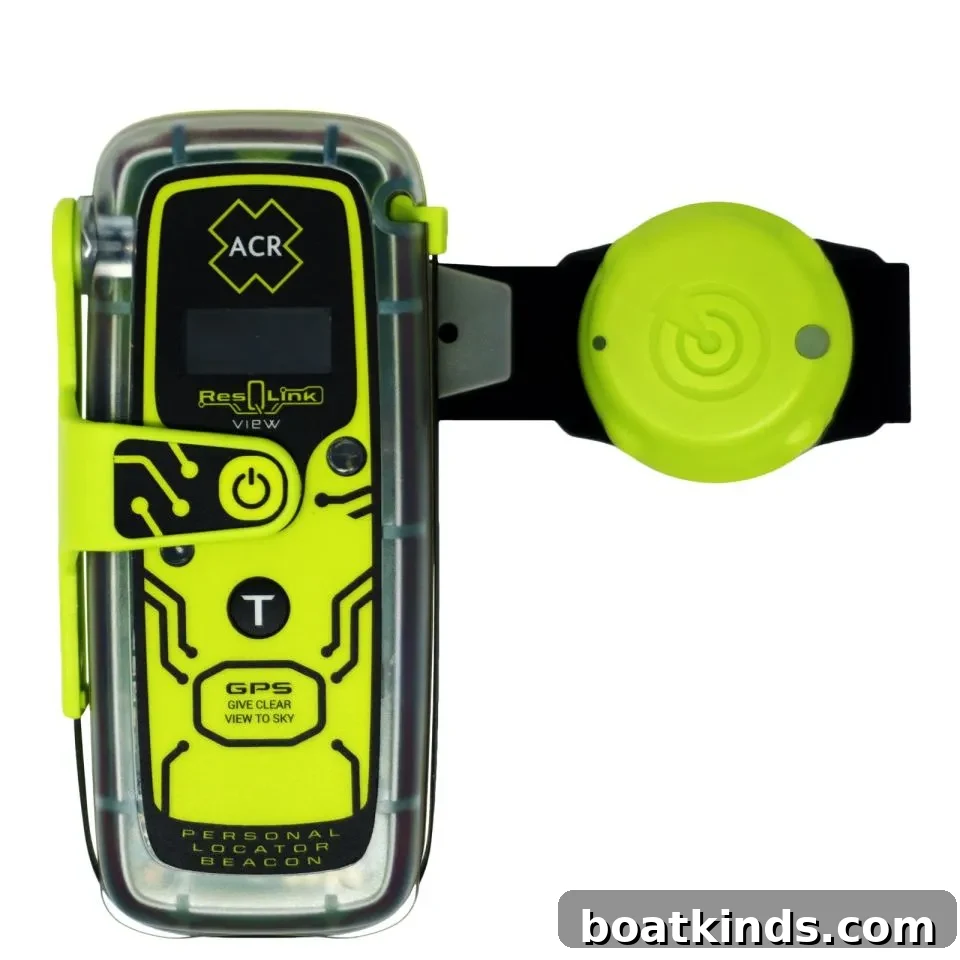
Personal Locator Beacons (PLBs) operate on the 406 MHz band and link to the COSPAS-SARSAT satellite system, the same global network used by EPIRBs. PLBs with integrated GPS broadcast an identifier and precise coordinates to rescue coordination centers, allowing authorities to retrieve owner details and dispatch help. Because PLBs report only to satellites, nearby boats typically won’t receive an automatic alert—unlike AIS MOB beacons—so a PLB complements, rather than replaces, short-range alerting technologies.
These systems are complementary: many boaters use Bluetooth tags for immediate local alerts, AIS MOB beacons to broadcast a continuous position to other vessels, and PLBs to summon formal search-and-rescue coordination. Manufacturers have explored bundling these technologies to offer comprehensive packages that combine the strengths of each system.
Final thoughts
High-profile overboard incidents underline how important reliable safety gear is when you head offshore. Technology has made it easier and more affordable to protect crew, passengers, and pets. For casual day-boaters, a couple of Bluetooth beacons can be an inexpensive, effective safety measure. For offshore passages or when you expect to be alone on deck, adding an AIS MOB beacon or a 406 MHz PLB provides a higher level of assurance and enables both nearby vessels and rescue authorities to locate someone in the water quickly. Evaluate your boating style, crew size, and operating area to choose the right combination of devices to keep everyone safe.
Buy Now At Defender.com