Coast Guard coxswain faces more than a decade behind bars after fatal collision in San Diego Harbor during holiday boat parade
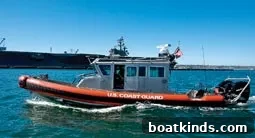
The U.S. Coast Guard has charged the coxswain of a 33-foot patrol boat with involuntary manslaughter and negligent homicide following a December 2009 collision in San Diego Harbor that killed an 8-year-old boy during a holiday boat parade. The investigation and subsequent military charges have drawn intense public attention and prompted separate civil and federal safety probes.
Petty Officer Paul A. Ramos, a third-class boatswain’s mate serving as the patrol boat’s coxswain, faces several charges, including involuntary manslaughter, negligent homicide, aggravated assault, negligently hazarding a vessel and dereliction of duty, Coast Guard spokesman Dan Dewell confirmed. The charges are filed under the Uniform Code of Military Justice (UCMJ) and are the result of the Coast Guard’s internal investigation into the incident.
Three other crewmembers on the patrol boat have also been charged. Petty Officer Ian M. Howell, a second-class boatswain’s mate in the Coast Guard Reserve and the senior crewmember aboard, is charged with negligent homicide, aggravated assault, negligently suffering a vessel to be hazarded and dereliction of duty. Petty Officer Brittany N. Rasmussen, a third-class boatswain’s mate, faces charges of negligent homicide, aggravated assault and dereliction of duty. Petty Officer 3rd class Lavelle M. Teague is charged with dereliction of duty.
Coast Guard legal officials in Alameda, California, and Washington, D.C., who oversee courts-martial and other military proceedings, indicated that such severe charges arising from official duties are rare. “We could not recall the last time Coast Guard personnel faced such serious charges in connection with their official duties,” Dewell said.
The collision occurred on Dec. 20, when the aluminum-hulled, foam-collared Coast Guard patrol boat, powered by triple 275-horsepower Mercury four-stroke engines, struck the stern of a 26-foot Sea Ray bowrider. The Sea Ray, a 2003 240 Sundeck, was anchored south of Harbor Island where multiple families had gathered to watch the annual Parade of Lights. The accident killed Anthony DeWeese, an 8-year-old boy who was seated in the transom area and died of blunt-force trauma.
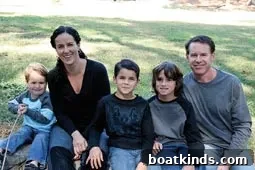
There were 13 people aboard the Sea Ray — six adults and seven children, all under 11 — including Anthony’s mother, Caroline DeWeese, and his brothers Nathan and Dominick. Anthony’s father, Alan DeWeese, who was at the helm at the time and is described by his attorney as an experienced boater, has disputed the events that led to the collision. According to the family’s legal representative, Alan DeWeese believes the Coast Guard craft was traveling at a high rate of speed at the time of impact.
Coast Guard investigative documents allege the coxswain failed to perform an adequate risk assessment, did not designate proper lookouts before getting underway, failed to maintain a safe speed, and failed to take appropriate action to avoid the collision. The documents also note that crews were aware the Parade of Lights would attract many vessels and that background lighting from spectators and other boats would make navigation more demanding.
In addition to the Coast Guard’s internal review, the National Transportation Safety Board (NTSB) and the San Diego Harbor Police opened independent investigations. Harbor police forwarded their report to the San Diego County district attorney’s office for review. The NTSB’s investigation, which typically takes several months, was expected to continue while military proceedings proceed.
The next step in the military justice process is an Article 32 hearing, which functions similarly to a civilian preliminary hearing or grand jury review. Sentencing ranges cited by the Coast Guard include up to 10 years for involuntary manslaughter, three years each for negligent homicide and aggravated assault, and shorter terms, such as three months, for dereliction of duty.
The DeWeese family has also filed a wrongful death lawsuit against the Coast Guard seeking unspecified damages. Family attorney Michael Neil of Neil Dymott Attorneys said the family wants accountability and hopes the legal process will help prevent similar tragedies in the future.
The collision renewed concerns among local boaters about high-speed operation of patrol craft in the bay. The particular 33-foot special purpose craft involved in the incident is described on Coast Guard materials as having rapid acceleration and a top speed exceeding 60 mph, characteristics that, according to critics, can increase risk in crowded recreational waters.
This case is pending military and federal safety investigations, as well as civil litigation, and officials have emphasized that the Coast Guard probe will remain open until all UCMJ proceedings are finalized.
This article originally appeared in the September 2010 issue.