Hundreds Attend 10th Annual “White Trash Bash” in East Peoria Despite COVID-19 Surge
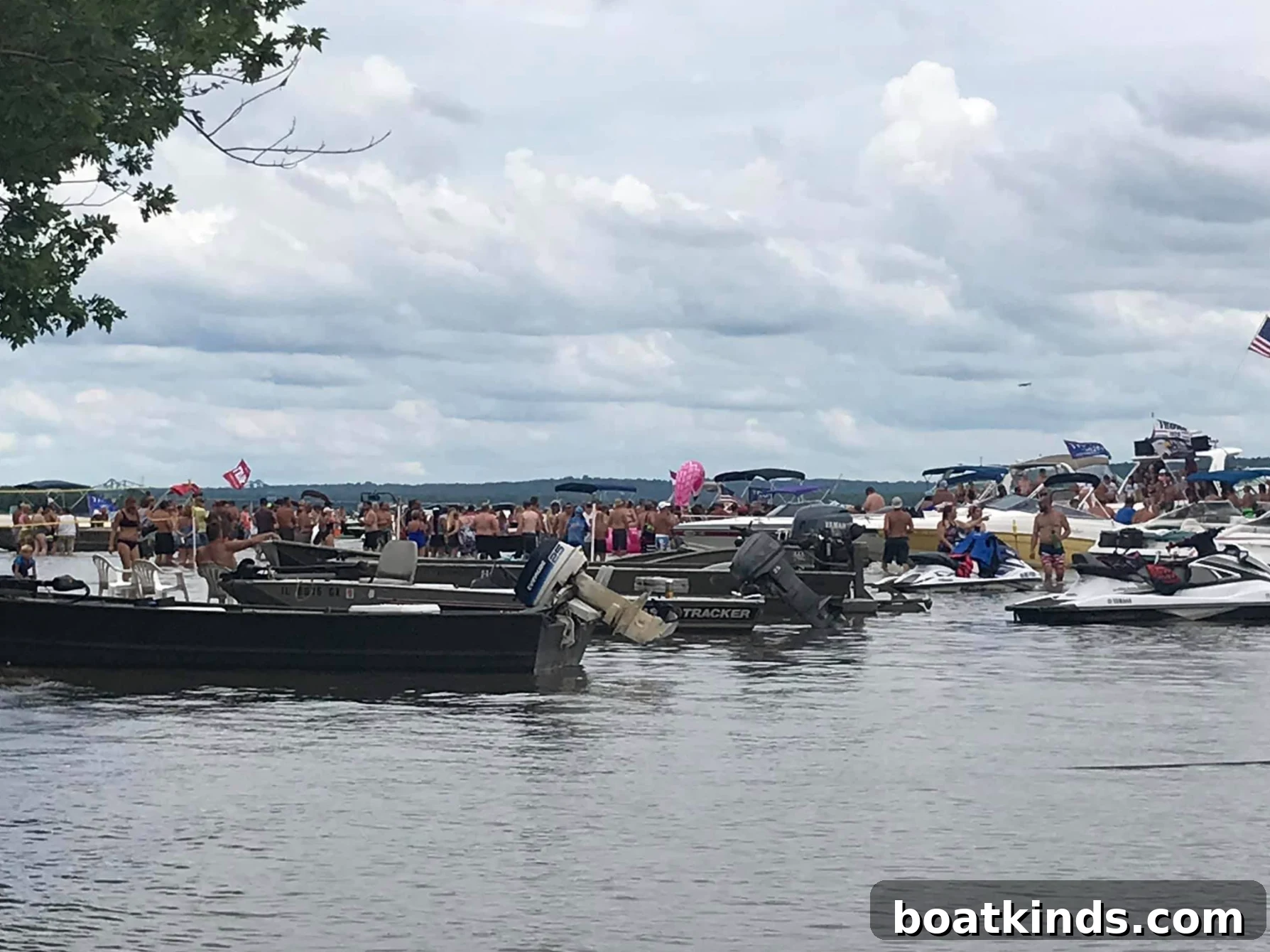
Despite a recent surge in COVID-19 cases across Illinois, roughly 500 people gathered over the weekend for the 10th annual “White Trash Bash” in East Peoria. The gathering—centered around heavy boat traffic, drinking and large social groups—drew attention because attendees largely ignored recommended safety measures; observers reported that none of those present were seen wearing masks.
Event and Attendance
The event brought at least 200 boats together on the Illinois River, effectively transforming a stretch of water into a dense social scene. What began as a popular, unofficial celebration has repeatedly drawn sizable crowds in previous years; this edition attracted several hundred participants at a time when public health officials were urging residents to limit social interaction. Organizers and participants appeared to favor socializing on and near the river, with little visible adherence to social distancing guidance.
Public Health Concerns
Leading up to the weekend, authorities issued warnings urging attendees to follow social distancing protocols and to wear face coverings to help limit the spread of the coronavirus. The warnings appear to have had limited impact on behavior at the event. According to the Illinois Department of Public Health, the state currently reports more than 180,000 confirmed cases of COVID-19 and in excess of 7,500 deaths, figures that underscore the risk of large gatherings during an active outbreak.
Public health experts consistently advise that crowded events, particularly those where people are in close physical contact and mask use is minimal, increase the likelihood of viral transmission. Such circumstances can lead to accelerated local spread, putting additional strain on testing, contact tracing and health care resources.
Local Context and Reactions
Local officials and health authorities had emphasized the importance of following preventative measures in the days before the gathering. Their guidance typically includes mask wearing in public settings where distancing is difficult, maintaining a safe distance from people outside one’s household, and avoiding large social events whenever possible. In this case, many attendees appear to have disregarded those recommendations.
Community reactions to the event were mixed: some residents expressed frustration and concern about potential consequences for public health, while others framed the gathering as a longstanding local tradition. The clash between recreational activities and public health guidance has been a recurring theme in many communities since the start of the pandemic.
Looking Ahead
Events that draw large crowds during an active pandemic present practical challenges for local health and emergency services. While organizers and participants may view weekend river parties as social outlets, the broader public-health context remains a key consideration for local policymakers and residents alike. Continued monitoring of local COVID-19 case trends and adherence to public health recommendations will influence how future events are managed and perceived.
The weekend’s turnout on the Illinois River serves as a reminder of the ongoing tensions between social gatherings and the need to follow established public health guidance during an outbreak. As communities balance traditions and safety, public health messaging and individual choices will continue to shape local outcomes.