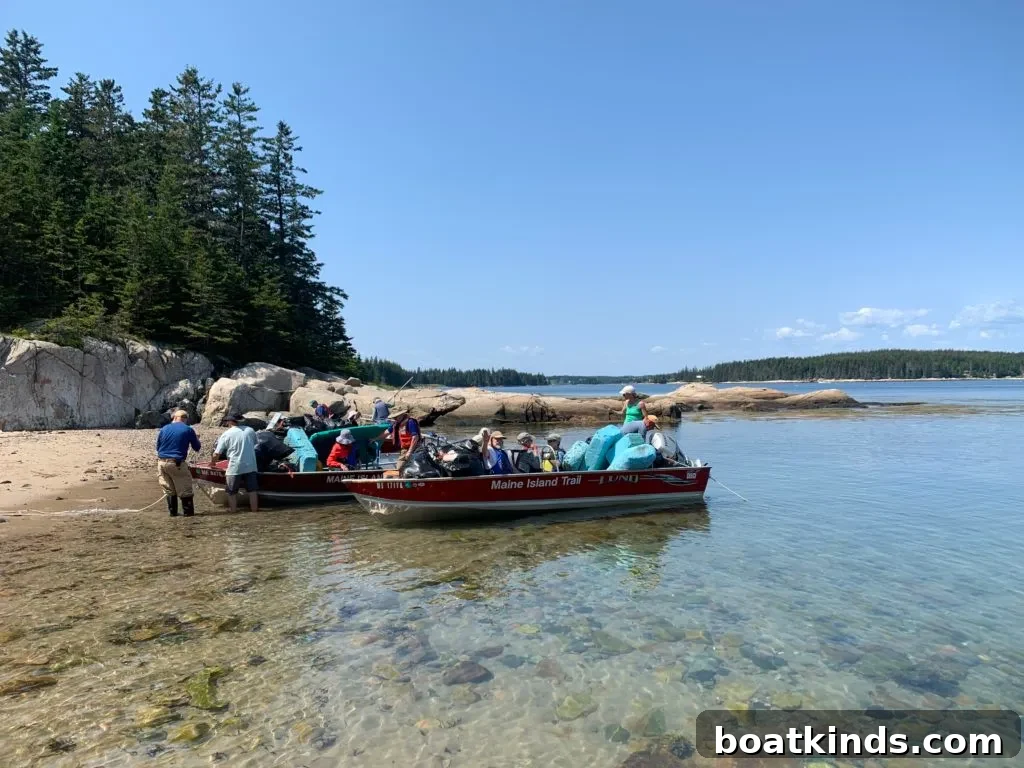
Maine Island Trail: America’s First Recreational Water Trail
In 1988, Dave Getchell, Sr. founded the Maine Island Trail, recognized as America’s first recreational water trail. Over the decades it has grown into an extensive coastal network, now spanning approximately 375 miles and connecting more than 200 islands and mainland access points. The trail links a remarkable variety of shorelines—rocky headlands, sandy coves, and wooded isles—creating a unique corridor for boaters, kayakers, paddlers, and nature lovers to explore Maine’s coastal environment.
The Maine Island Trail operates on a stewardship model that emphasizes active care by those who use it. Rather than relying solely on government management, many of the trail’s islands and sites are included through informal, handshake agreements with property owners and local communities. That cooperative arrangement depends on trust, respect, and shared responsibility between users, landowners, and dedicated volunteers.
Volunteers form the backbone of trail stewardship. Hundreds of people participate in organized programs such as island cleanups, shoreline restorations, and monitoring efforts that help preserve natural habitats and scenic character. These volunteer events are extremely popular; in many cases they fill quickly and maintain waitlists. Participation not only helps protect fragile coastal ecosystems, it also gives people the opportunity to spend meaningful time outdoors, develop boating and camping skills, and connect with a community committed to conservation.
What makes the Maine Island Trail distinctive is this blend of outdoor recreation and stewardship. Visitors are encouraged to practice low-impact camping and boating ethics—packing out what they pack in, avoiding disruption of wildlife, and respecting seasonal restrictions that protect nesting birds and sensitive vegetation. That ethic helps keep the islands pristine for future seasons and preserves the natural experience that draws people back year after year.
Whether you arrive by kayak, sailboat, or motorboat, the trail offers a range of experiences. Some sites provide sheltered anchorages and simple shorelines for day visits and overnight camping, while other islands are wild and remote, best suited for visitors prepared for rugged conditions. The trail’s variety means there are opportunities for short excursions, family outings, extended multi-day trips, and quiet moments of solitude on less-visited shores.
Getting involved with the Maine Island Trail and its volunteer efforts can be rewarding. Groups that participate in cleanup events often include clubs, schools, outdoor organizations, and families. These gatherings serve both practical and social purposes: removing debris, restoring trails and campsites, and building stewardship skills, while also introducing newcomers to boating safety, navigation, and Leave No Trace principles.
Education and outreach are important parts of the trail’s mission. New volunteers and visitors are welcomed with guidance on safe and respectful practices, seasonal closures, and site-specific considerations. By following those guidelines, recreational users help maintain the fragile balance that supports both wildlife and human enjoyment.
If you want to learn more about the trail’s history, its founding by Dave Getchell, Sr., and the volunteers who keep it vibrant and clean, there are video features and community resources that document their work and share first-hand stories from people who care for the coast. These resources showcase how simple acts—regular island cleanups, careful camping, and cooperative agreements—combine to protect a significant stretch of Maine’s coastline.
The Maine Island Trail stands as an example of how community stewardship can sustain a major recreational resource. Its success depends on respect for landowners, commitment from volunteers, and responsible visitor behavior. For anyone interested in coastal boating, nature-based recreation, or community-led conservation, the trail offers a model of how recreation and preservation can go hand in hand while providing unforgettable experiences along one of America’s most scenic coastlines.